Technical Investing

Trading by reading charts.

Use price patterns and indicators to time market trades effectively.

17-01.png

Introduction to Technical Investing 

Technical investing focuses on analyzing historical price movements and trading volumes to forecast future market trends. 

Unlike fundamental investing, which evaluates a company's financial health, technical investors rely on charts, indicators, and patterns to make trading decisions. 

This strategy emphasizes timing the market rather than assessing a company's intrinsic value, aiming to capitalize on short- to medium-term price movements based on past behavior and market sentiment.

17-02.png

Key Principles of Technical Investing 

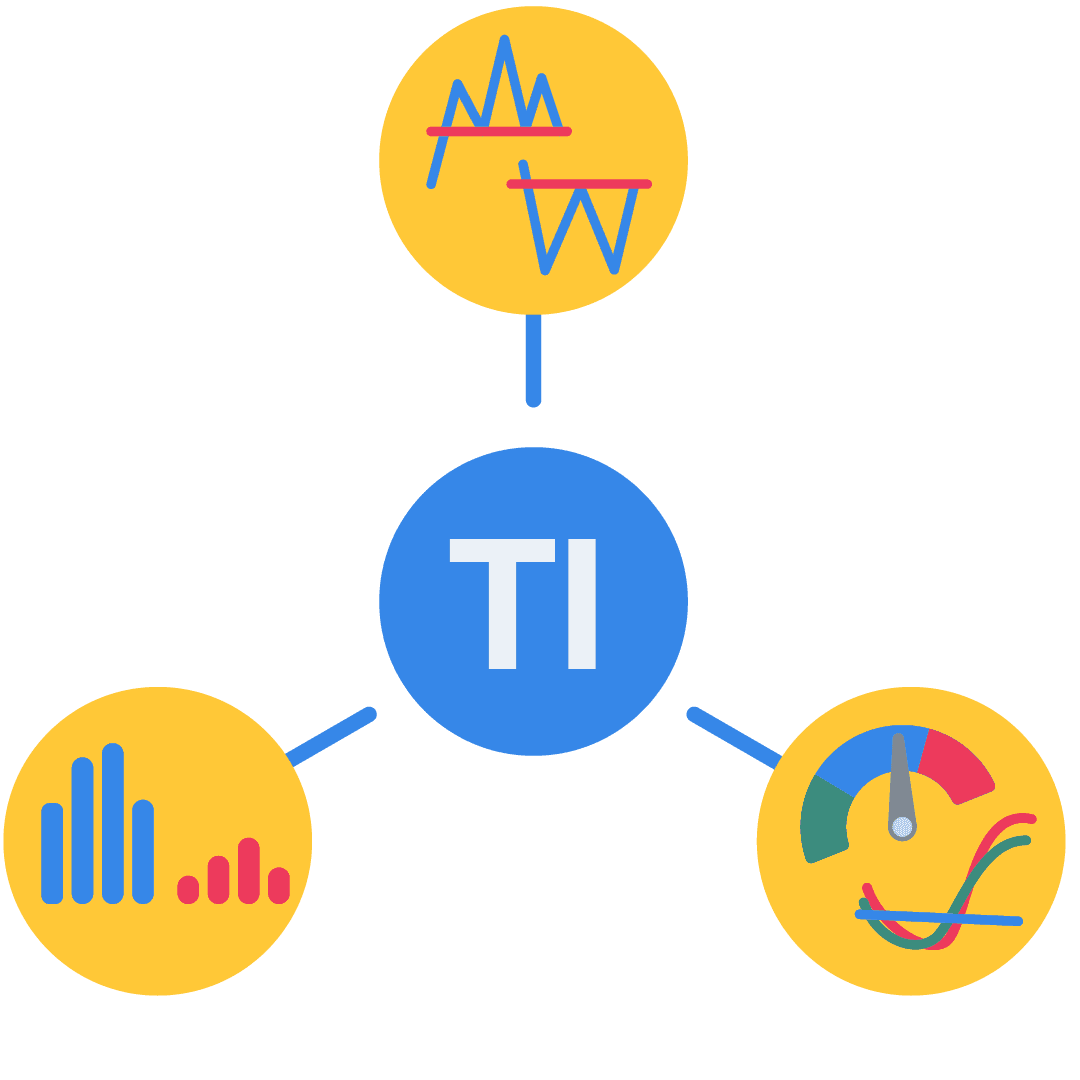
Technical investing is built on three main principles: trends, patterns, and indicators. 

Investors believe that markets move in identifiable trends—upwards, downwards, or sideways—and that these trends persist until a reversal occurs. 

By recognizing chart patterns like head-and-shoulders or double bottoms, and using indicators such as moving averages and RSI, technical investors make informed buy or sell decisions, aiming to predict and leverage future price movements based on historical data.

17-03.png

Sarah Learns the Basics 

After mastering what to buy (value) and where the market is headed (growth), Sarah shifts her focus to timing—when to buy and sell. 

Diving into technical investing, she learns to interpret candlestick charts, moving averages, and trendlines, feeling like a code-breaker deciphering the market’s secret language. 

Sarah practices identifying support and resistance levels, thrilled at the idea of using price history and patterns to refine her investment decisions with precision.

17-04.png

Understanding Charts and Trends in Technical Trading 

Charts and trends are foundational tools in technical trading, used to analyze past price movements and predict future behavior. 

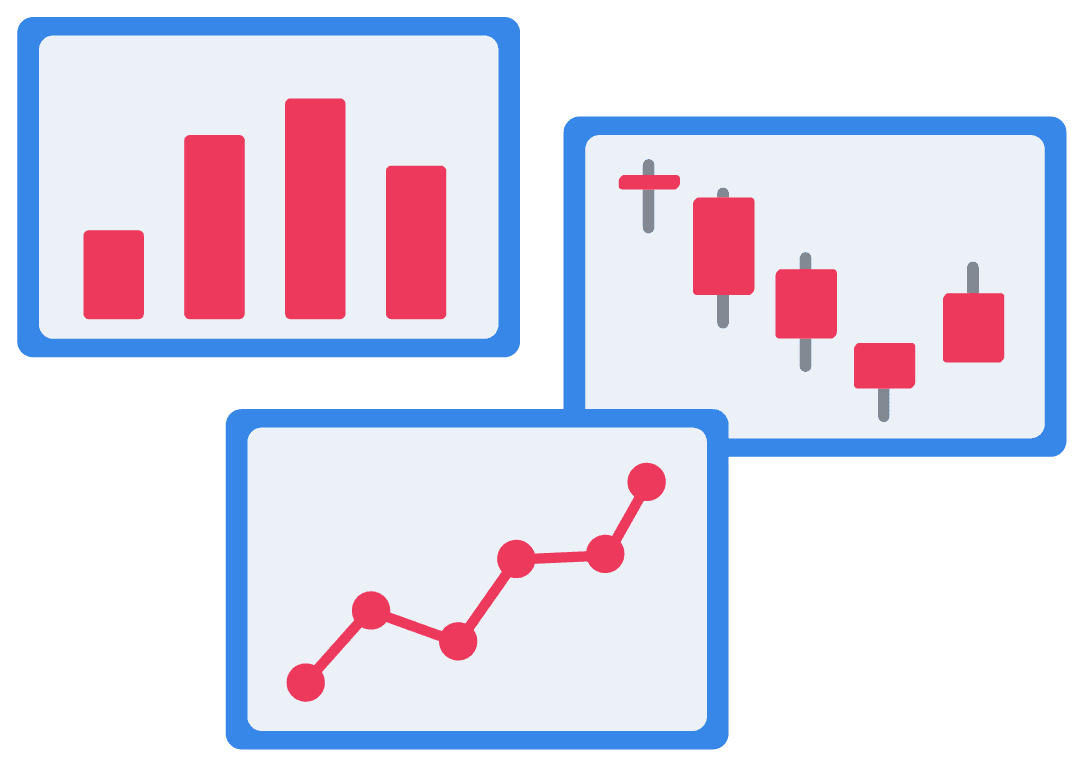
Common chart types include line charts, bar charts, and candlestick charts, each offering insights into price patterns and market sentiment. 

Trends are categorized as uptrends, downtrends, or sideways, based on the direction of price movements. 

Traders identify key features like support and resistance levels, trendlines, and moving averages to guide buy and sell decisions.

 17-05.png

Technical Indicators in Action 

Technical indicators are mathematical calculations applied to price, volume, or other market data to identify trends and potential trade signals. 

Common indicators include moving averages, which smooth price data to highlight trends, and the Relative Strength Index (RSI), which measures momentum and identifies overbought or oversold conditions. 

Other popular tools include Bollinger Bands for assessing volatility and Moving Average Convergence Divergence (MACD) for tracking trend changes and momentum.

Do you want to learn more?
Download InvestMentor to access the full lesson and explore interactive courses that build your financial knowledge and guide you toward smarter investing decisions.