Impact Investing

Profits with purpose.

Invest for profit while driving measurable social impact.

08-16.png

Introduction to Impact Investing 

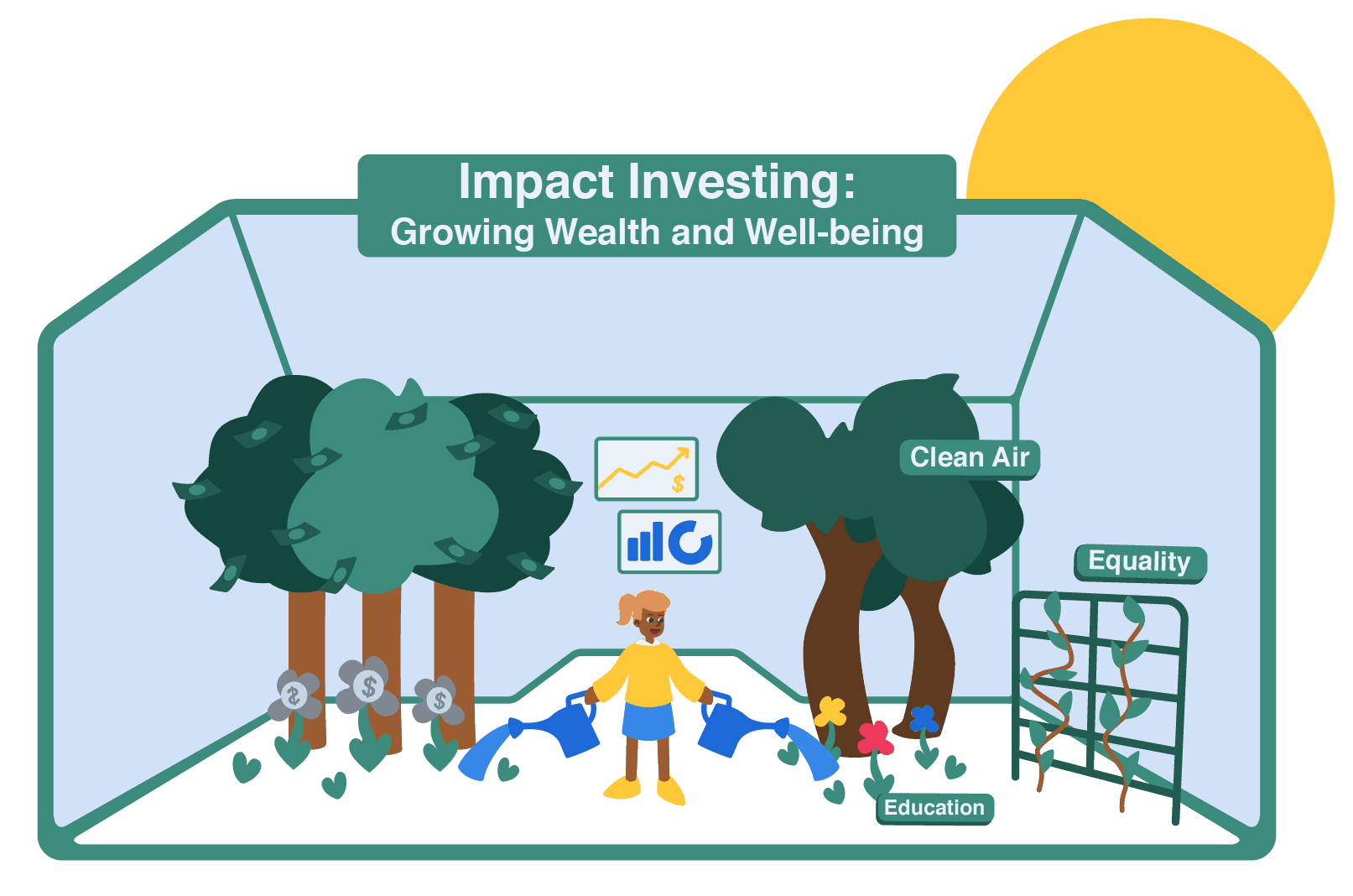
Impact investing involves allocating funds to ventures that aim for positive social or environmental outcomes alongside financial returns. 

Unlike traditional investing, which focuses purely on profits, impact investing seeks measurable improvements in areas like education, clean energy, and healthcare. 

By directing capital into mission-driven projects, impact investors blend purpose with profit, addressing global challenges while fostering sustainable growth and meaningful change.

Key Principles 

Impact investing seeks measurable social or environmental benefits alongside financial returns. 

Key principles include intentionality, selecting investments to address specific challenges, and measurability, tracking outcomes through metrics like carbon reduction or community development. 

It balances financial returns, from market-rate to concessionary, with mission-driven goals, emphasizing sustainability for long-term solutions and additionality to ensure value creation beyond existing efforts.

Sarah’s First Investment  

As Sarah’s goals expand beyond profit, she discovers impact investing at a seminar and is inspired by the idea of aligning her money with her values. 

Intrigued by a clean water initiative with the tagline “Turning muddy water into miracles,” she invests in a project building filtration systems to provide safe drinking water. 

As reports show fewer illnesses and healthier communities, Sarah feels a deep sense of purpose, seeing her money make a tangible difference while contributing to her financial goals.

Measuring Impact  

Measuring impact in impact investing involves tracking outcomes using standardized metrics and frameworks to ensure transparency and alignment with goals. 

Tools like the Impact Reporting and Investment Standards (IRIS) and the Global Impact Investing Rating System (GIIRS) establish benchmarks for assessing social and environmental performance. 

Metrics commonly include the number of individuals benefiting from programs, carbon emissions reduced, jobs created, and other measures of positive change.

Returns and Risks 

Impact investing balances financial returns with measurable social or environmental outcomes but carries unique risks. 

Financial risks may include lower or delayed returns when impact takes precedence. Impact risks involve failing to achieve intended outcomes or causing unintended negative effects. 

Returns can vary from market-rate to concessionary, depending on objectives and structure, requiring careful assessment of risks and benefits to align with investment goals.

Do you want to learn more?
Download InvestMentor to access the full lesson and explore interactive courses that build your financial knowledge and guide you toward smarter investing decisions.