
IBKR InvestMentor
HomeNewsCoursesSnapshotsVideosHelp
Privacy & TermsSocial Media DisclosureHelpCookie settings

2026 Interactive Academy. All rights reserved.
IBKR InvestMentor is owned by Interactive Academy LLC, an affiliate of Interactive Brokers LLC. All content provided by IBKR InvestMentor is for informational and educational purposes only and should not be interpreted as implying any sponsorship, partnership, endorsement, recommendation, or approval by Interactive Brokers LLC or its affiliates.
  1. Courses
  2. Bonds I
  3. Corporate Bonds

Corporate Bonds

Introduction to Corporate Bonds 

Corporate bonds are issued by companies to raise funds for growth, offering investors income through interest payments. 

These bonds generally provide higher returns than government bonds, with varying risk levels based on the company’s financial health. 

Carlos, a small business owner, is exploring ways to diversify his investments with bonds that balance income and stability. 

In this lesson, we’ll follow Carlos as he learns about corporate bond types to meet his investment goals.
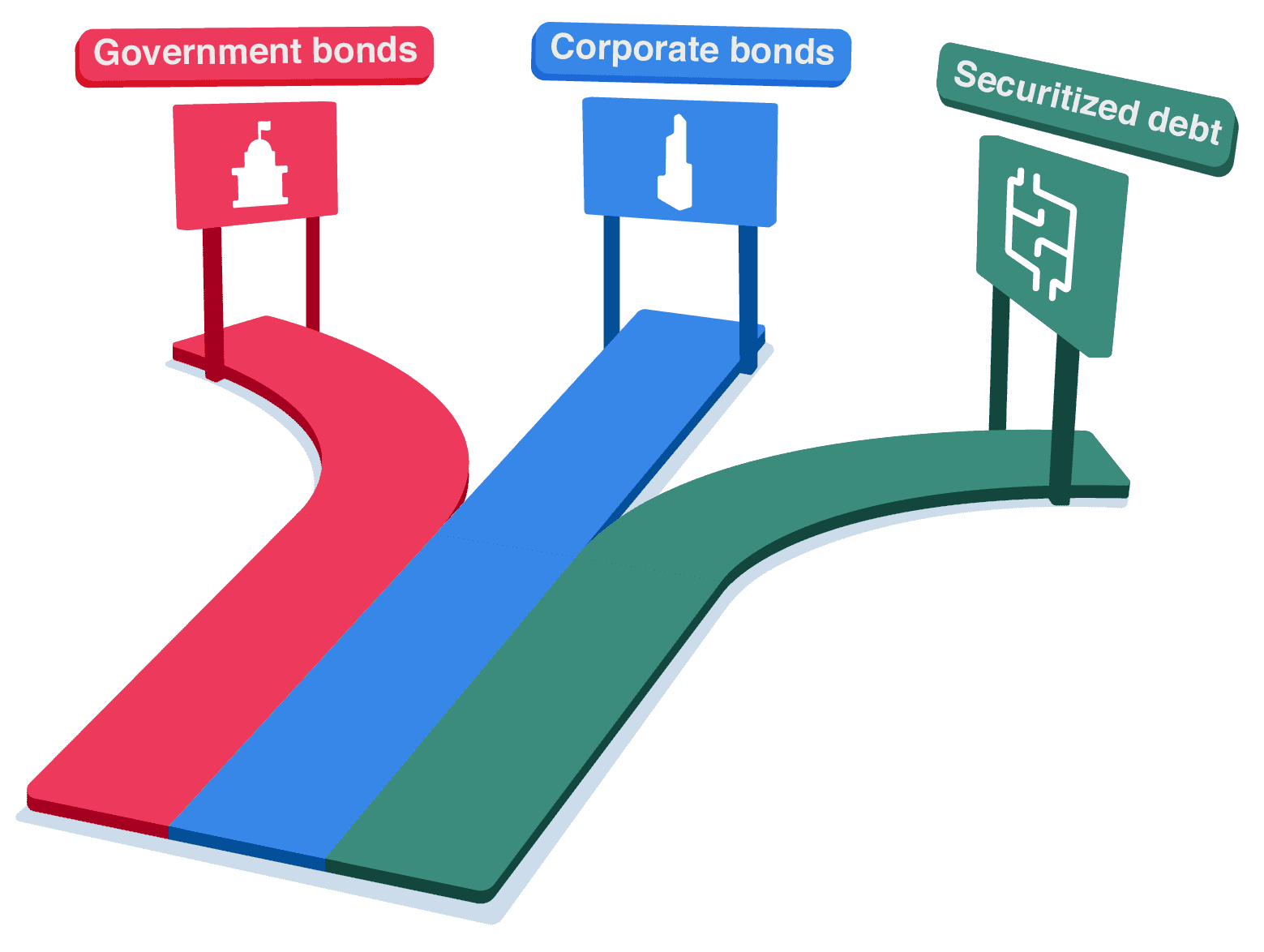
Corporate Bonds Overview 

When investors purchase corporate bonds, they lend money to the issuing company in exchange for regular interest payments and the return of principal at maturity. 

Corporate bonds vary widely in terms of maturity, interest rates, and credit quality. 

They offer a spectrum of yields and risks, from conservative investment-grade bonds to higher-yielding, higher-risk options. 

Assessing these factors is essential for investors seeking to balance income generation with risk management.

Credit Ratings Crash Course 

Credit ratings estimate how likely a company is to repay its debts. Rating agencies such as S&P, Moody’s, and Fitch rank bonds from highest to lowest credit quality, based on the likelihood of a default. Here's the simplified scale:

  • AAA (S&P and Fitch) / Aaa (Moody's): Highest rating and lowest default risk.
  • AA / Aa: Very strong credit quality.
  • A / A: Strong credit quality, but somewhat more exposed to changing economic conditions.
  • BBB / Baa: Lowest tier of investment-grade debt.
  • BB / Ba and below: High-yield, or junk, bonds. These carry greater default risk and typically pay higher interest to compensate investors.
  • D / C: At or near the bottom of the scale, indicating default or very high default risk, depending on the agency.

The key dividing line is BBB- at S&P and Fitch and Baa3 at Moody’s: Anything at or above those ratings is investment grade. Anything below is high yield or junk, depending on your perspective.

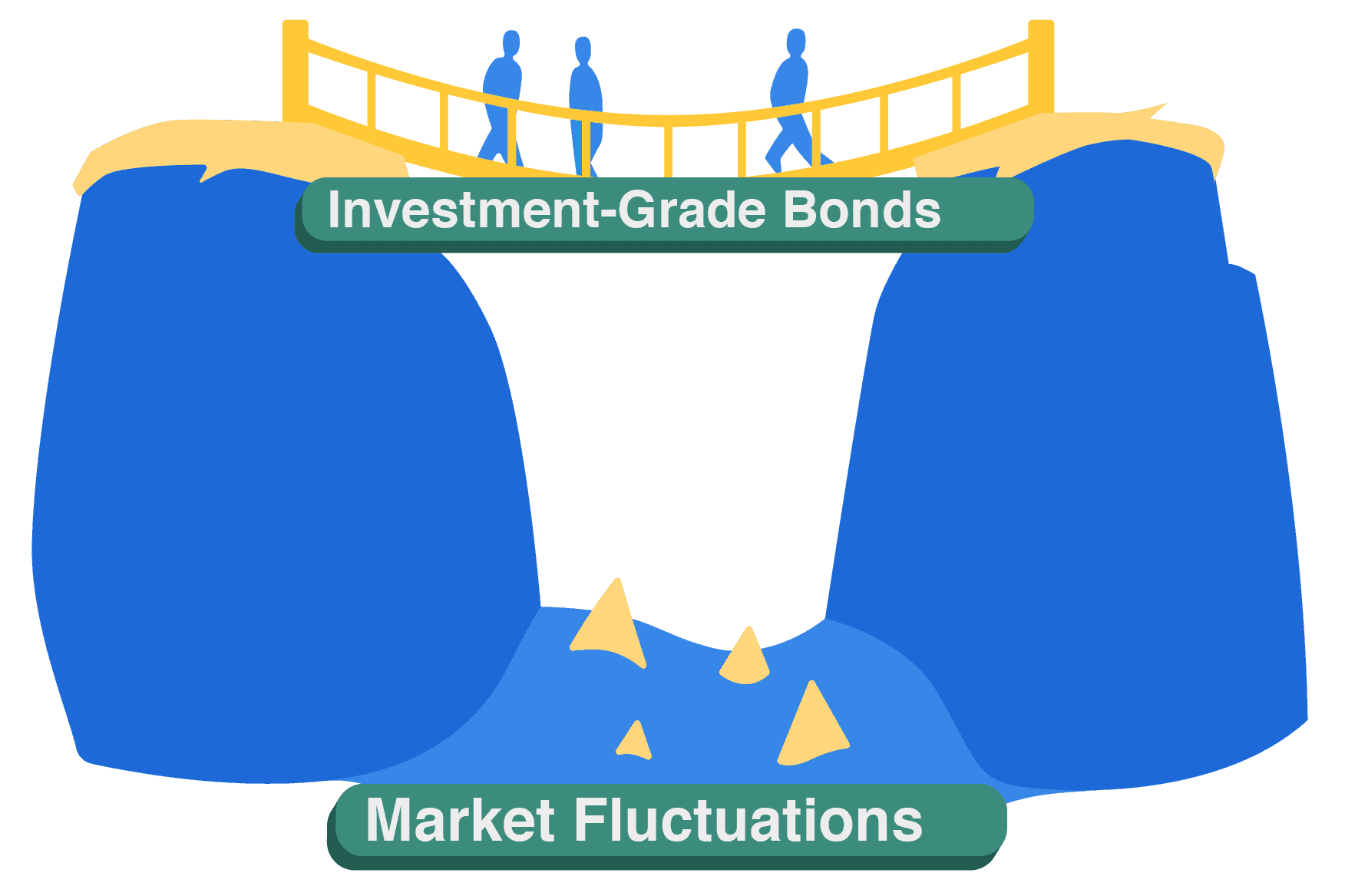
Investment-Grade Corporate Bonds 

Investment-grade bonds are issued by financially stable companies with strong credit ratings (BBB or higher). 

These bonds are considered lower risk compared to high-yield bonds, offering steady income with reduced default risk. 

Because they are backed by companies with good credit, investment-grade bonds appeal to investors seeking a balanced approach of reliable income and moderate safety. 

These bonds typically offer lower yields than high-yield bonds but are considered more secure.

Carlos Invests in Investment-Grade Bonds 

Seeking steady income with lower risk, Carlos decides to purchase investment-grade corporate bonds. 

After researching, he selects bonds issued by TechSolutions Inc., a well-established company rated A by Standard & Poor's. 

The bonds have a 5-year maturity, a face value of $1,000 per bond, and offer a 3% annual coupon rate, paid semi-annually. 

Carlos buys 100 bonds, investing the full $100,000. This investment provides him with $3,000 in annual interest income, or $1,500 every six months.

Do you want to learn more?
Download IBKR InvestMentor to access the full lesson and explore interactive courses that build your financial knowledge and guide you toward smarter investing decisions.
Log in to access the full lesson
or