
Perfect Competition

Markets with numerous equal players.

Understand market efficiency via price-taking and product homogeneity.

01-16.png

Introduction to Perfect Competition

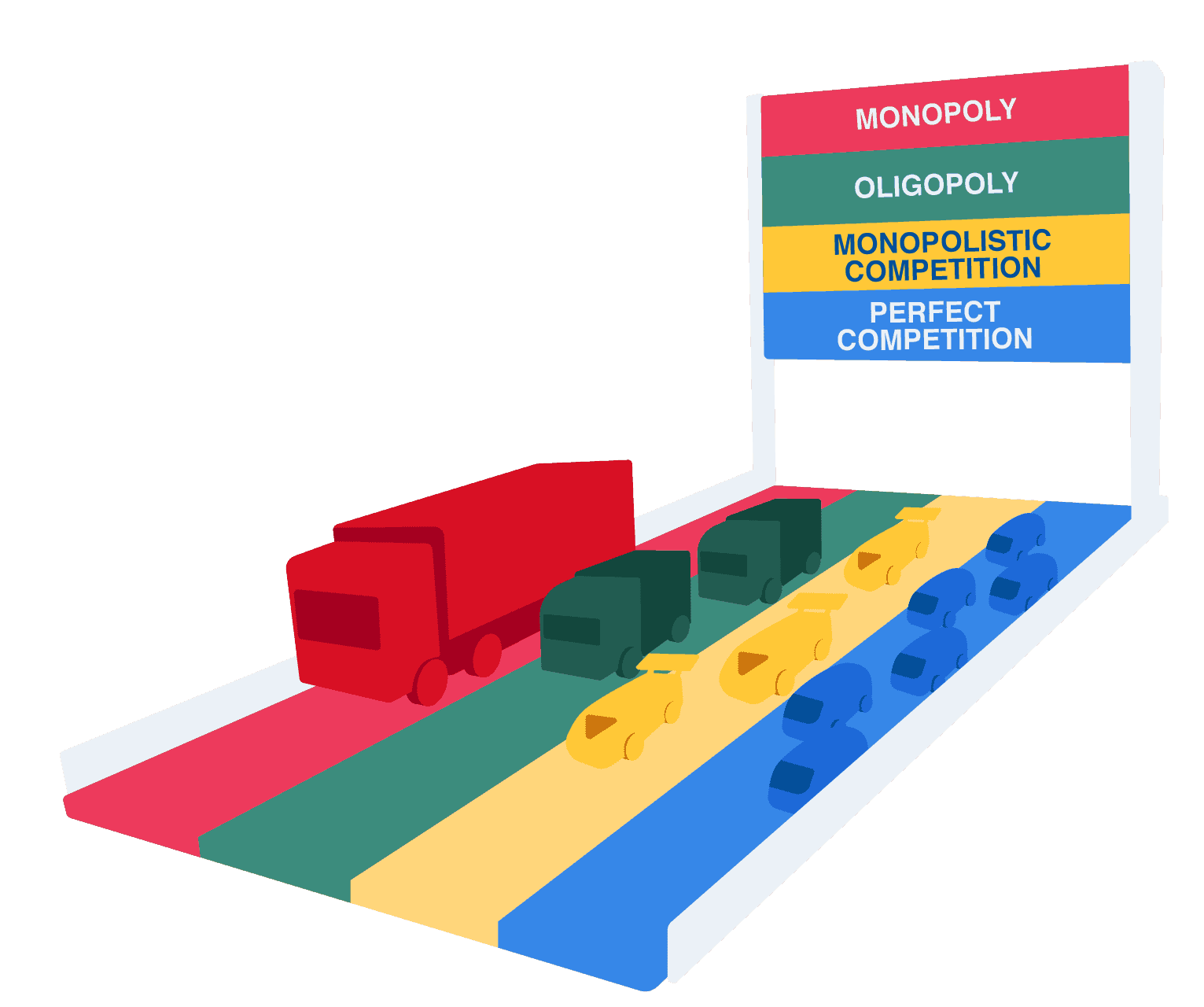
Market structures define the competitive frameworks within which industries operate and determine the interactions between firms and consumers. 

They differ based on factors such as the number of firms, the degree of product differentiation, barriers to entry and exit, and the extent of price-setting power. 

These variations impact competition intensity, market efficiency, resource allocation, and innovation. 

Firms adjust their strategies to align with influencing pricing, output, and market positioning.

Perfect Competition 

Perfect competition represents a market with many sellers offering identical products where no single firm has pricing power. 

While rare, it’s vital for understanding the role of competition and pricing in free markets. 

Here, the forces of supply and demand determine prices, leading to efficient resource allocation. 

Firms are price takers, meaning they must accept the market price. 

This theoretical model serves as a benchmark to compare more complex and less efficient real-world markets.

Perfect Competition in Marketburg 

In Marketburg, the local farmers, including Farmer Sam, grow wheat and sell their harvest at the town's market. 

Here, the agricultural sector closely resembles perfect competition. Numerous farmers sell similar products, and no single farmer can influence market prices. 

This competitive environment benefits Marketburg’s residents with lower prices and higher quality wheat. 

Though real-world deviations exist, Marketburg’s market offers a glimpse into the idealized model of perfect competition.

 Role of Competition 

In perfect competition, many small firms sell identical products, creating intense competition. 

No firm controls pricing; they accept the market price set by supply and demand. 

This competition drives firms to operate efficiently and minimize costs to stay profitable. 

Consumers benefit from lower prices and consistent quality. 

The lack of product differentiation ensures resources are allocated efficiently, promoting both market efficiency and consumer welfare.

Homogeneity in Perfect Competition 

In perfect competition, products are homogeneous

This means each product is identical to others, making consumers indifferent to their choice of seller. 

This homogeneity is a key characteristic of perfect competition markets. 

It ensures that no single producer can differentiate their product to gain a competitive edge. 

This leads to prices being driven solely by supply and demand, ensuring that resources are allocated efficiently without any distortions caused by unique features.

Do you want to learn more?
Download InvestMentor to access the full lesson and explore interactive courses that build your financial knowledge and guide you toward smarter investing decisions.