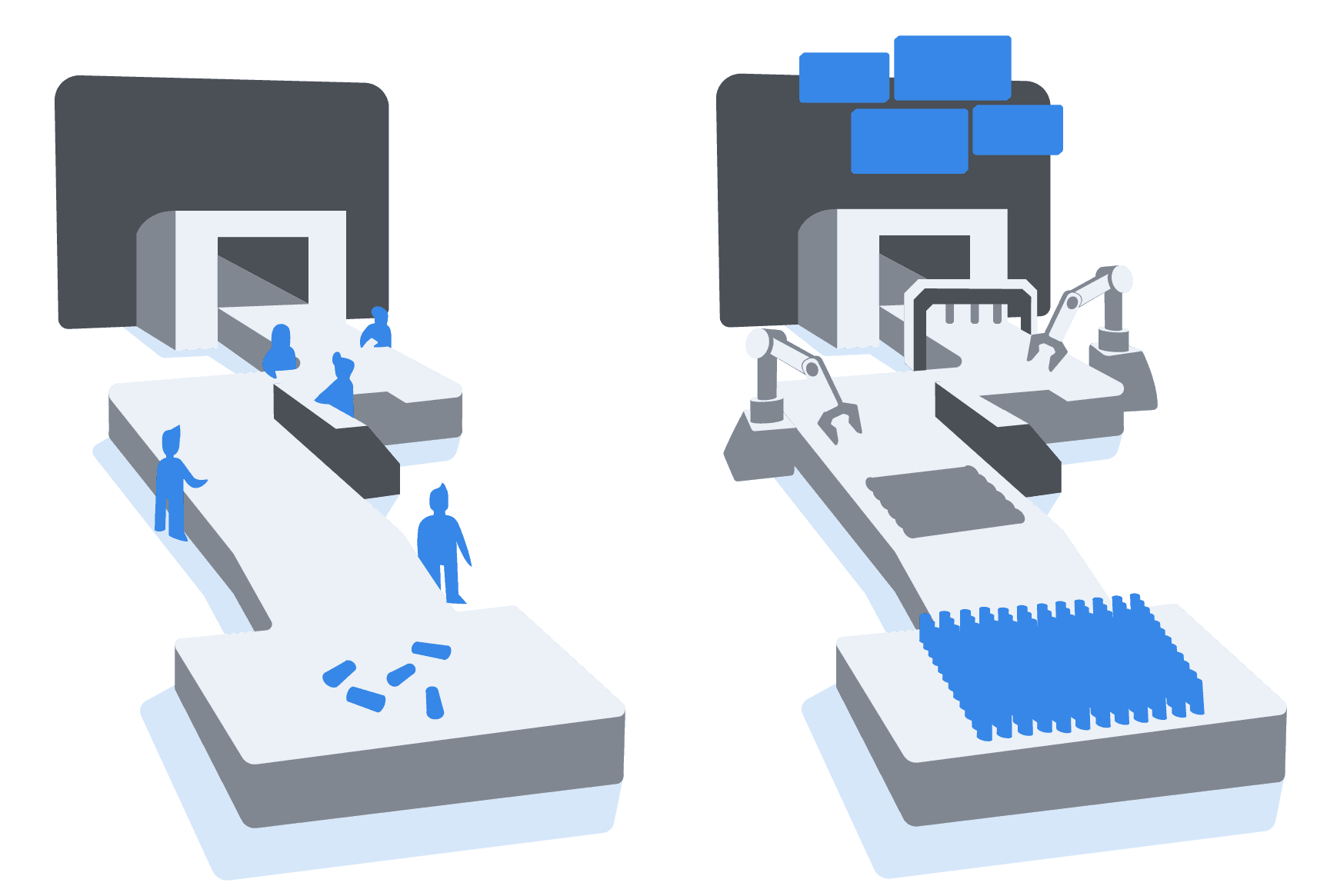
Production Theory II.

Making stuff, part two.

Analyze returns to scale, cost measures, and profit-maximizing output.

01-29.png 

Returns to Scale 

After understanding diminishing returns in the short run, it's crucial to explore returns to scale, which apply in the long run when all inputs can be adjusted. 

Returns to scale examine how output changes when all inputs are increased proportionally. 

If output rises more than inputs, it's called Increasing Returns to Scale; if it increases in equal proportion, it's Constant Returns to Scale; and if it increases by less, it's Decreasing Returns to Scale. This concept is essential for long-term business expansion.

Maria's Efficient Expansion 

Maria decides to expand "Flour Power" by doubling the size of her bakery, hiring more bakers, and adding new ovens. 

After the expansion, she finds that her output more than doubles. 

This happens because the larger space allows for better workflow, reducing time lost to bottlenecks, the bakers can now specialize, and the new ovens bake more efficiently with the larger batch sizes. 

In this example, Maria’s business benefited from increasing returns to scale.

 Understanding Costs: Total, Average, and Marginal 

Understanding the production function leads to analyzing costs, as the inputs used in production come at a price. 

Costs are crucial in setting the optimal level of production. 

The more efficiently a business converts inputs into outputs, the lower its costs per unit. 

Key cost concepts include total cost (the sum of all expenses), average cost (cost per unit), and marginal cost (the cost of producing one additional unit), allowing businesses to evaluate the financial implications of production decisions.

Maria's Cost Analysis 

Maria conducts a detailed cost analysis to understand her bakery's financial dynamics better. 

She calculates her total costs, including fixed costs like rent and equipment, and variable costs such as ingredients and wages. 

By analyzing her average cost, Maria determines the cost per cake or pastry, helping her set prices that cover expenses and generate profit. 

She also examines marginal costs to decide how much additional production will affect her overall costs.

Profit Maximization 

As businesses navigate the challenges of production and costs, their primary objective remains clear: profit maximization—achieving the highest possible revenue while minimizing costs. 

Profit serves as the reward for entrepreneurial risk and effort, driving growth of the business. By focusing on profit maximization, businesses can ensure they generate enough resources to reinvest, expand, and compete. 

To achieve this, they must balance marginal revenue and marginal cost, which is our next topic.

Do you want to learn more?
Download InvestMentor to access the full lesson and explore interactive courses that build your financial knowledge and guide you toward smarter investing decisions.