
Imperfect Competition

Markets dominated by few players.

Explore pricing power and strategies in less-than-perfect markets.

01-18.png

Introduction to Imperfect Competition  

Imperfect competition encompasses market structures where firms face entry barriers, have differentiated products, or possess some pricing power. 

This includes monopolistic competition, oligopoly, and monopoly. 

Unlike perfect competition, imperfect competition reflects the complexities of real-world markets where businesses can influence prices and consumers have preferences. 

Recognizing these market forms is crucial for understanding how businesses achieve and sustain competitive advantages.

Monopoly 

A monopoly is a market dominated by a single firm, often due to unique products or significant entry barriers. 

This gives the firm substantial control over pricing and product availability. 

Monopolies can result from natural advantages, government regulations, or technological superiority. 

While monopolies can lead to higher prices and lower output, they may also benefit from economies of scale and substantial resources for innovation, potentially offering high-quality products or services.

Natural Monopolies and Economies of Scale 

Natural monopolies occur where economies of scale enable a single producer to supply the entire market more efficiently than multiple firms. 

These monopolies can produce at a lower cost, benefiting from their large scale. Examples include utilities and public transportation. 

Governments often regulate natural monopolies to prevent abuse of market power while ensuring that the benefits of economies of scale, such as lower costs and improved efficiency, are passed on to consumers.

 A Monopoly in Marketburg 

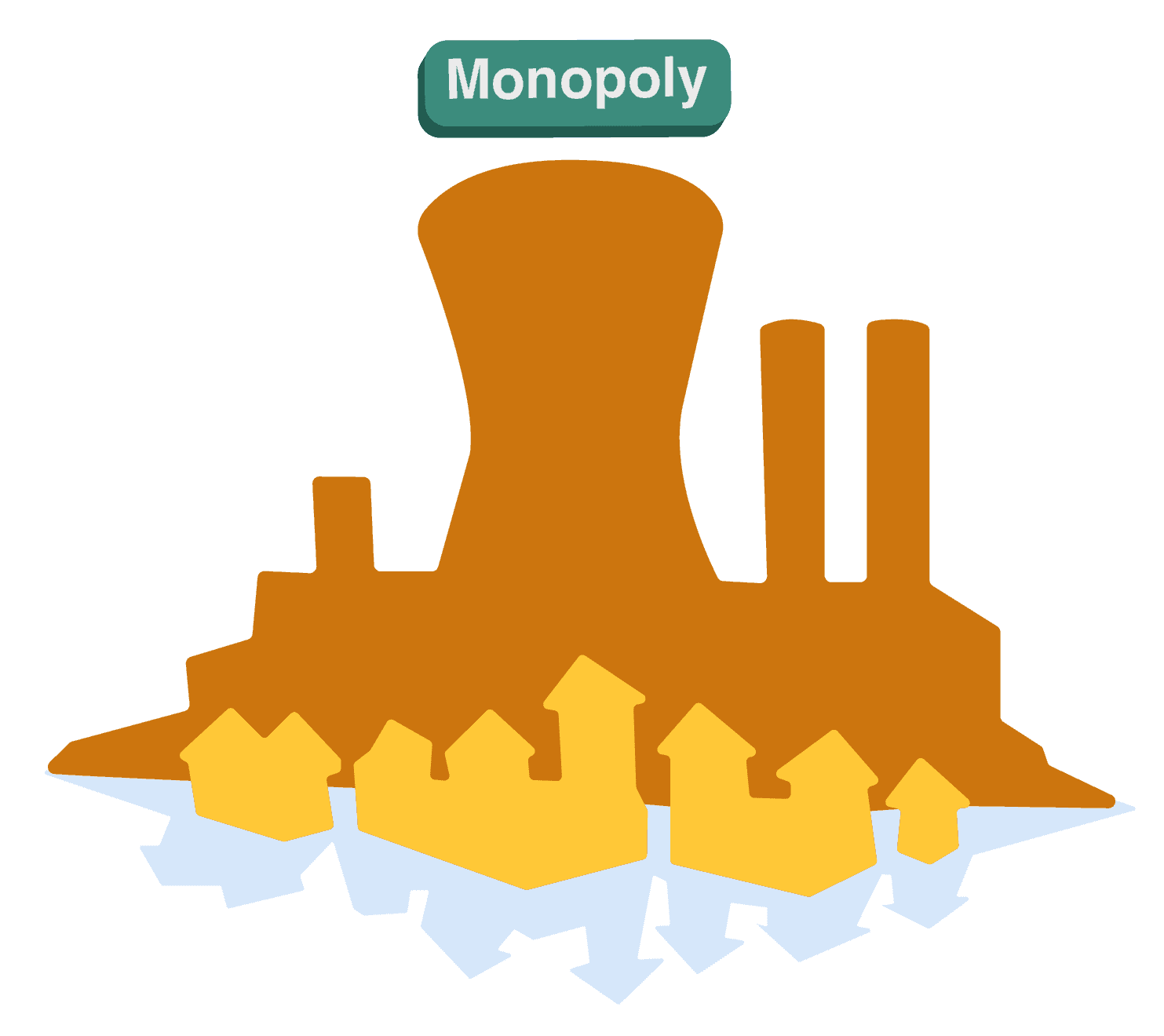
In Marketburg, Powerburg Utilities is the only provider of electricity. 

This company operates as a monopoly due to the high costs of infrastructure and strict regulations that prevent new competitors from entering the market. 

The town relies on Powerburg Utilities for consistent electricity, with the local government ensuring fair pricing and reliable service to protect residents from potential abuses of this market power.

01-19.png

Oligopoly 

Oligopolies are markets where a few large firms hold significant market share. 

They can influence prices and market trends, often leading to a competitive yet cooperative environment among the dominant firms. 

This interdependence means that the actions of one firm can directly impact others, leading to strategic behaviors like price setting, market sharing, and collaborative ventures. 

Oligopolies can lead to higher prices and restricted output but may also drive significant innovation and investment.

Do you want to learn more?
Download InvestMentor to access the full lesson and explore interactive courses that build your financial knowledge and guide you toward smarter investing decisions.