

Private Equity II.

Going private, part two

Learn about value creation, exit strategies, and risks in private equity.

08-04.png

Private Equity Value Creation Strategies 

Private equity firms don’t just invest passively. They transform operations, cut waste, and boost output.

They fuel growth by launching new products, entering fresh markets, or acquiring rivals.

Behind the scenes, they restructure finances, optimize debt, and sharpen the company’s capital strategy.

They tie leadership rewards to results, driving accountability and performance. PE firms typically aim for a sale within a few years, focusing on sustainable value creation over short-term gains.
The Importance of Operational Efficiency in PE 

Operational efficiency means helping a company run smarter, not just cheaper.

Private equity sponsors often start by simplifying supply chains, automating manual tasks, or renegotiating vendor contracts. 

They might reduce excess inventory, shorten delivery times, or upgrade outdated tech systems.

These changes can lower costs, improve speed, and boost output. 

Ultimately, they make the company more attractive for potential buyers, maximizing the returns for the fund.

The PE Firm Restructures ClinixTech

Sarah’s medical software company ClinixTech struggles with delays, rising costs, and client churn. Its private equity backer steps in.

The firm appoints a new advisory board, restructures product development, enforces stricter quality controls, and resets the marketing strategy.

Operational costs drop, reliability improves, and client trust rebounds. A new CEO joins to lead operations, while Sarah focuses on product development. With clearer roles and stronger execution, ClinixTech regains its footing.

08-05 (1).png

Private Equity Exits: IPOs and Other Strategies 

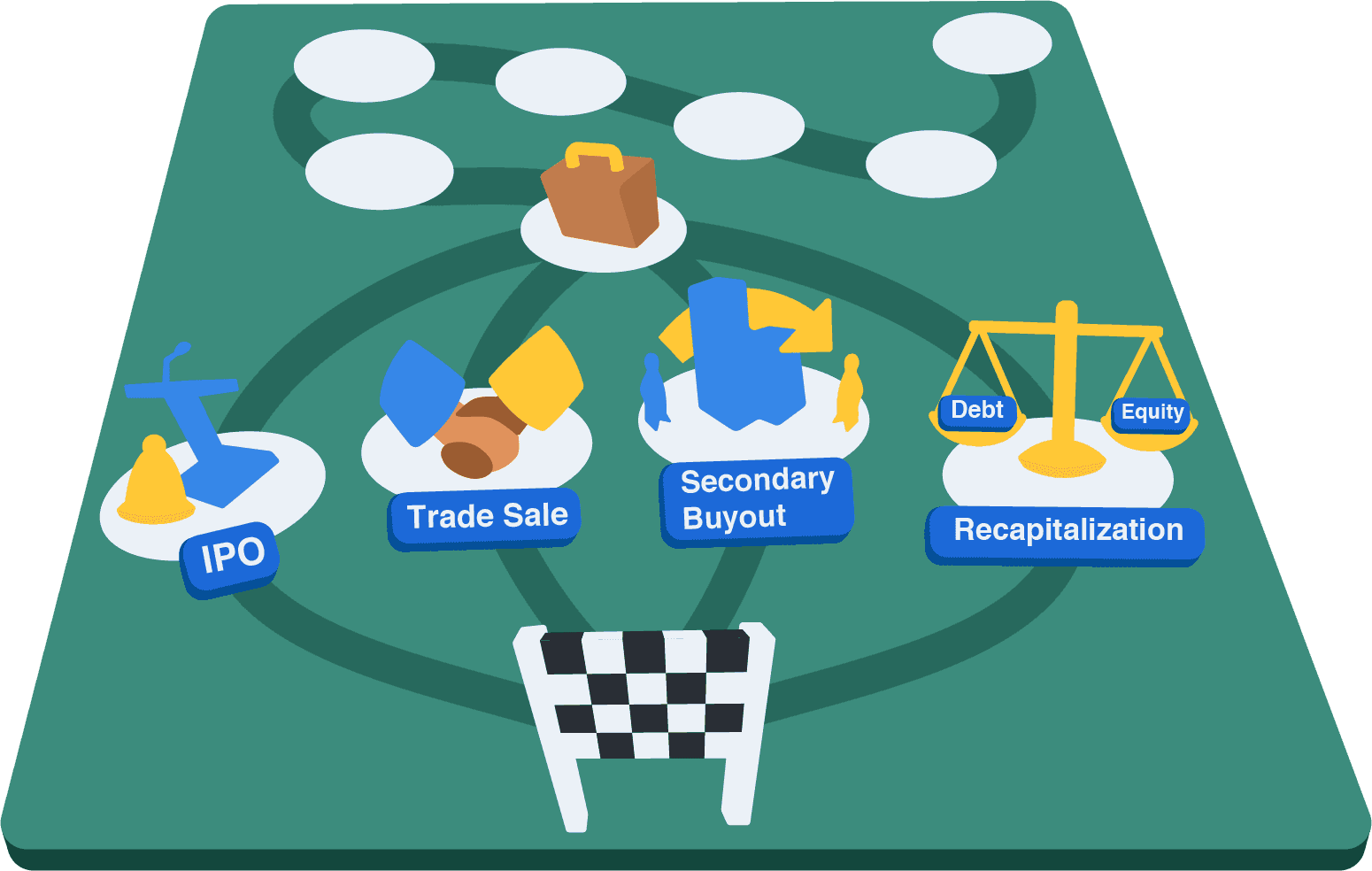
Private equity firms aim to sell their stake after growing its value — usually within 3–7 years. Common exit paths include:

  • IPO: Taking the company public and selling shares on the stock exchange.
  • Strategic sale: Selling to a larger company in the same industry.
  • Secondary buyout: Selling to another PE firm.
  • Recapitalization: Restructuring ownership while keeping some stake.

Each path depends on market conditions, company performance, and buyer interest. The goal: a profitable, well-timed exit.

ClinixTech’s Successful IPO 

After the restructuring and years of steady growth, ClinixTech is ready to go public

Before the IPO, its private equity sponsor audits financials, refines disclosures, selects underwriters, and hires legal counsel. 

Investor interest is strong, and ClinixTech’s shares debut successfully on the stock exchange. The PE firm exits at a significant profit, while founder Sarah remains a major shareholder and continues to lead product as CTO. 

With fresh capital and public backing, ClinixTech enters its next chapter.

Do you want to learn more?
Download InvestMentor to access the full lesson and explore interactive courses that build your financial knowledge and guide you toward smarter investing decisions.