Benchmarking and Pricing Power

Brent, WTI, and beyond 

Learn how commodity benchmarks shape global prices and why they matter for producers, traders, and investors.

ChatGPT Image Dec 5, 2025, 10_53_33 AM.png

What Is a Commodity Benchmark? 

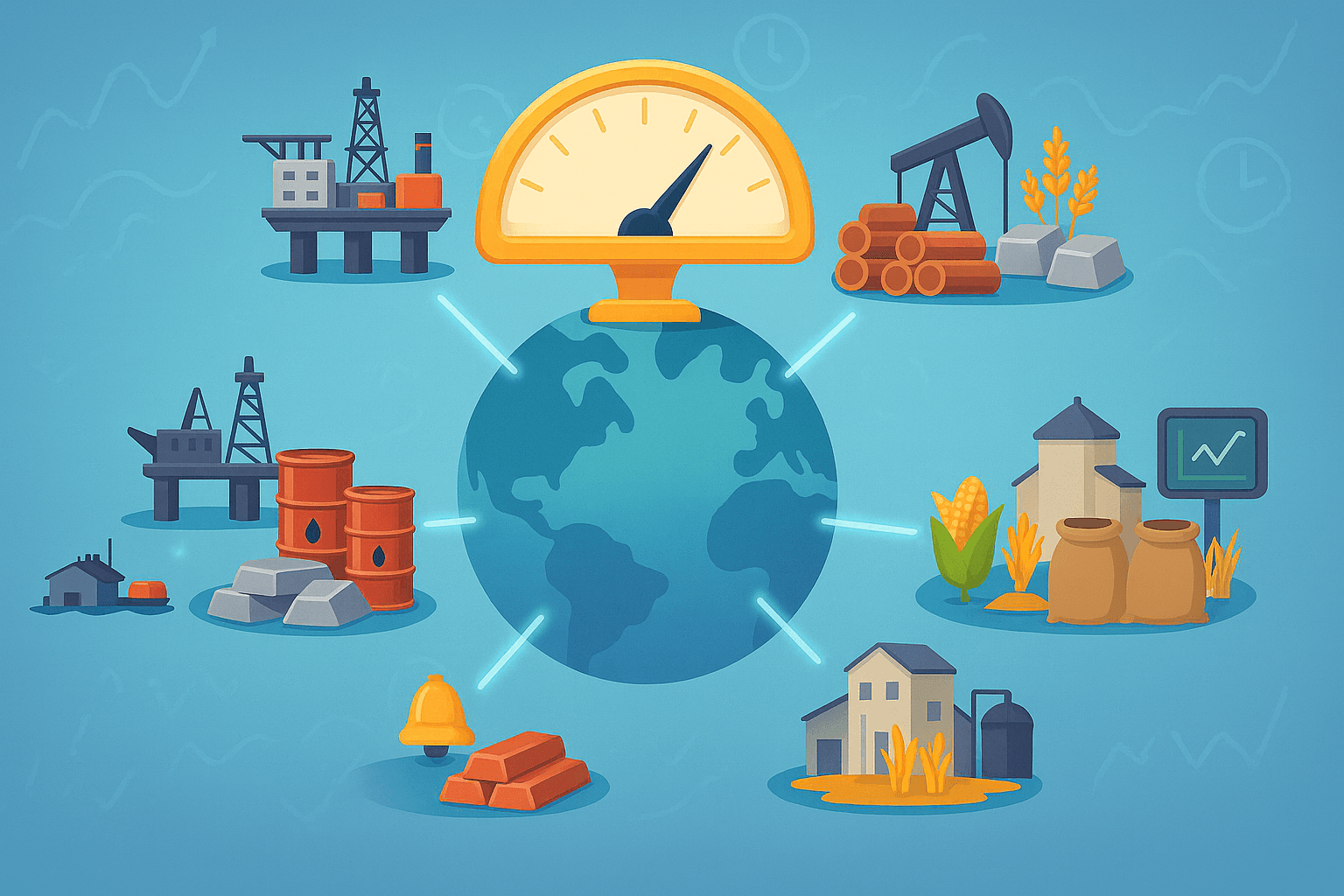
A commodity benchmark is like a price anchor, a reference used to value and trade raw materials worldwide. 

It reflects market consensus on quality, location, and delivery terms. 

Think Brent crude or WTI for oil, or the London Metal Exchange (LME) for copper. For grains, it’s the Chicago Board of Trade (CBOE). 

Benchmarks help standardize contracts, guide futures pricing, and keep global trade flowing. 

Without them, pricing would be chaotic, especially across borders and time zones.

Oil’s Leading Benchmarks 

Brent and West Texas Intermediate (WTI) are the leading oil benchmarks. 

Brent crude is extracted from the North Sea and used to price most of the world’s oil. 

It’s slightly heavier and more sulfurous than WTI, making it a bit trickier to refine. Priced in London, Brent reflects global shipping routes. 

WTI is lighter and sweeter (=less sulfur), and priced in Cushing, Oklahoma. WTI is sensitive to US pipelines, storage and demand.  

Brent usually trades at premium due to its global reach and strategic location.

ChatGPT Image Dec 5, 2025, 11_07_48 AM.png

Brent vs WTI in Ostara Crisis 

The oil markets react fast to the coup in Ostara. 

A week after the initial shock, Brent crude is still trading nearly 50% higher, driven by fears of disrupted exports and shipping delays.  

WTI climbs too, tracking Brent closely, but its rise is somewhat softened by ample US inventories. 

Kenzo monitors both. Brent’s spike signals higher shipping costs, directly affecting VoltMatter’s global logistics. 

WTI helps forecast North American fuel trends and regional pricing shifts.

LME and CBOT: Metals and Grains 

The London Metal Exchange (LME) sets global prices for metals like copper, aluminium, and nickel. 

It’s where futures contracts are traded and physical delivery is settled.  

The Chicago Board of Trade (CBOT), one of the oldest futures exchanges, benchmarks grains like wheat, corn, and soybeans. Farmers, producers, and investors rely on CBOT prices to plan harvests, hedge risks, and manage costs.  

These benchmarks reflect real-world supply chains, from mines and smelters to farms and silos.

How Benchmarks Shape Contracts 

Most commodity contracts are priced relative to a benchmark

A copper deal might be “LME price plus $200/ton” to reflect delivery terms or purity.  

Benchmarks reduce disputes, improve transparency, and anchor pricing across regions. 

They help producers and buyers plan budgets, hedge risks, and compare offers.  

Kenzo’s team relies on benchmark-linked contracts to stabilize costs in volatile markets — especially for semiconductors, battery inputs, and rare earth metals.

Do you want to learn more?
Download InvestMentor to access the full lesson and explore interactive courses that build your financial knowledge and guide you toward smarter investing decisions.