
Emergence of Economic Behavior

Why cavemen started trading.

Discover how scarcity and specialization spark early trade.

FoE-01.png

Introduction to Economic Origins 

Imagine a small, isolated group of humans starting from scratch. 

As they work to meet their needs, we’ll explore how economic principles naturally emerge.

Without any centralized authority, these early economic activities are shaped by the interactions of individuals seeking to improve their lives through trade and cooperation. 

This thought experiment will help us understand fundamental concepts like scarcity, specialization, and trade, as well as the decisions that shape economies.

Basic Needs 

In our thought experiment, the group’s first concern is survival. 

They instinctively seek essential needs like food, water, and shelter. 

Meeting these basic needs drives their initial efforts. 

This focus on essential resources introduces us to the idea that economics begins with addressing basic human needs, the foundation of all economic activity

As these individuals strive to meet their needs, they begin to engage in simple exchanges, trading goods and services to better satisfy their basic requirements.

The Drive to Satisfy Needs 

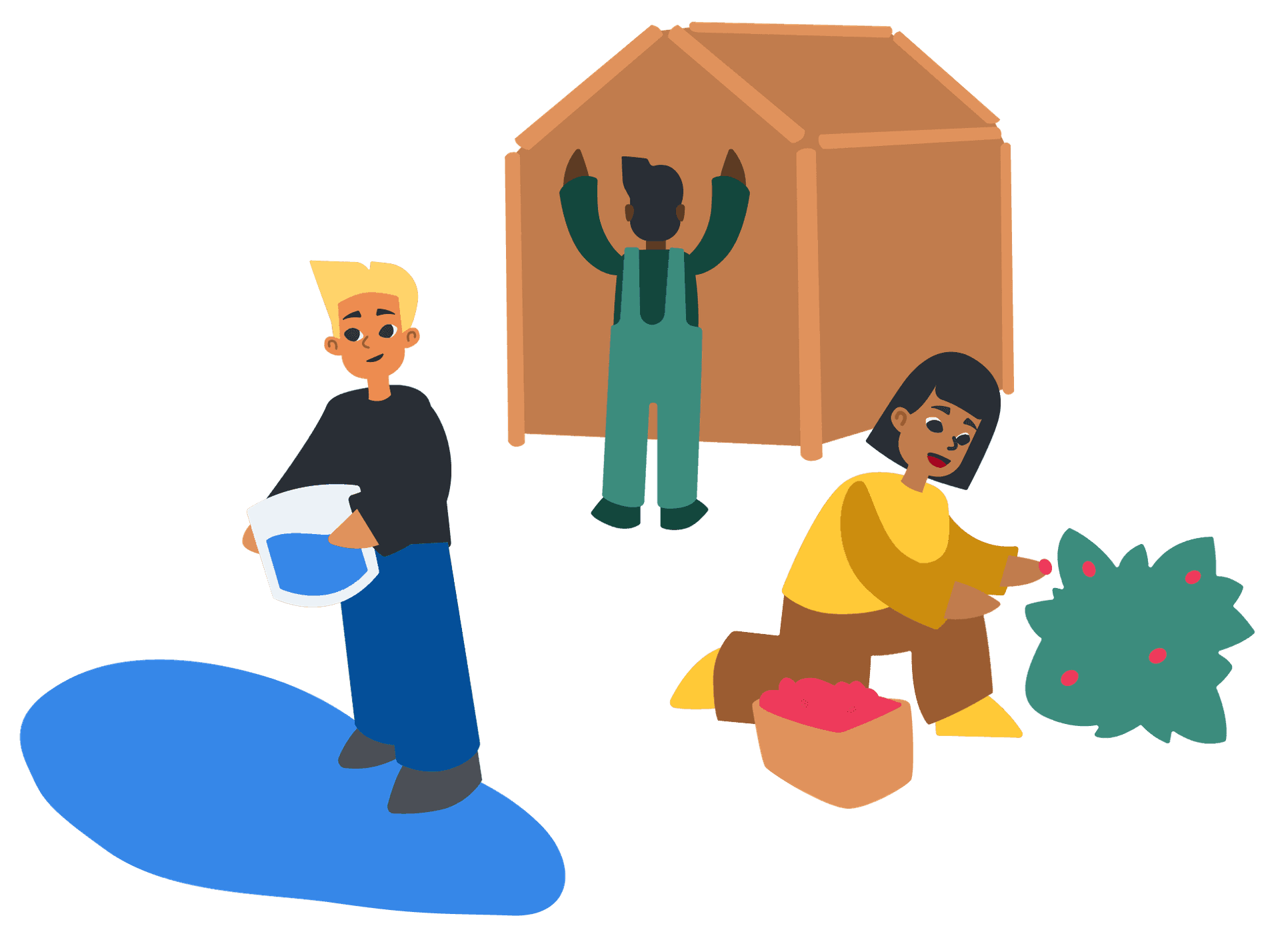
With basic needs identified, the group turns to satisfying them. Gathering food, finding water, and building shelter become their primary tasks. 

Over time, individuals realize that they can be more effective by focusing on what they do best. 

This leads to the first instances of specialization, where some focus on hunting while others concentrate on building shelters. 

This specialization not only makes their efforts more efficient but also sets the stage for early forms of trade.

FoE-02.png

Understanding Scarcity and Exchange 

Scarcity arises when resources are limited, but needs are unlimited. 

The group soon realizes they don’t have enough time, energy, or resources to meet all needs at once. 

To manage these limitations, individuals begin to exchange goods and services, trading what they have in abundance for what they lack. 

This exchange process helps them allocate resources more effectively.

Understanding scarcity helps us see why economics exists: to study how we manage limited resources to satisfy as many needs as possible.

Allocating Scarce Resources 

Facing scarcity, the group must decide how to allocate their resources

Should they focus on gathering food or building shelter? 

These choices involve trade-offs, as doing one thing means giving up another. 

Through their interactions, the group learns to prioritize tasks based on their immediate and long-term benefits, gradually developing a system of exchange that reflects these priorities. 

This allocation process involves careful consideration of what’s most important at any given time.

Do you want to learn more?
Download InvestMentor to access the full lesson and explore interactive courses that build your financial knowledge and guide you toward smarter investing decisions.