
From Barter to Markets

When trading goats got tricky.

Learn how money evolves to simplify exchange and value.

FBtM-01.png

Introduction 

Now that we’ve explored the basics of economic decision-making, we’ll move on to how these simple principles evolve into more complex economic systems

In subsequent lessons, we’ll examine how the limitations of barter lead to the creation of money and how this innovation transforms the economy, enabling more sophisticated trade and markets. 

In the next lesson, we’ll see how the group develops money and markets and how these innovations transform their economy from basic to advanced systems.
The Limitations of Barter 

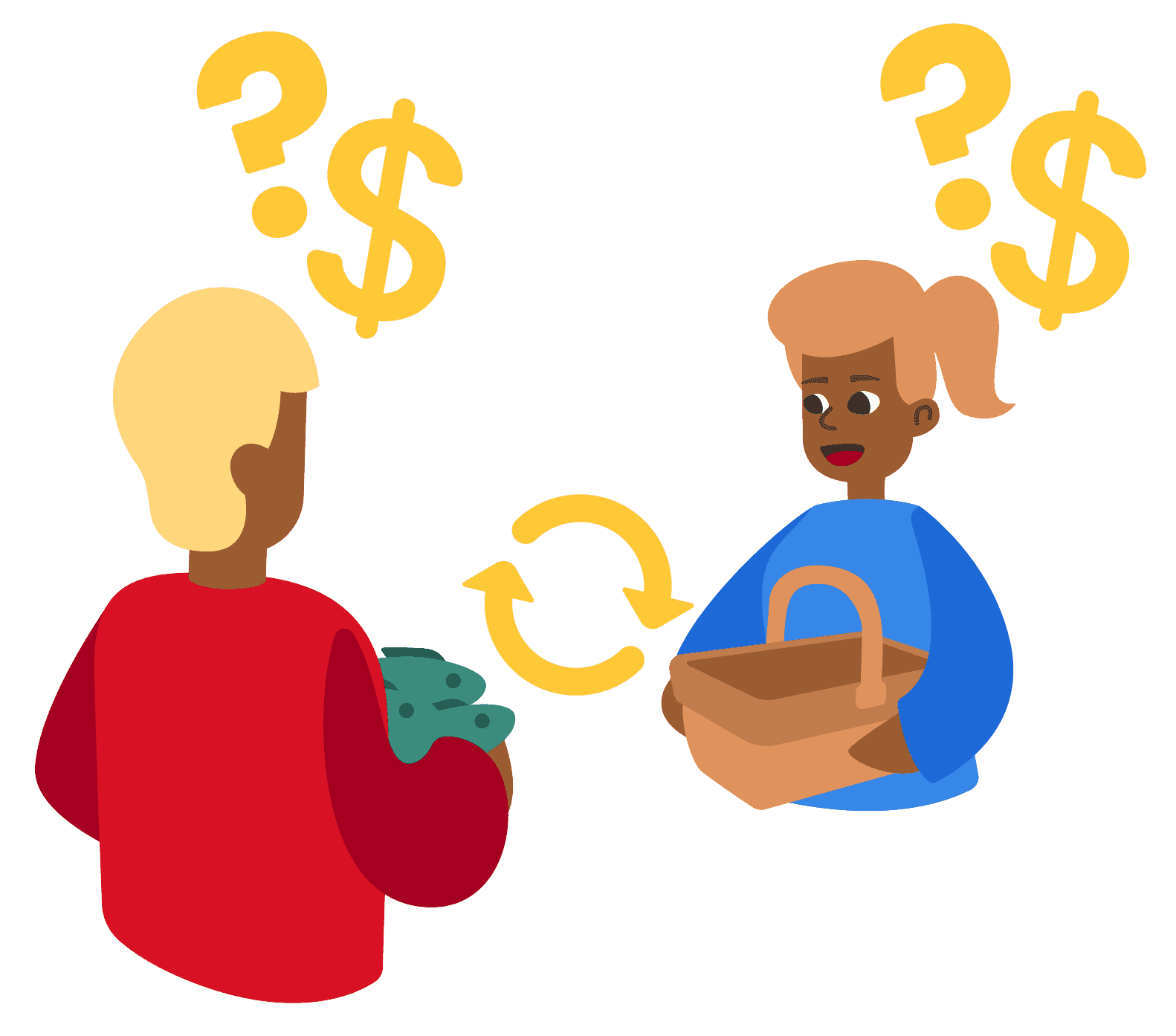
As the group’s trade network expands, the limitations of bartering become increasingly apparent. 

Barter relies on the "double-coincidence of wants", meaning both parties must have what the other desires at the same time. 

As we saw earlier, to overcome this challenge, some members of the group take on the role of merchants

Over time, these merchants start using items of standardized value, like beads or shaped stones, as collateral to secure promises, which eventually evolve into money.

The Evolution of Money 

To overcome barter's limitations, the group adopts items like beads, shells, and stones as a standardized medium of exchange

These objects are durable, portable, and widely accepted, making them ideal for trade. 

As money, they simplify transactions, allow for wealth storage, and enable long-distance trade. 

This shift not only increases economic efficiency but also paves the way for more complex economic activities, eventually leading to the creation of minted coins.

Money as a Medium of Exchange 

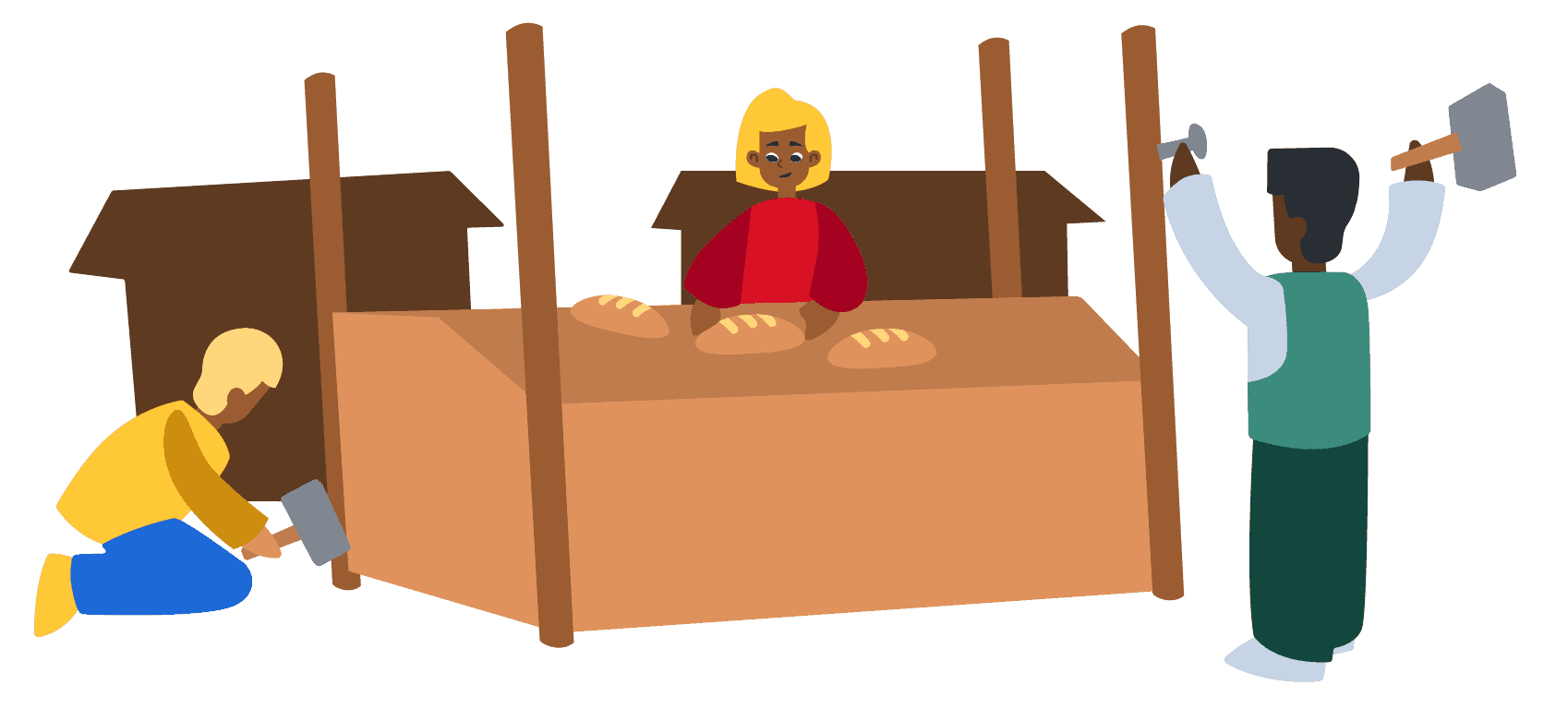
Money revolutionizes trade by serving as a universally accepted medium of exchange. 

With standardized money, such as bits of gold or silver, people can now compare the value of different goods and services easily, making trade more efficient and reliable. 

Unlike barter, where each trade is unique, money allows for standardized transactions. 

This development enables the group to trade more frequently and efficiently, laying the foundation for a more complex economy.

FBtM-02.png

The Concept of Value in Exchange 

With the introduction of money, the group begins to assign value to goods and services. 

This standardized value system, based on money, allows the group to easily compare and exchange goods, leading to a more organized and efficient market. 

Value is influenced by scarcity, utility (how useful an item is), and the demand for it. 

Understanding how value is determined helps the group make informed decisions in their trades, ensuring they receive fair compensation for their goods and services.

Do you want to learn more?
Download InvestMentor to access the full lesson and explore interactive courses that build your financial knowledge and guide you toward smarter investing decisions.