
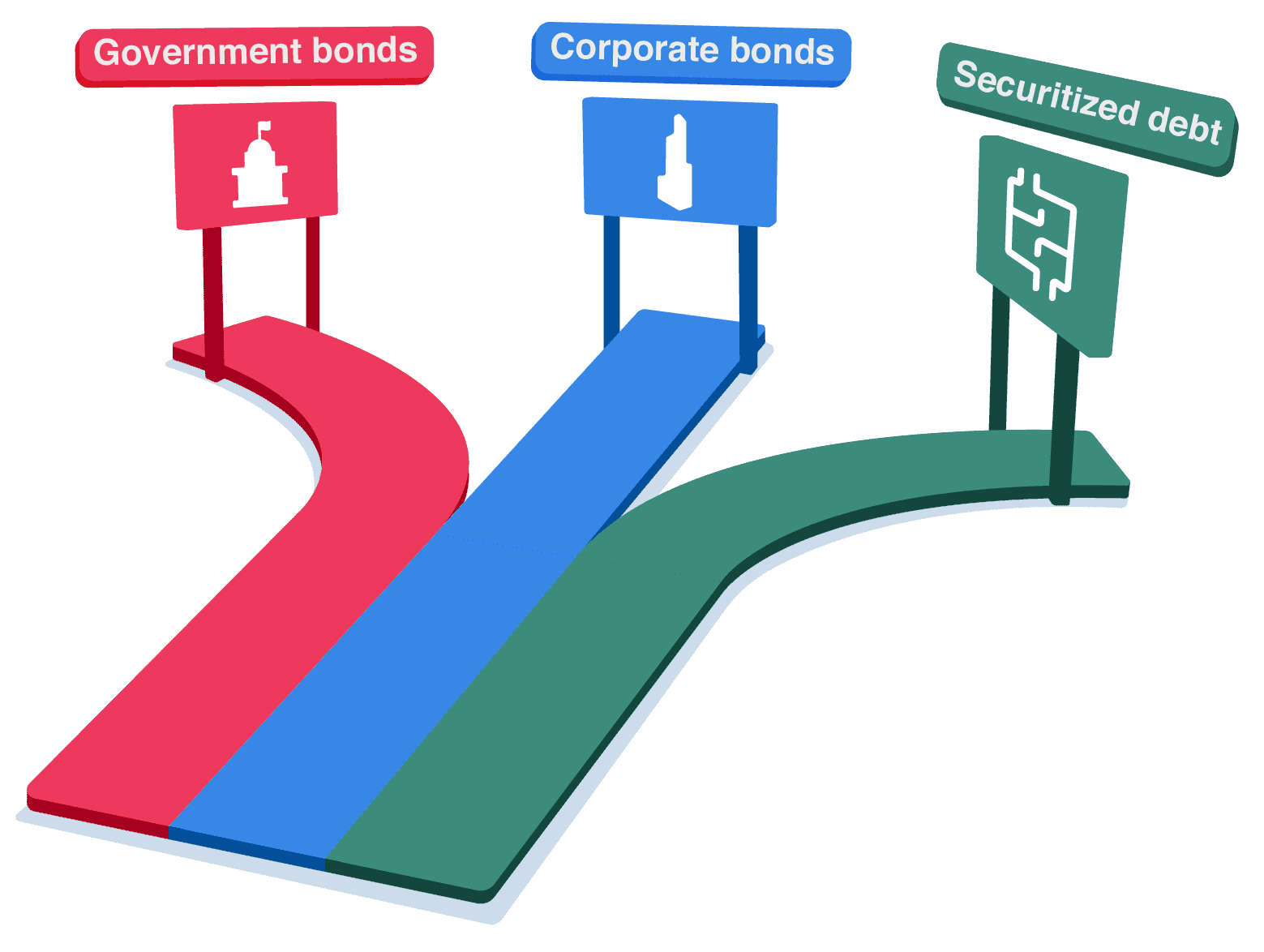
Corporate Bonds

Lending cash to companies.

Assess corporate bond types, ratings, and structures

04-06.png

Introduction to Corporate Bonds 

Corporate bonds are issued by companies to raise funds for growth, offering investors income through interest payments. 

These bonds generally provide higher returns than government bonds, with varying risk levels based on the company’s financial health. 

Carlos, a small business owner, is exploring ways to diversify his investments with bonds that balance income and stability. 

In this lesson, we’ll follow Carlos as he learns about corporate bond types to meet his investment goals.
Corporate Bonds Overview 

When investors purchase corporate bonds, they lend money to the issuing company in exchange for regular interest payments and the return of principal at maturity

Corporate bonds vary widely in terms of maturity, interest rates, and credit quality. 

They offer a spectrum of yields and risks, from conservative investment-grade bonds to higher-yielding, higher-risk options. 

Assessing these factors is essential for investors seeking to balance income generation with risk management.

Credit Ratings Explained 

Credit ratings are evaluations provided by agencies like Standard & Poor's (S&P), Moody's, and Fitch, reflecting a company's ability to meet its debt obligations. 

Ratings range from high-grade (low default risk) to speculative-grade (higher risk of default). 

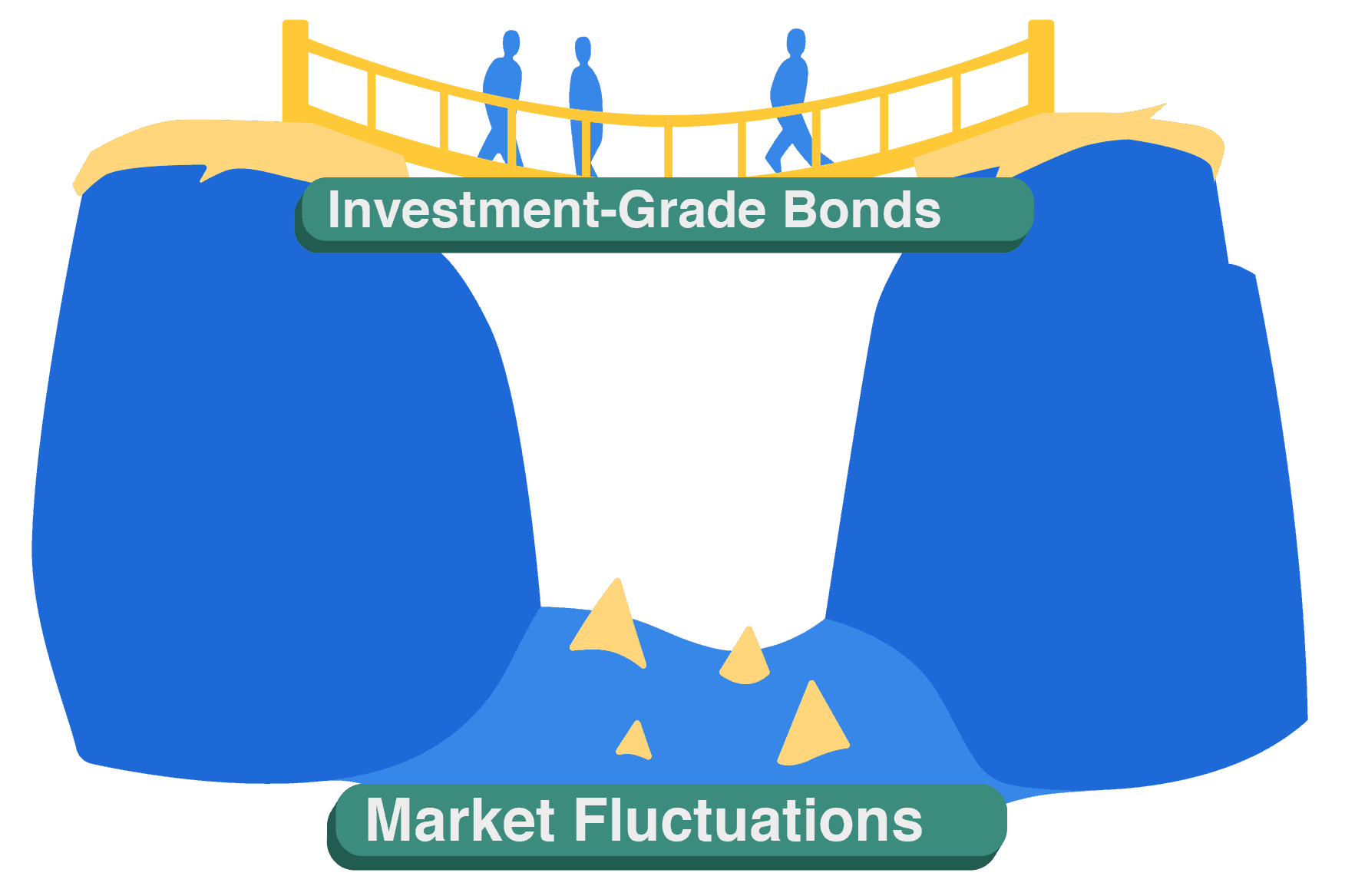
Investment-grade bonds have ratings of BBB- (S&P) or Baa3 (Moody's) and above, indicating strong creditworthiness. 

High-yield bonds are rated below these thresholds. 

Understanding credit ratings help investors gauge default risk and make informed decisions when selecting corporate bonds.

04-07.png

Investment-Grade Corporate Bonds 

Investment-grade bonds are issued by financially stable companies with strong credit ratings (BBB or higher). 

These bonds are considered lower risk compared to high-yield bonds, offering steady income with reduced default risk. 

Because they are backed by companies with good credit, investment-grade bonds appeal to investors seeking a balanced approach of reliable income and moderate safety. 

These bonds typically offer lower yields than high-yield bonds but are considered more secure.

Carlos Invests in Investment-Grade Bonds 

Seeking steady income with lower risk, Carlos decides to purchase investment-grade corporate bonds. 

After researching, he selects bonds issued by TechSolutions Inc., a well-established company rated A by Standard & Poor's. 

The bonds have a 5-year maturity, a face value of $1,000 per bond, and offer a 3% annual coupon rate, paid semi-annually. 

Carlos buys 100 bonds, investing the full $100,000. This investment provides him with $3,000 in annual interest income, or $1,500 every six months.

Do you want to learn more?
Download InvestMentor to access the full lesson and explore interactive courses that build your financial knowledge and guide you toward smarter investing decisions.