
Measuring & Managing Interest Rate Risk

Surviving interest rate swings.

Gauge bond sensitivity and cut exposure.

04-11.png

Introduction to Interest Rate Risk 

Interest rate risk is the potential for bond values to decline when interest rates rise, impacting returns for investors who hold a range of bonds like Melvin from the previous lesson. 

As rates climb, bond prices fall, affecting Melvin’s portfolio value. 

This lesson explores how factors like maturity and coupon rates impact bond sensitivity to rate changes and introduces ways to measure and manage interest rate risk, enabling investors to maintain stability even in volatile markets.
Factors Affecting Interest Rate Sensitivity 

A bond's sensitivity to interest rate changes depends on several factors. 

Longer-maturity bonds are more sensitive because their cash flows extend further into the future, increasing exposure to rate fluctuations. 

Bonds with lower coupon rates are more affected since a greater portion of their value comes from the principal repayment at maturity. 

Additionally, bonds with lower yields have higher price volatility. 

Grasping these factors help investors anticipate potential risks.

Understanding Duration 

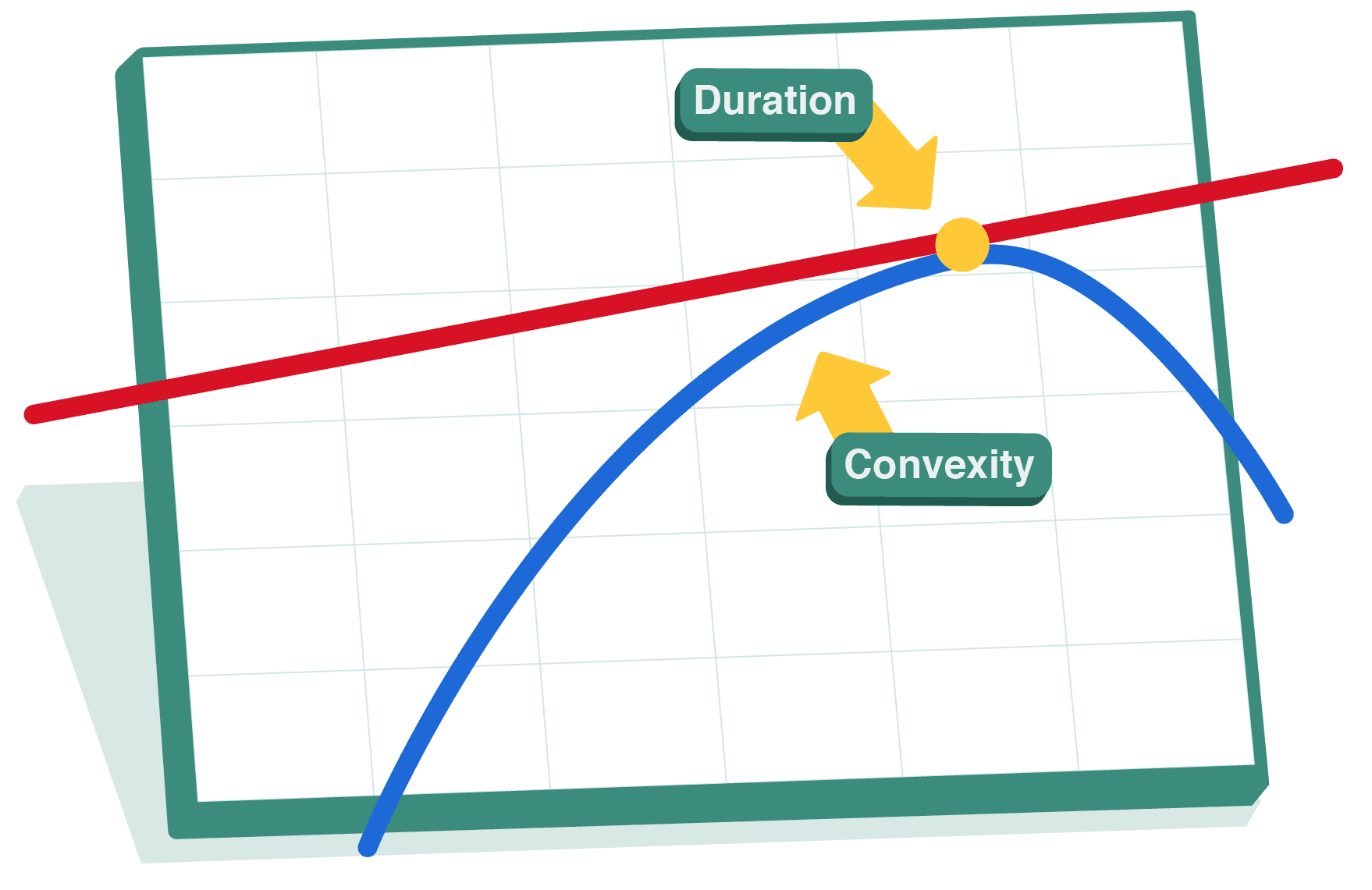
Duration is an estimate of a bond's sensitivity to interest rate fluctuations, calculated as the weighted average time until all cash flows (coupons and principal) are received. 

For example, the price of a bond with an 8-year duration would likely drop by 8% if rates rise by 1%. 

This measure helps investors gauge a bond’s risk level, as bonds with longer durations are more vulnerable to price drops when interest rates increase, informing strategies to manage interest rate exposure.

Melvin Explores Shorter-Duration Bonds 

Seeking to reduce interest rate risk, Melvin decides to research bonds with shorter durations. 

He discovers a 4-year corporate bond from SecureCo offering a 4.5% annual coupon. 

Calculating its duration, he finds it's approximately 3.7 years. 

Recognizing that shorter-duration bonds are less sensitive to interest rate changes, Melvin invests $20,000 in SecureCo's bonds. 

This shift lowers his portfolio's overall duration, helping to mitigate potential losses from future rate hikes.

04-25.png

Convexity Explained 

Convexity refines the estimate provided by duration, accounting for the curvature in the relationship between bond prices and interest rates.

It measures how the duration of a bond changes as interest rates change. 

Bonds with higher convexity experience less price volatility from large interest rate movements compared to those with lower convexity. 

Including convexity in analysis provides a more accurate prediction of price changes for significant rate shifts.

Do you want to learn more?
Download InvestMentor to access the full lesson and explore interactive courses that build your financial knowledge and guide you toward smarter investing decisions.