
IBKR InvestMentor
HomeNewsCoursesSnapshotsVideosHelp
Privacy & TermsSocial Media DisclosureHelpCookie settings

2026 Interactive Academy. All rights reserved.
IBKR InvestMentor is owned by Interactive Academy LLC, an affiliate of Interactive Brokers LLC. All content provided by IBKR InvestMentor is for informational and educational purposes only and should not be interpreted as implying any sponsorship, partnership, endorsement, recommendation, or approval by Interactive Brokers LLC or its affiliates.
  1. Courses
  2. Microeconomics
  3. Perfect Competition

Perfect Competition

Introduction to Perfect Competition

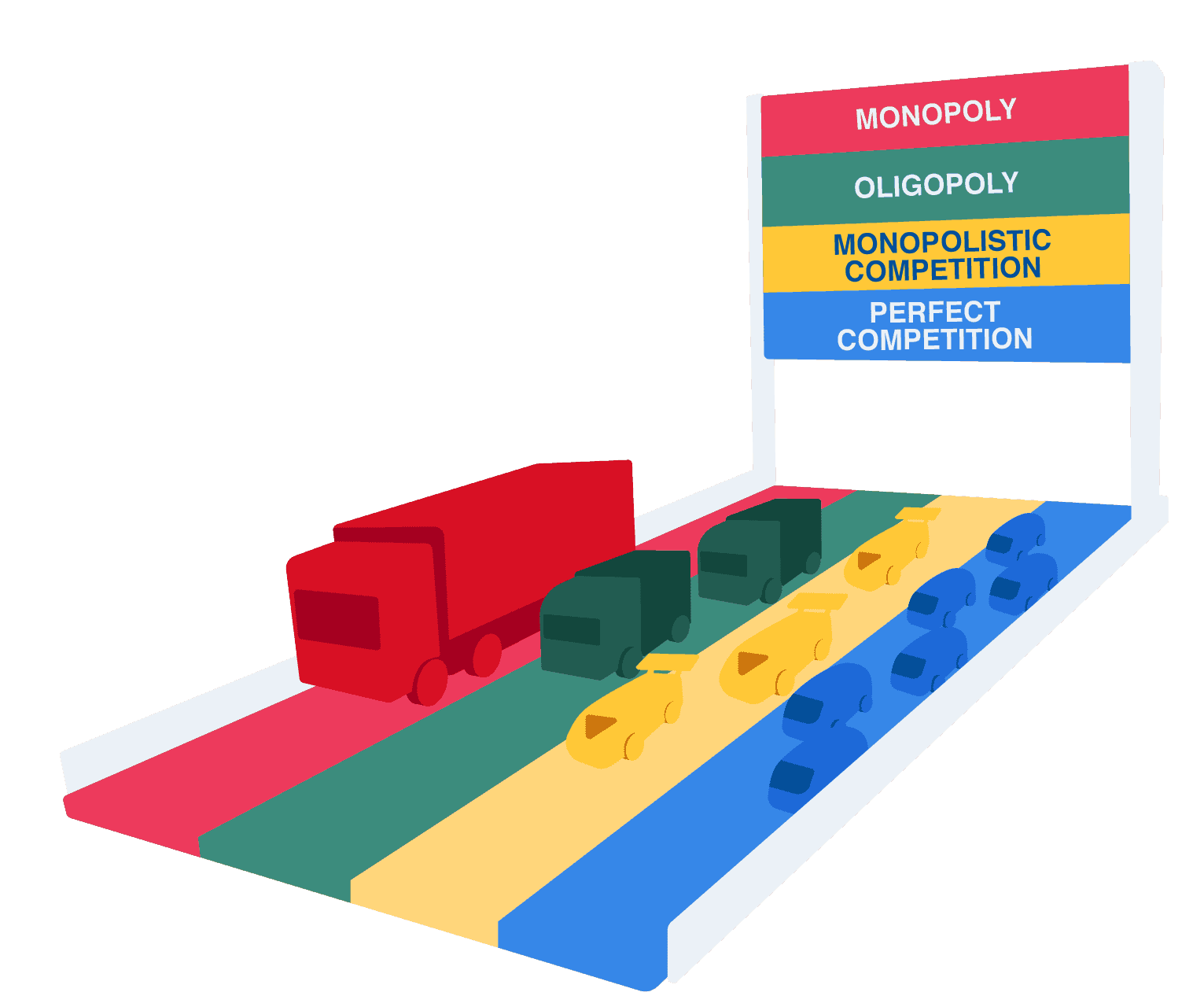
Businesses compete in very different kinds of markets. Some face hundreds of rivals, while others have the field almost to themselves.

Perfect competition describes one rare extreme: a market with many buyers and sellers, identical products, and few barriers stopping new businesses from entering or existing ones from leaving.

With so much competition, individual sellers have virtually no power over market prices. Supply and demand set the prices, which then help businesses decide what’s worth producing. As a result, labor, materials, and money tend to flow toward what consumers value most.

Adam Tries to Stand Out

Adam knows that selling the same ice cream as everyone else would leave Cool Scoops competing largely on price. If dozens of stalls offered identical scoops, customers would have little reason to choose his.

So, he has chosen a different route. Adam makes artisan ice cream, using local milk, unusual flavors, and small batches to set Cool Scoops apart.

That product differentiation gives customers reasons to prefer his ice cream over a rival’s. It also gives Adam more freedom to set his own prices, moving Cool Scoops away from the world of perfect competition.

Competition Keeps Firms on Their Toes

In a perfectly competitive market, there’s little room for waste. With lots of businesses selling the same product at the same market price, firms can’t charge more to cover higher costs. Because the products are homogenous — practically identical and easy to replace — sellers struggle to stand out.

To stay profitable, firms have to find ways to produce efficiently and keep costs under control. Those that spend more than their rivals struggle to survive.

That pressure can benefit consumers. Efficient producers can supply goods at lower cost, while competition prevents individual firms from using market power to push prices higher.

The Artisan Ice-Cream Boom

Cool Scoops has been thriving. But as Adam’s ice-cream cones and long queues go viral on social media, other entrepreneurs notice. Suddenly, four new artisan ice-cream carts pop up around the park, some even blatantly copying his flavors.

Now, Adam has plenty of rivals. It’s not perfect competition as he can still leverage his experience and differentiate in quality. But now customers can choose between five carts selling similar premium scoops, putting pressure on everyone to keep prices competitive.

Adam can’t afford to waste milk, overproduce unpopular flavors, or let costs creep up. The more crowded the market becomes, the more efficiently Cool Scoops has to operate to stay profitable.


Good News for Ice-Cream Lovers

The arrival of four new artisan carts may be a headache for Adam, but it’s good news for parkgoers. With five businesses fighting for their attention, customers can vote with their wallets.

If one cart raises prices too much or lets quality slip, people can simply buy their scoop elsewhere. That puts pressure on every seller to offer good quality at a fair price point.

Competition therefore gives consumers more power: businesses have to work harder to win their customers and keep them coming back.

Do you want to learn more?
Download IBKR InvestMentor to access the full lesson and explore interactive courses that build your financial knowledge and guide you toward smarter investing decisions.
Log in to access the full lesson
or