
Option Trading Strategies II.

Level up your options trades.

Learn advanced spreads and hedging techniques for options.

09-05.png

Bull Call Spread Strategy

Imagine you believe a stock’s price will rise, but only slightly. Instead of buying one expensive option, you might try a strategy known as a bull call spread. 

This means you can purchase one call option at a lower strike price and sell another at a higher strike price, both with the same expiration date. 

Your maximum profit is the difference between the strike prices minus the net premium paid, while your maximum loss is limited to the net premium. 

Also, remember each leg may incur its own commission fee.
Delilah Tries a Bull Call Spread

Expecting TechGrowth Inc.'s stock, currently at $50 per share, to rise moderately, Delilah buys a call option with a $50 strike price for a $400 premium and sells a call option with a $55 strike price for a $150 premium, both expiring in three months. 

Her net premium paid is $250 ($400 - $150). 

If the stock rises to $55 or above, her maximum profit is ($55 - $50) × 100 shares - $250 net premium = $250. 

If the stock remains below $50, she loses the $250 net premium paid.

Delilah Executes a Bear Put Spread

Anticipating a decline in MarketLeaders Corp.'s stock, currently at $80 per share, Delilah buys a put option with an $80 strike price for a $500 premium and sells a put option with a $75 strike price for a $200 premium, both expiring in two months. 

Her net premium paid is $300 ($500 - $200). 

If the stock falls to $75 or below, her maximum profit is ($80 - $75) × 100 shares - $300 net premium = $200. 

If the stock remains above $80, she loses the $300 net premium.

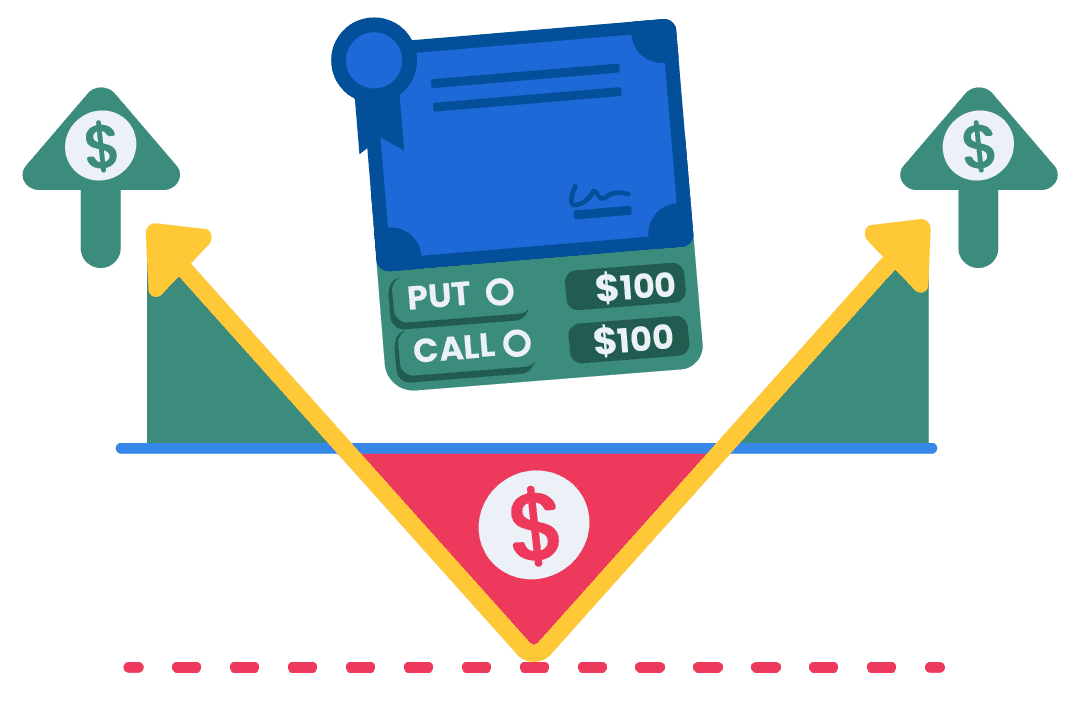
Long Straddle Strategy

A long straddle involves buying both a call option and a put option with the same strike price and expiration date. 

This strategy profits from significant price movements in either direction. 

The maximum loss is limited to the total premiums paid. 

Profit potential is unlimited on the upside and substantial on the downside (limited by the asset price falling to zero). 

This strategy is appropriate when expecting high volatility but uncertain about the direction of the price movement.

18-03.png

Delilah Uses a Long Straddle

Expecting a major announcement from InnovateTech Ltd., currently trading at $100 per share, Delilah buys a call option and a put option, both with a $100 strike price and expiring in one month, paying $400 for the call and $350 for the put, totaling $750. 

If the stock moves to $110, her call option is worth ($110 - $100) × 100 shares = $1,000, while the put expires worthless, netting a profit of $1,000 - $750 = $250. 

If the stock drops to $90, the put option gains value similarly.

Do you want to learn more?
Download InvestMentor to access the full lesson and explore interactive courses that build your financial knowledge and guide you toward smarter investing decisions.