
Fiscal Policy

Government spending and taxation impacts.

Steer growth, inflation, and jobs via government spending and taxes.

01-36.png 

Introduction to Fiscal Policy 

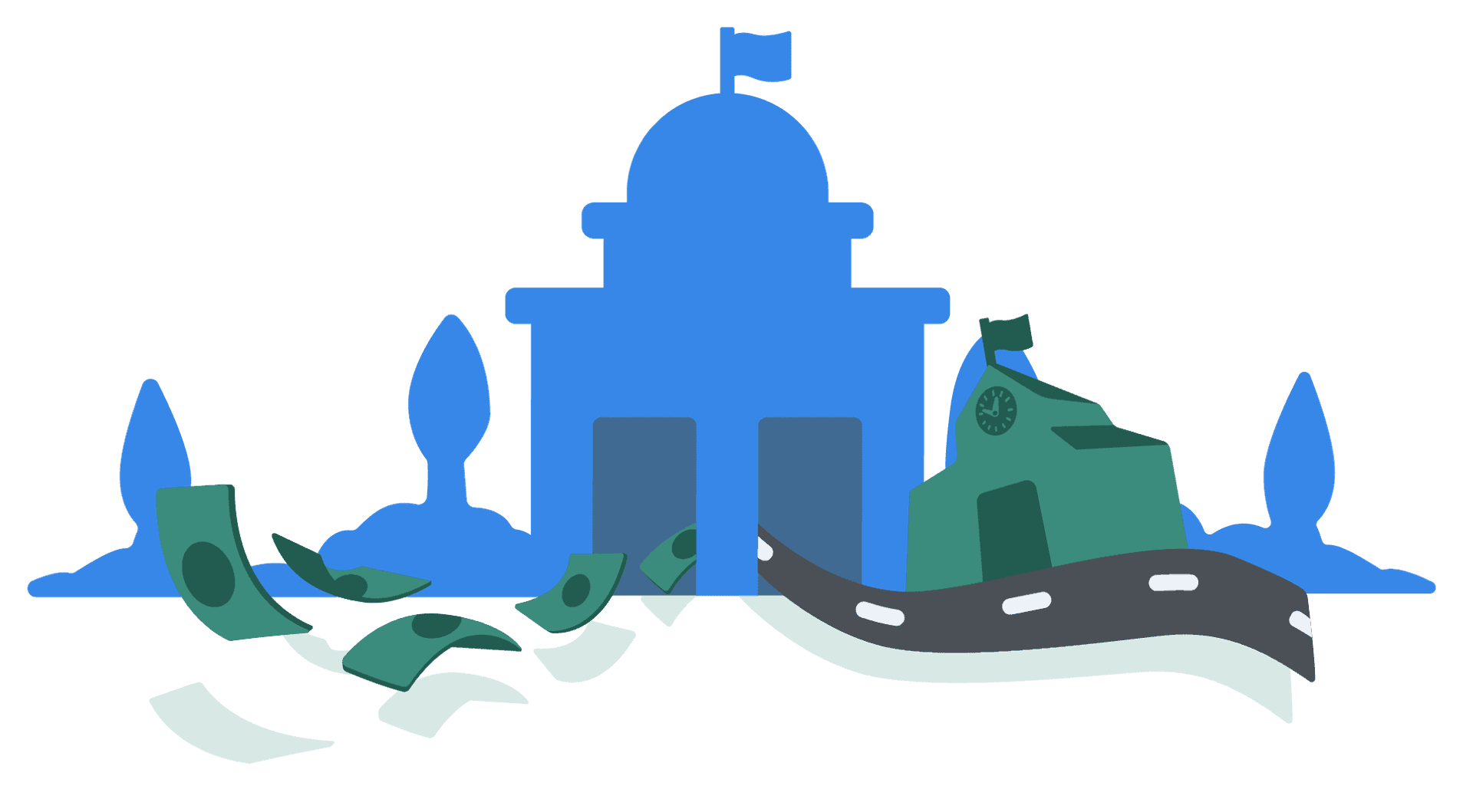
Fiscal policy is the government’s use of spending and taxation to influence the overall economy. 

By adjusting its expenditure on public services and infrastructure or altering tax rates, a government can directly impact aggregate demand, which determines an economy's total output. 

Fiscal policy aims to foster economic growth, reduce unemployment, and maintain stability during economic fluctuations. 

We’ll examine these concepts through the story of Macronia, a freshly independent state.

 Fiscal vs. Monetary Policy 

First, let’s explain two terms that are often mixed up. 

Fiscal policy and monetary policy are both tools used to manage the economy, but they work in different ways. 

Fiscal policy is controlled by the government and involves decisions about how much to spend and how much to collect in taxes. 

Monetary policy is managed by the Federal Reserve, and involves changing interest rates, adjusting the money supply, and setting rules for banks to help control inflation and keep prices stable over time.

Goals of Fiscal Policy 

The primary goals of fiscal policy are to regulate economic activity, encourage growth, manage business cycles, reduce unemployment, and control inflation. 

Expansionary fiscal policy involves increasing government spending or reducing taxes to stimulate aggregate demand during recessions. 

In contrast, contractionary fiscal policy decreases spending or raises taxes to lower demand and control inflation during periods of rapid growth. 

These measures influence consumption, investment, and economic stability.

Government Spending as a Tool 

Government spending is a major driver of economic growth. Investments in key sectors like infrastructure, education, and healthcare can stimulate job creation, enhance productivity, and increase aggregate demand, supporting overall economic activity. 

However, when government spending becomes excessive, it can result in budget deficits, higher inflation, and a rising national debt, which may create long-term financial challenges and disrupt economic stability if not managed properly.

Taxation as a Tool 

Taxation directly impacts consumption, savings, and investment. 

High taxes can fund public programs but may discourage private spending and investment. 

Lower taxes increase disposable income, boost consumer spending, and stimulate business activity but may reduce government revenue. 

Striking the right balance is crucial for fostering economic growth, maintaining fiscal stability, and ensuring that governments can effectively meet public needs without compromising long-term financial health.

Do you want to learn more?
Download InvestMentor to access the full lesson and explore interactive courses that build your financial knowledge and guide you toward smarter investing decisions.