Economic Indicators I.

Checking the economy’s pulse.

Track leading, lagging, and coincident data to guide decisions.

02-21.png

Introduction to Economic Indicators 

Economic indicators play a crucial role in evaluating an economy's health and shaping business and investment strategies. 

We'll explore these indicators through the story of Elena and Leo from Macronia. 

The pandemic hit Elena’s fitness business, FitFlex, and Leo’s career hard. 

Elena closed locations and shifted online, while Leo used the time to study investing. 

As restrictions ease, they reconnect to plan for what’s ahead and how to make better economic decisions using these indicators.
02-22.png

Overview of Indicator Categories 

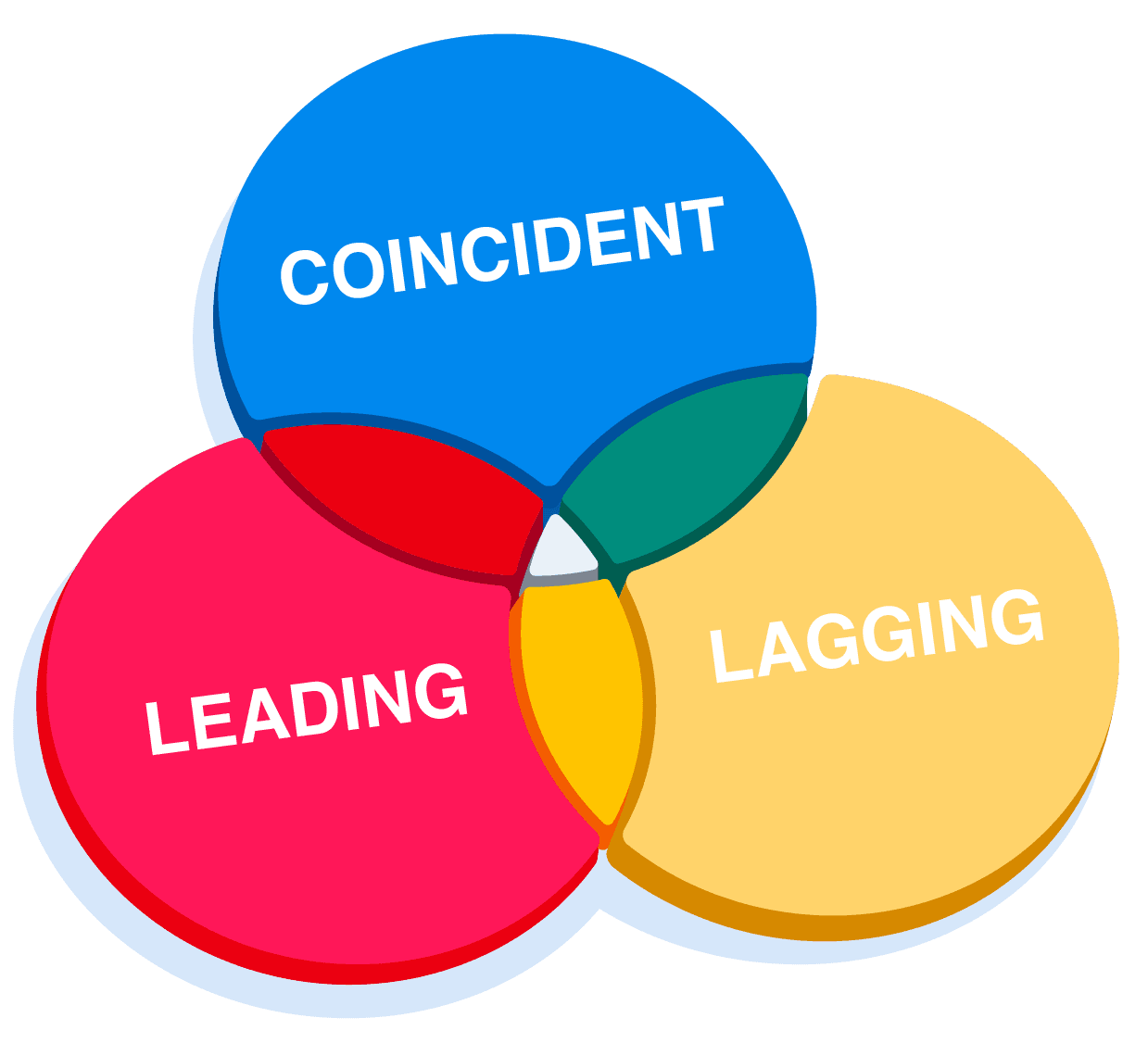
Economic indicators are categorized into leading, lagging, and coincident indicators. 

Leading indicators, such as stock market performance, predict future economic activity by signaling shifts before they occur. 

Lagging indicators, like unemployment rates, confirm trends after the economy has begun to follow a particular path, validating past economic performance. 

Coincident indicators, such as GDP, move in tandem with the economy, offering a realer-time snapshot of current conditions.

Stock Market Performance 

Stock market trends are a key leading indicator, reflecting investor confidence and economic expectations. 

Rising stock prices often suggest optimism about economic growth and corporate profits, while declines may signal economic concerns. 

Analysts closely monitor stock indices to gauge future economic activity, as changes in stock prices can precede broader economic shifts. 

This makes stock market performance a valuable tool for forecasting and decision-making.

Consumer Sentiment and Confidence Index 

Consumer sentiment and the Consumer Confidence Index (CCI) gauge the overall economic outlook of consumers. 

These indicators reflect the degree of optimism or pessimism that consumers feel about the economy's present and future. 

High consumer confidence typically indicates that consumers are likely to spend more, driving economic growth. 

Conversely, low confidence suggests reduced spending and an economic slowdown. 

These indicators help predict consumer behavior, a significant portion of economic activity.

Elena’s Reopening Guided by Consumer Sentiment 

Elena monitors the Consumer Sentiment Index and notices an upward trend, indicating growing consumer confidence. 

This suggests that people are ready to increase spending on non-essential services like fitness memberships. 

Guided by this data, Elena decides to gradually reopen her FitFlex studios, confident that the demand for in-person classes will rebound. 

She invests in reopening and marketing, aligning her strategy with the positive shift in consumer sentiment.

Do you want to learn more?
Download InvestMentor to access the full lesson and explore interactive courses that build your financial knowledge and guide you toward smarter investing decisions.