
Economy
US Sentiment
Consumers See Progress but Still Brace for Pain
12/19/202512/23/2025
Think of Gross Domestic Product (GDP) as the economy’s report card. It measures the total value of all final goods and services a country produces over a period of time.
A simple way to see it is as a spending pie:
GDP = Consumer Spending + Investment + Government Spending + Exports − Imports
Because prices change, economists often use “real GDP", which adjusts for inflation so we can tell if the economy is truly producing more, not just charging higher prices.
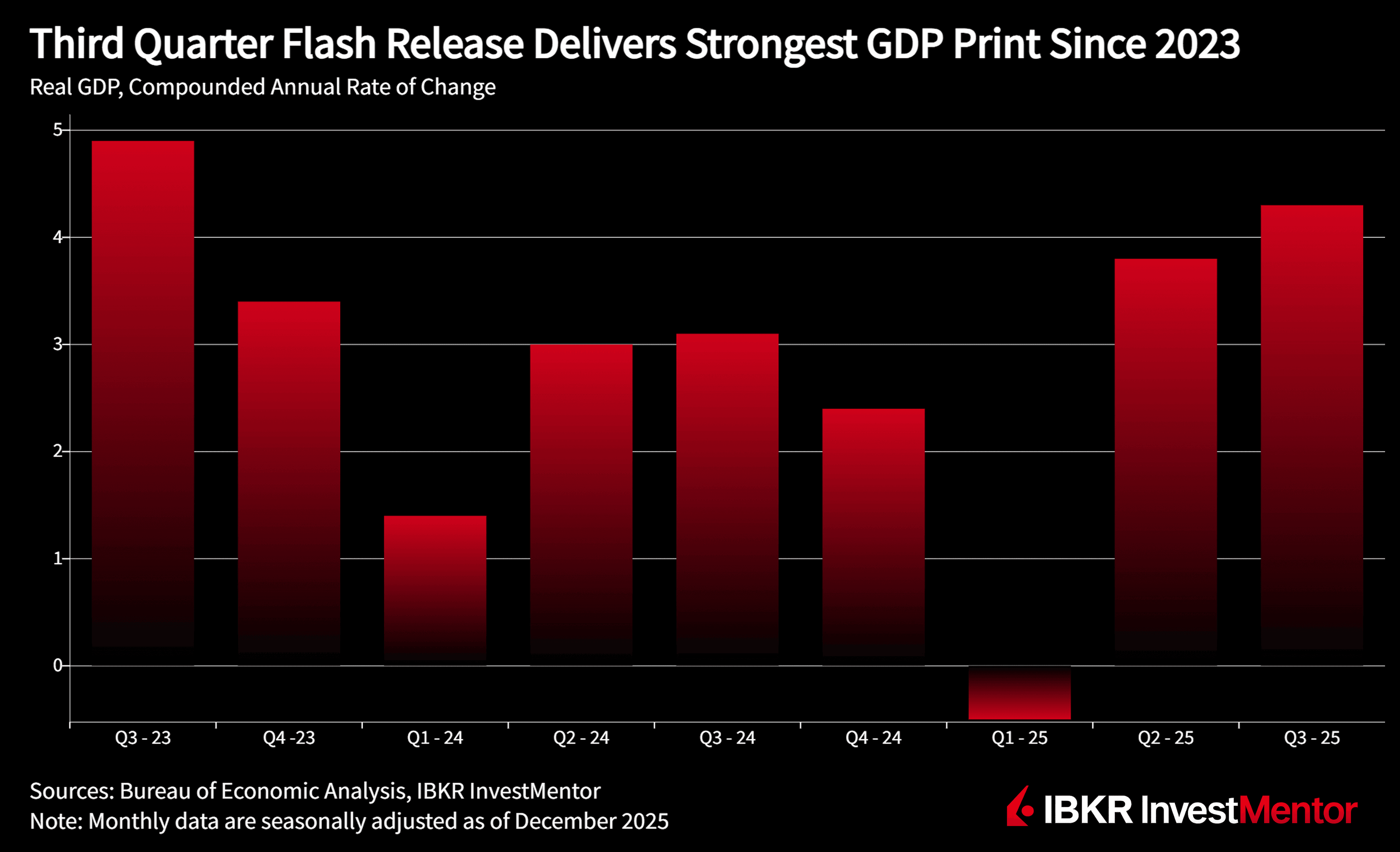
In Q3 2025 (July–September), real US GDP grew at a 4.3% annual rate, up from 3.8% in Q2. The release was delayed and combined because of the government shutdown, but the message is clear: growth stayed strong.
What drove it?
A “core demand” measure—real final sales to private domestic purchasers (US consumer spending + private investment)—rose 3.0%, almost the same as Q2’s 2.9%. Underneath the headline, private demand is growing at a steady pace.
Growth is solid, but inflation hasn’t fully cooled:
So inflation is well off its peaks but still above the Fed’s 2% goal. Meanwhile:
Put together, you have strong growth, firm inflation, and rising profits—an economy far from recession, and a Fed that can’t relax too quickly.
Canada’s recent GDP shows a milder recovery with a different mix. Real GDP has returned to modest growth, but:
So while the US is showing broad strength led by consumers, Canada is more about avoiding recession via trade and public spending, with households still feeling the strain of higher rates and living costs.
GDP is really just a way of asking: “How much is the economy producing, and what’s driving it?”
For investors, workers, and businesses, these reports help you see where the momentum is and how sustainable it might be—even if GDP can’t answer every question about the economy.
Want to explore more? Download our free app to unlock expert news updates and interactive lessons about the financial world.