
Media
Nature's Invoice 🎥
9/1/2026
9/1/2026
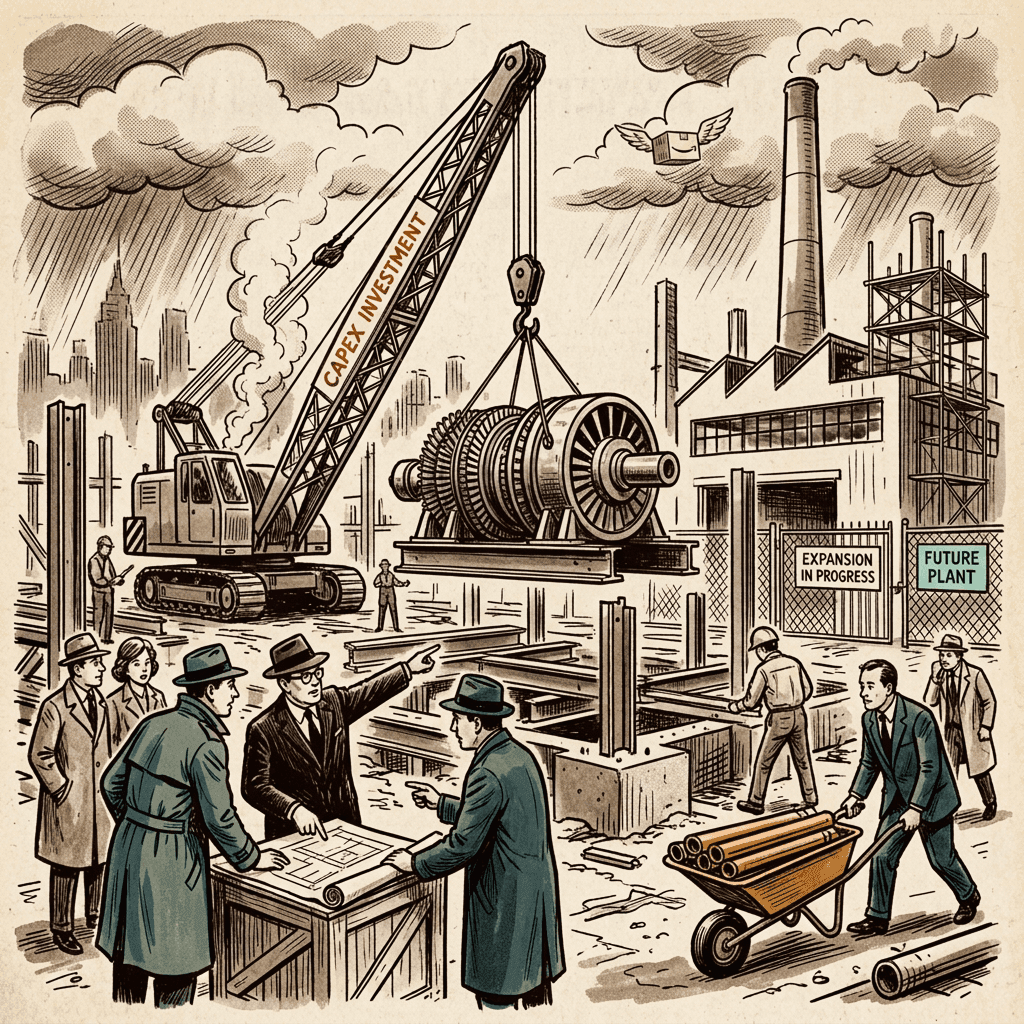
Capital expenditure (capex) is the money a company invests in assets that are expected to generate value over many years, such as factories, data centers, and other long-term business assets.
While operating expenses cover day-to-day costs such as salaries and rent, capex is used for assets that support the business long into the future. Tracking capex can provide insight into where management sees opportunities for growth and how it plans to allocate resources.
Companies use capex to maintain, improve, or expand their operations. Some investments replace aging equipment or facilities, while others increase production capacity, improve efficiency, or support new business initiatives.
For example, when online retail giant Amazon builds a new warehouse, the upfront cost is capex. The company expects that investment to increase delivery capacity and support sales for years to come. These projects often require substantial spending today, with the benefits expected to be realized gradually over time.
Some capex programs create decades of growth. Others become expensive lessons.
Telecom companies spent heavily on fiber-optic networks during the internet boom, expecting internet usage to rise rapidly. The demand eventually arrived, but many firms invested too much, too quickly, leading to years of weak returns. Some analysts fear the current AI boom has similar characteristics, with historic amounts poured into data centers and high-end chips.
Investors watch where business capital flows closely because it can signal both opportunity and risk. Too little investment can leave a company falling behind competitors, while too much spending can hurt profits if future demand falls short of expectations. The key question here is whether today's investment will create enough value to justify its cost.