
Companies
Trade in Transit
The Hidden Trade Story Wrapped in FedEx Earnings
12/19/202512/19/2025

According to Joanne Hsu, Director of the Surveys of Consumers, December sentiment only inched up from November, well within the margin of error. That matters: it means we’re not seeing a genuine inflection higher so much as a modest stabilization after a long slide.
The data quietly reinforces the K-shaped narrative we’ve been seeing elsewhere:
That’s a familiar pattern: those under more pressure respond most to changes in gas prices, wages, and inflation headlines, so any perceived relief can move the needle more for them. Higher earners, with more cushion, are less reactive in the short term.
At the same time, buying conditions for durable goods fell for the fifth straight month. That’s big-ticket items—cars, appliances, furniture. When people feel squeezed or uncertain, that’s exactly where they cut first. So even as some expectations improve, the willingness to spend on “big stuff” is still deteriorating.
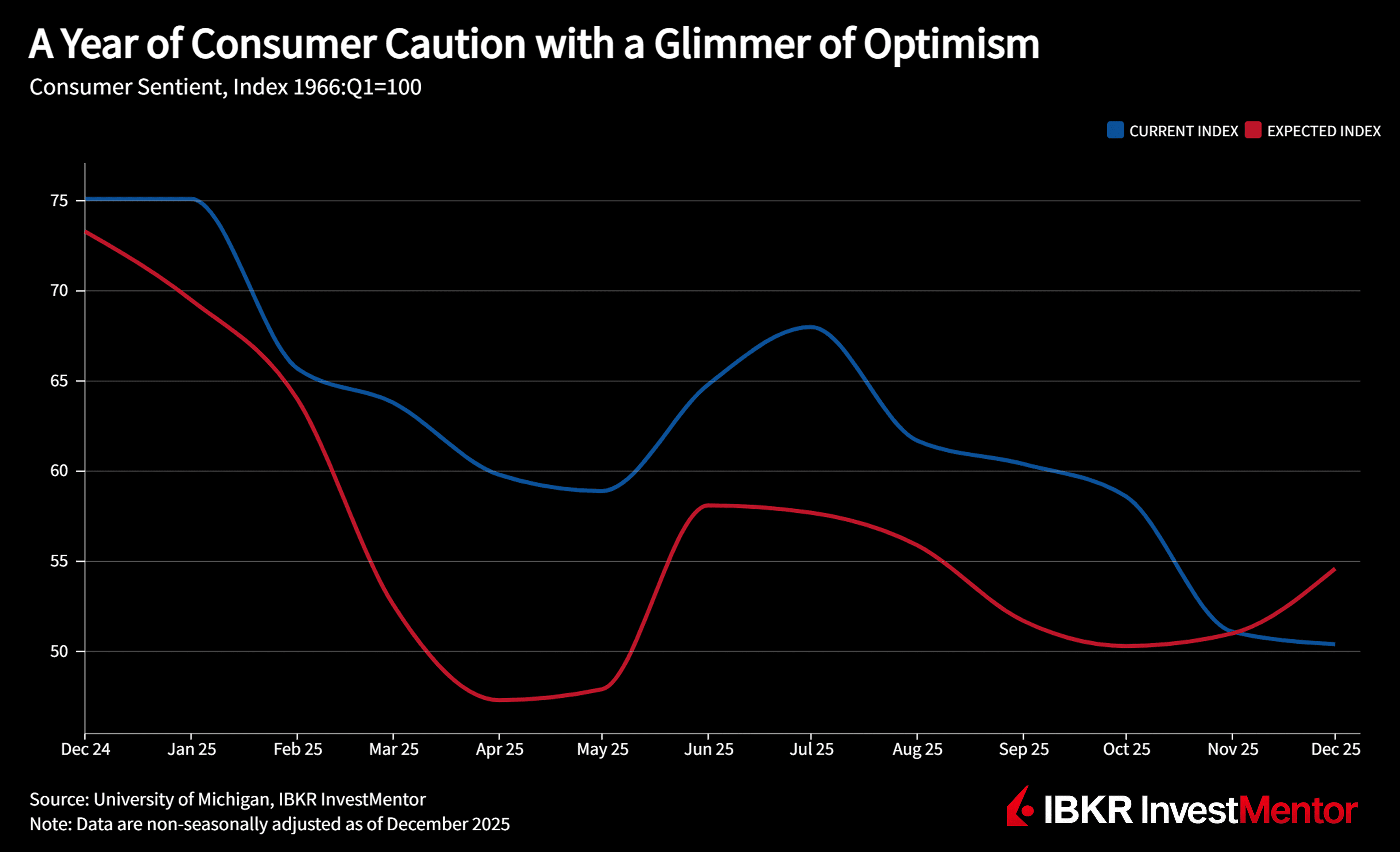
There are green shoots:
But then comes the key line: 63% of consumers still expect unemployment to rise over the next year. That’s not a small minority; that’s a solid majority effectively bracing for a softer job market.
Put differently: households are saying, “Things might get a bit better for me personally, but I still expect the broader economy to weaken.”
The inflation story is more nuanced, and quietly important for the Fed:
So the public is gradually dialing down its inflation fears, but hasn’t fully bought into a “back to 2% and done” narrative. From the Fed’s perspective, that’s a mixed blessing: progress, but not victory. Anchored expectations are critical for long-run price stability, and we’re still hovering above the pre-pandemic comfort zone.
Put together, December’s sentiment picture looks like this:
For policymakers, that argues for a careful, data-dependent path: inflation progress is feeding into expectations, but confidence is fragile and labor market fears are very real in the minds of households.
Want to explore more? Download our free app to unlock expert news updates and interactive lessons about the financial world.