
Economy
GDP Shrinks
Japan's Economy Slips as Tariffs Bite
11/17/202511/18/2025
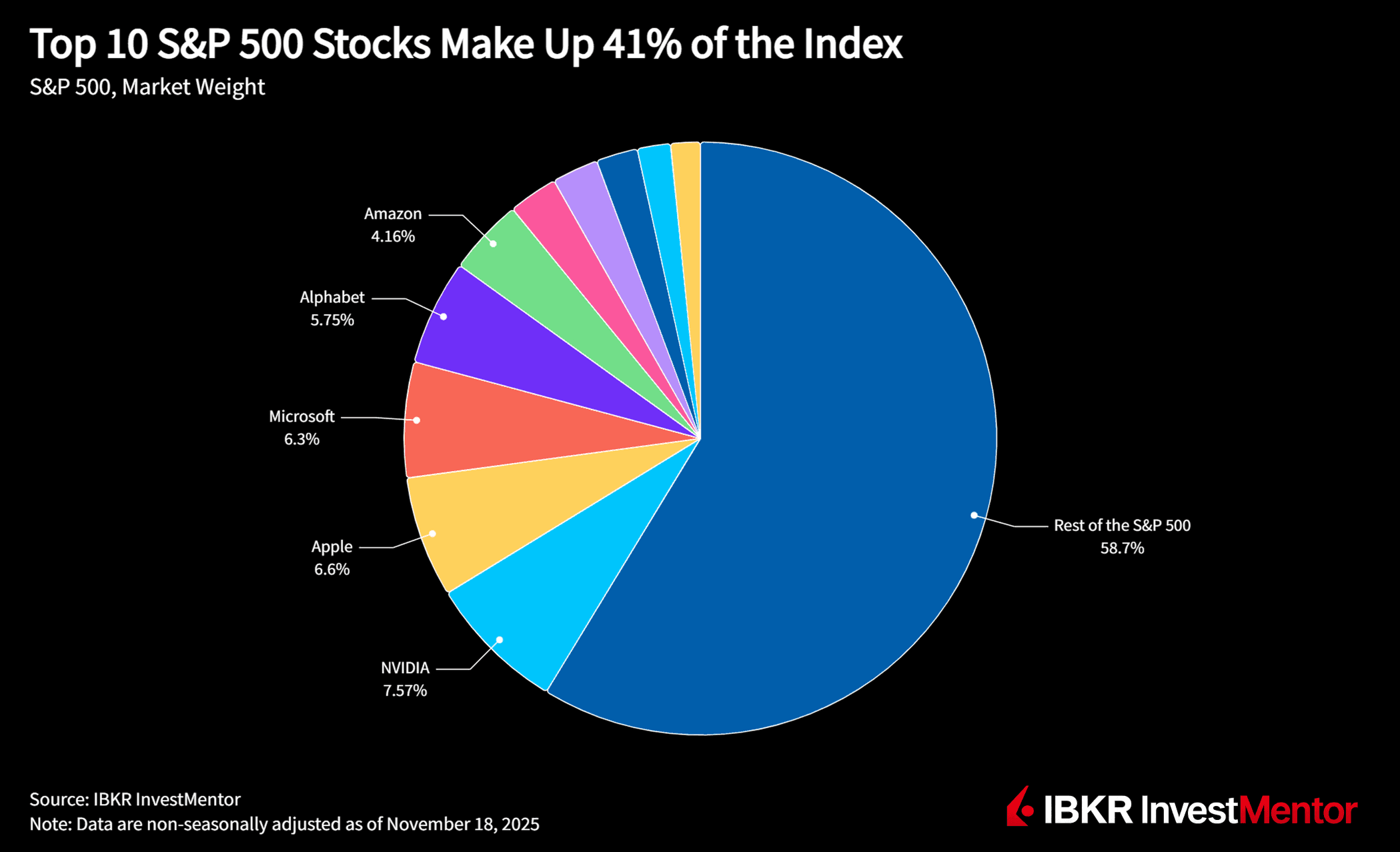
A tiny group of mega-cap companies now steers the S&P 500 stock index. The top 10 control over 40% of the index, LSEG data shows. This makes the market more sensitive to single-company moves than at any point in decades.
When those firms rally, the whole index surges. When they wobble, everything shakes.
Why this matters:
The S&P 500 heavyweights are a tight club of tech stocks: Nvidia, Apple, Microsoft, Alphabet, Amazon, Broadcom, and Meta. Even the “outsiders” tie back to tech.
Tesla is a car company that invests heavily in AI and robotics. Warren Buffett’s holding company Berkshire Hathaway has big stakes in Apple and Alphabet. Eli Lilly’s surge stems from weight-loss drugs, amplified by a viral social media buzz.
Much is riding on the largest of them, Nvidia. Whenever it releases earnings, a beat or miss can swing the whole index.
Passive investing keeps feeding concentration. Funds that track indices like the S&P 500 buy the largest companies simply because they’re already large. That adds to their weight in the index, reinforcing the gap with the rest of the market.
With nearly half the index sitting in ten stocks, the buying loop becomes self-strengthening. Market-cap weighting means even broad funds can hinge on a few names.
Quick fact: Equal-weighted indices avoid this bias by giving each stock the same weight.
Market concentration isn’t just about a passive investing loop — it also reflects genuine fundamentals.
Big tech delivers massive earnings growth, global reach, and innovation in areas like AI. Their digital models scale almost without limit: once platforms, chips, or clouds are built, each extra user costs very little. That creates high margins, huge cash reserves, and tough-to-disrupt moats, giving dominant firms the power to widen their lead.
History shows concentrated markets can magnify booms and busts. In the late 1990s, tech stocks dominated indices before the dot-com crash. And back then, the 10 most valuable companies only reached the peak of 27% of the S&P 500.
Today’s setup is different: the mega-caps are profitable and entrenched.
But the lesson remains: when a handful of companies drive the entire market, volatility rises. Investors should watch whether this AI boom creates new winners, broadening the leadership, or keeps spoils confined to a few names.
Top 10 stocks account for over 40% of the value of the entire S&P 500 index. This US stock tracker is one of the most followed and influential indices in the world, with many funds and pensions worldwide benchmarked against it.
Want to explore more? Download our free app to unlock expert news updates and interactive lessons about the financial world.