
Companies
IBM's AI Squeeze
IBM Caught in the Tech Spending Shift
7/16/20267/16/2026
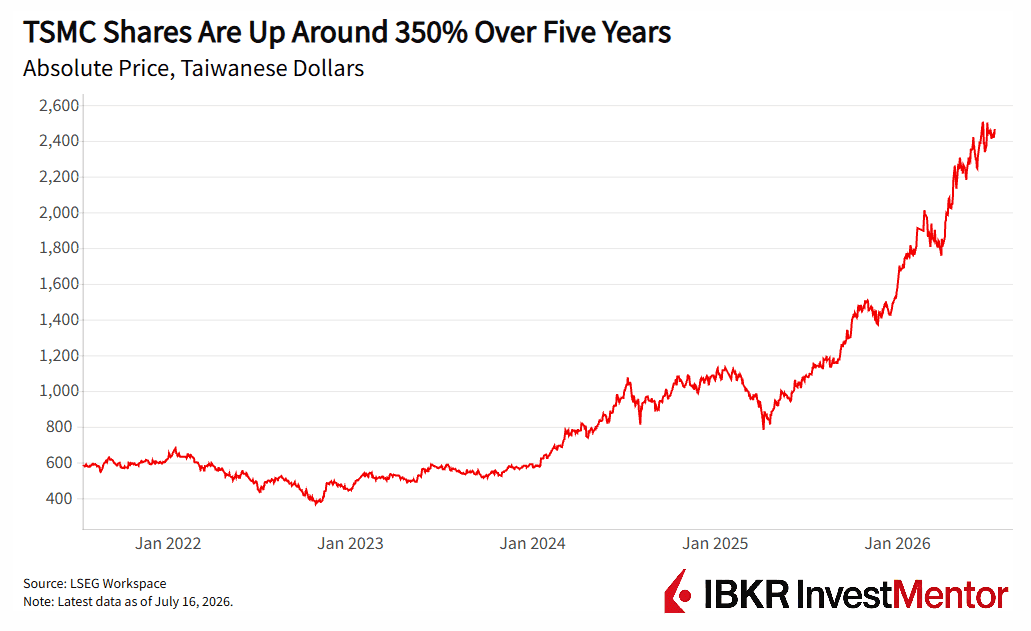
Taiwanese chipmaker TSMC posted blockbuster earnings on Thursday and announced another $100 billion of investments in Arizona, US.
The pledge comes on top of already-announced investments of $165 billion. This alone marked the largest foreign direct investment in US history. Altogether, Arizona can now expect TSMC to invest a mind-boggling $265 billion. That’s roughly the value of what the entire economy of New Zealand or Hungary produces in a year — and nearly half of Arizona’s GDP.
The investments will span across a decade or so, with the timeline depending on the market. Ultimately, there should be 12 chip plants or “fabs” and four packaging facilities on the outskirts of Phoenix. CEO C.C. Wei struck a bullish chord, saying: “Our conviction in the multi-year AI megatrend remains very high.”
TSMC isn't committing hundreds of billions on a whim. The company’s results are genuinely impressive, with quarterly profit jumping 77% year on year to a fresh record of $22 billion. This once again easily blew past analysts’ expectations. The profit has expanded at a double-digit pace for nine quarters in a row. Revenue surged 36%, also topping estimates.
While Nvidia, the most valuable company on Earth, grabs the headlines, it’s TSMC that builds Nvidia’s chips. Without TSMC’s fabs Nvidia’s GPUs are just design concepts. That’s why TSMC has become one of the most critical links in global tech manufacturing.
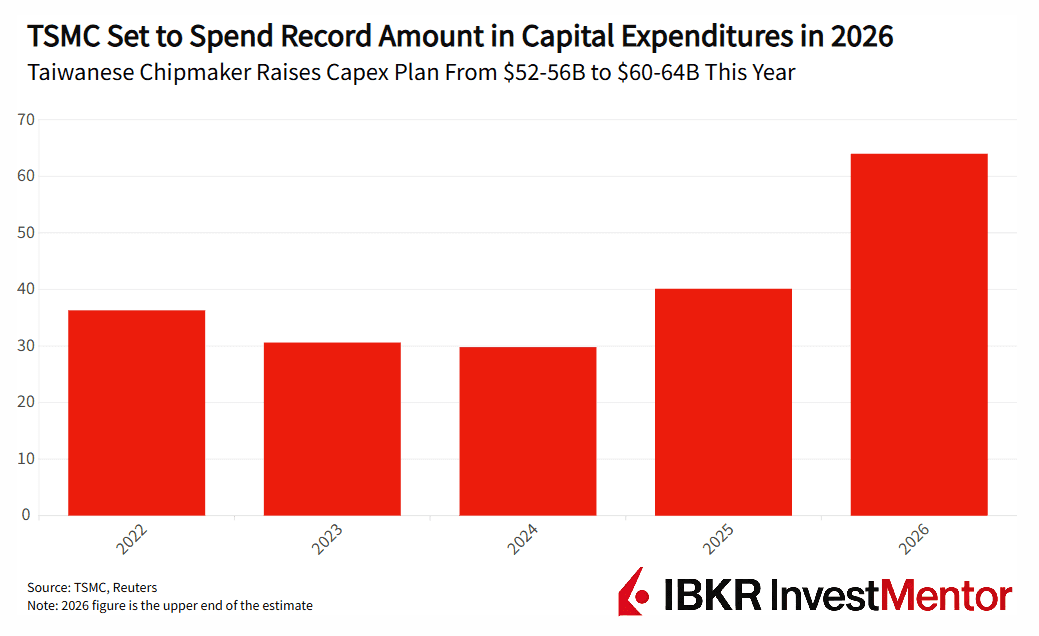
US investments are part of TSMC’s effort to meet searing-hot demand. The company raised capital spending plans to $60-64 billion this year alone.
When a company buys an Nvidia AI server, the money flows through the entire chip supply chain.
In short, Nvidia designs it, TSMC builds it, memory powers it, and cloud giants put it to work. If one of these links breaks, the entire chain comes apart.
Arizona won over TSMC with a mix of government support, customer demand, and geopolitical risk management.
TSMC’s first investment in Arizona was already during President Donald Trump's first term in 2020. Under President Joe Biden, TSMC later received a $6.6 billion grant through the CHIPS Act, plus $5 billion in low-interest loans. Arizona has also offered tax incentives, infrastructure support, and a business-friendly environment.
But there's also another big reason: concentration risk. Today, most of the world's most advanced chips are made in Taiwan. That leaves the global tech industry exposed to earthquakes, supply chain disruptions, and a potential confrontation between China and Taiwan.
Want to explore more? Download our free app to unlock expert news updates and interactive lessons about the financial world.