
US Shutdown

10/5/2025

US Shutdown

Public services on pause as shutdown continues

  • The US federal government paused or curtailed many of its functions on 1 October. A shutdown occurs when Congress cannot agree to pass the spending bill for the next fiscal year.
  • About 750,000 government employees are furloughed, with thousands more that have to work without pay while the shutdown continues.
  • Only essential services such as social security payments, postal deliveries and border control continue to function.
  • Budget fights change from year to year, but both chambers must ultimately approve funding and send it to the President for signature. If they fail to agree, funding lapses and parts of the government close.
US Shutdown

Why Does This Keep Happening?

Most democracies have mechanisms in place to fund government services even if lawmakers struggle to agree on a budget. This used to apply to the US as well.

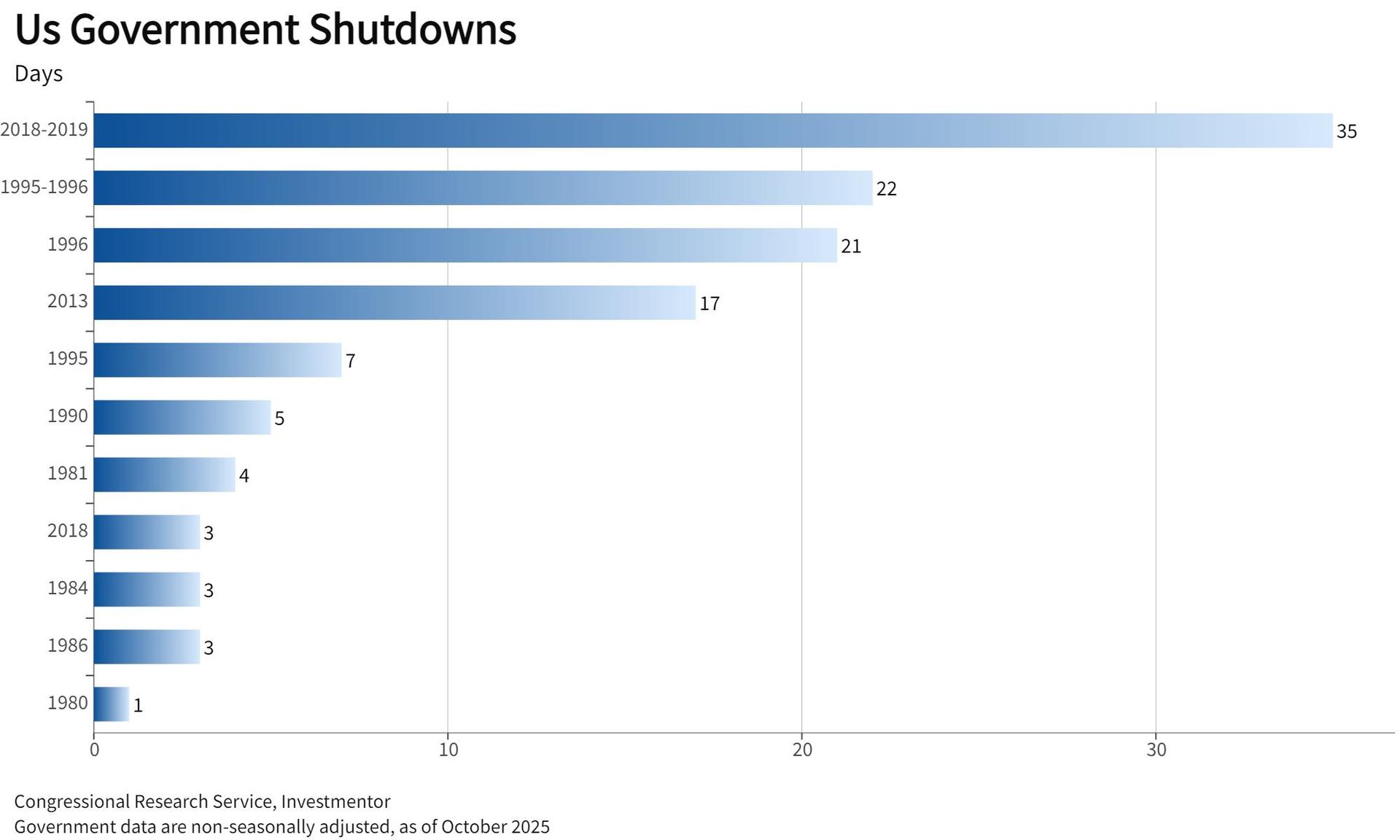
A 1980 Attorney General ruling reshaped the rules: federal agencies can’t spend without approved funding. That means each fiscal year, starting in October, brings the risk of a government shutdown.

Sometimes lawmakers agree to a stopgap measure that keeps the lights on temporarily. This “kicking the can” approach means multiple shutdowns in the same year are possible.

What About The Economy?

  • The 2018–19 shutdown shaved off 0.1% of Q4 2018 real GDP and 0.2% in Q1 2019.
  • Temporary drags on growth and on both consumer and business confidence.
  • Furloughs can hit consumption as hundreds of thousands workers aren't getting paid.
  • Businesses face delays as federal permits, loans and contracts may be frozen.
  • Federal spending on goods and services dips during a shutdown.

This shutdown is not related to the debt ceiling, so there's no risk of US defaulting on its debt.

What about the markets?

  • Wall Street is used to budget standoffs. Prioritizes long-term macro trends over short-term blips.
  • S&P 500 stock index was slightly up after the first day of shutdown.
  • During more than half of the previous shutdowns, US stocks posted gains.
  • Shutdowns often lead to a temporary dip in longer term treasury yields and weaken the dollar. Alternative assets like gold and crypto may make gains.
  • Inflation and employment data collection is impacted by shutdown, casting uncertainty on Fed's market moving rate decisions.

Have your say:

Want to explore more? Download our free app to unlock expert news updates and interactive lessons about the financial world.