
Media
Wall St Roots🎥
10/6/2026
10/8/2026
Samsung estimates it will report 107.4 trillion won or $80.2 billion in third quarter operating profit. This would be the biggest quarterly haul of any tech company ever. These are not the official numbers yet, but Samsung tends to post fairly accurate preliminary results.
The South Korean tech titan forecasts an almost ninefold profit jump from a year ago and a revenue rise of 127% to $146 billion.
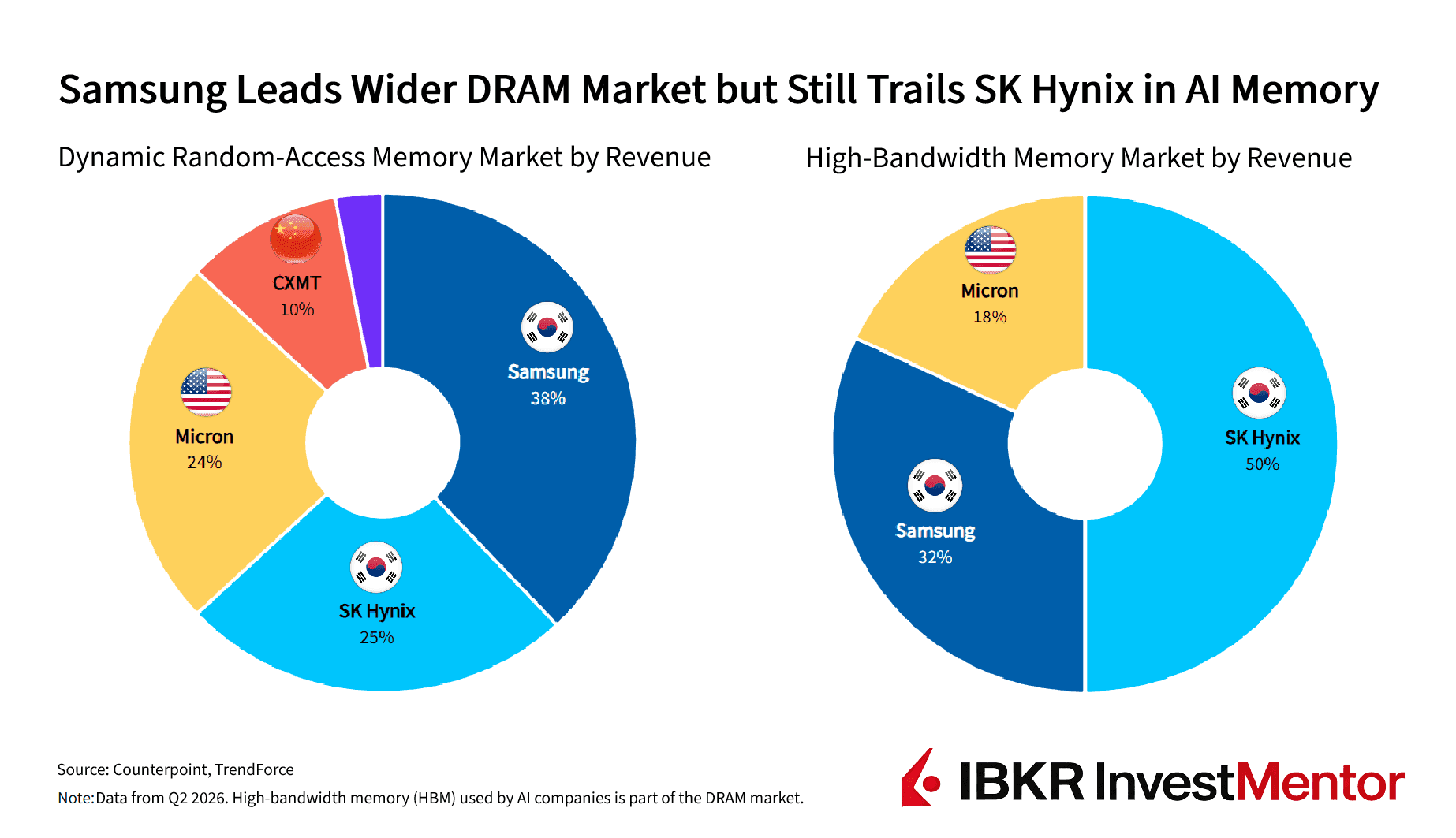
The main driver? Artificial intelligence. Every major AI company needs huge amounts of memory chips to train and run its models. Samsung is the world's largest memory-chip maker and the second largest in high-bandwidth memory after fellow South Korean rival SK Hynix. HBM-chips are essential for AI processing.
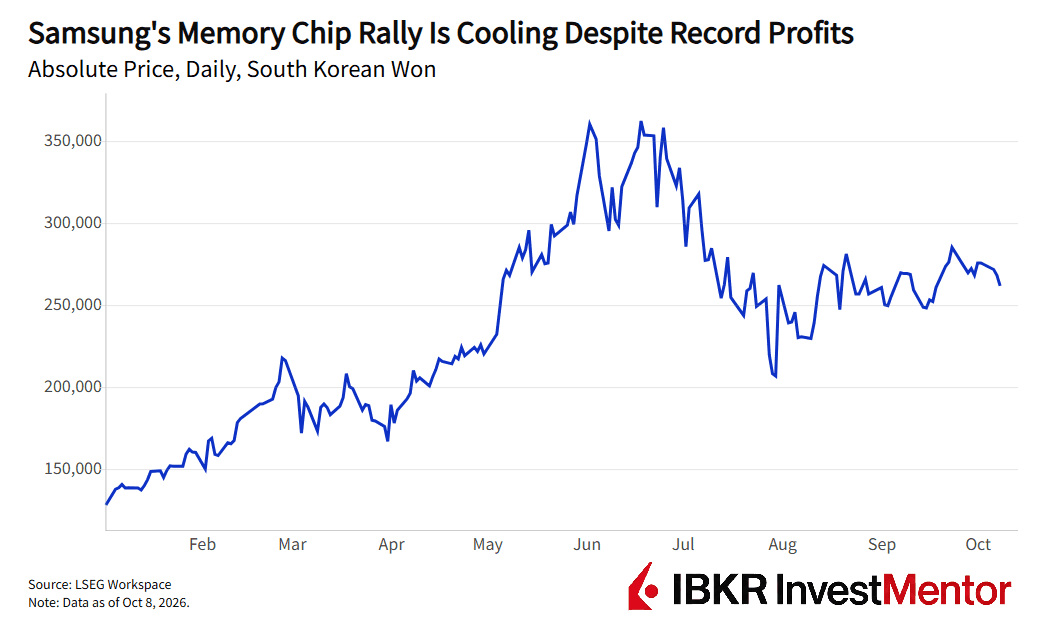
You'd think an $80 billion profit would send the stock soaring. Instead, Samsung shares fell more than 3% in Seoul.
Investors are asking whether today's AI spending boom can keep going for years. Samsung's stock is already down more than 25% from its June peak, even after a year of blockbuster earnings. Analysts also expect profit growth to slow in coming quarters as memory-chip prices rise less aggressively than before.
A stronger South Korean won hasn't helped either. Samsung earns much of its revenue overseas, so when foreign sales are converted back into local currency, they become worth less.
Advanced HBM-chips are essential for AI systems because they rapidly store and move huge amounts of data. As companies race to build bigger AI models and data centers, supply has struggled to keep up.
The demand for the high-end chips is raising prices for all memory chips. This is why used PlayStation 5 Pro consoles are sold for as much as $1,400. Sony can’t make enough new devices. Even Samsung’s own consumer electronics unit is hit by this.
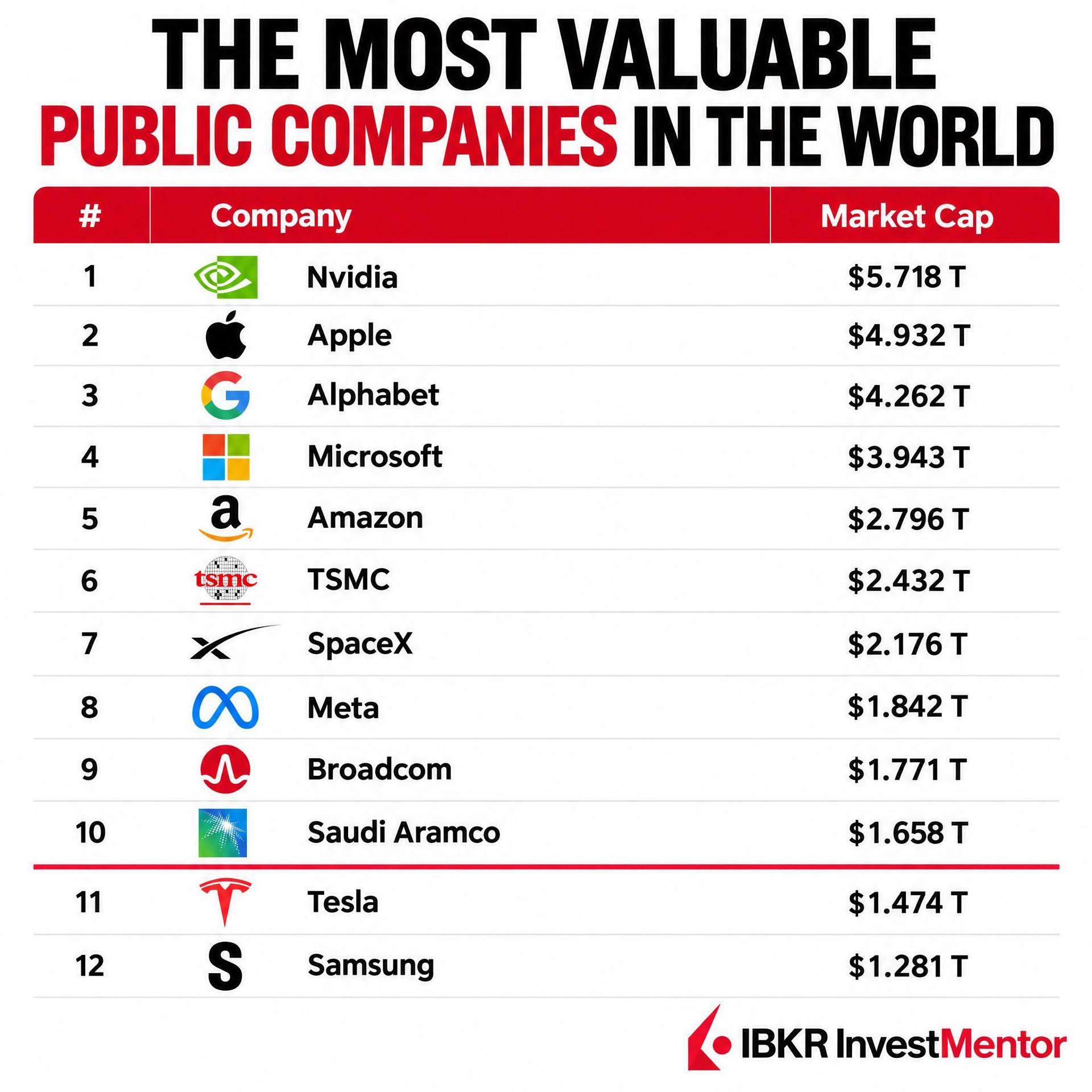
Here's a surprising fact: Samsung’s operating profits trump Nvidia, yet the South Korean giant isn't even in the top 10 of the world’s most valuable companies.
Stock markets value the future. Investors believe Nvidia’s in a stronger position in the AI ecosystem because its GPUs power most cutting-edge AI models. While Samsung is boosted by the sky-high memory chip demand, it’s also selling smartphones, TVs, appliances, and other lower-margin consumer tech. And memory chips have historically been a cyclical business, swinging between shortages and gluts.
There's also a geographical advantage. The world's largest pools of investment capital are in the US, and global investors tend to award higher valuations to American tech companies.