
Tech
AI Speed Limit
Why AI’s Own Builders Want to Decelerate
9/14/20269/18/2026

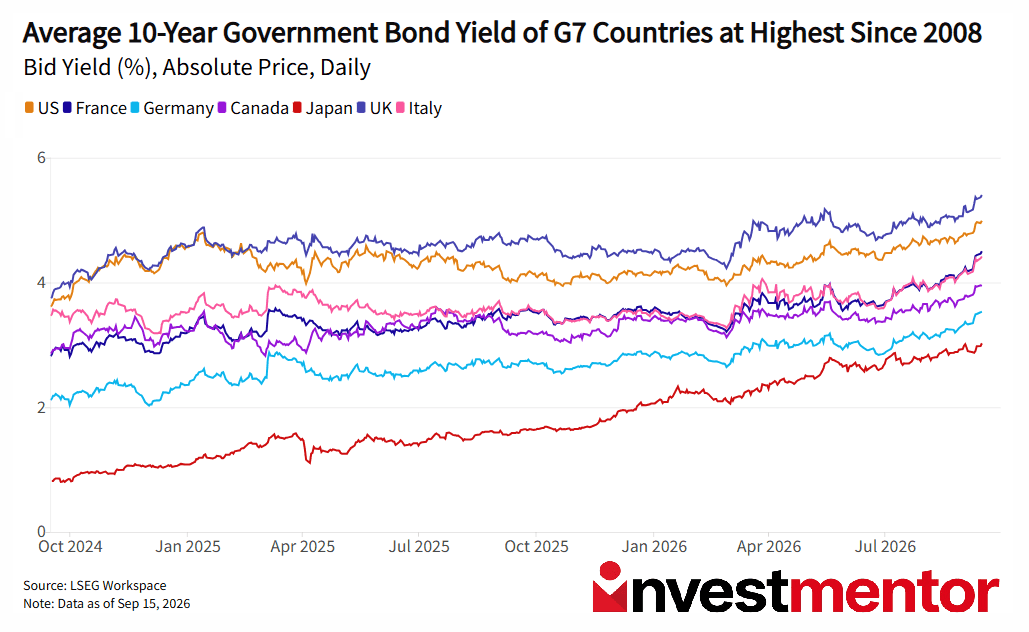
The US 10-year Treasury yield climbed above 5% on Tuesday for the first time since 2023. Later it reached the highest point since 2007. Investors have dumped government bonds globally, pushing prices down and yields up. Longer-dated 30-year government bonds are at multi-decade highs in many countries. Why the rush for the exit?
Government yields help set borrowing costs for mortgages and companies worldwide, so the impact is felt across the financial system.
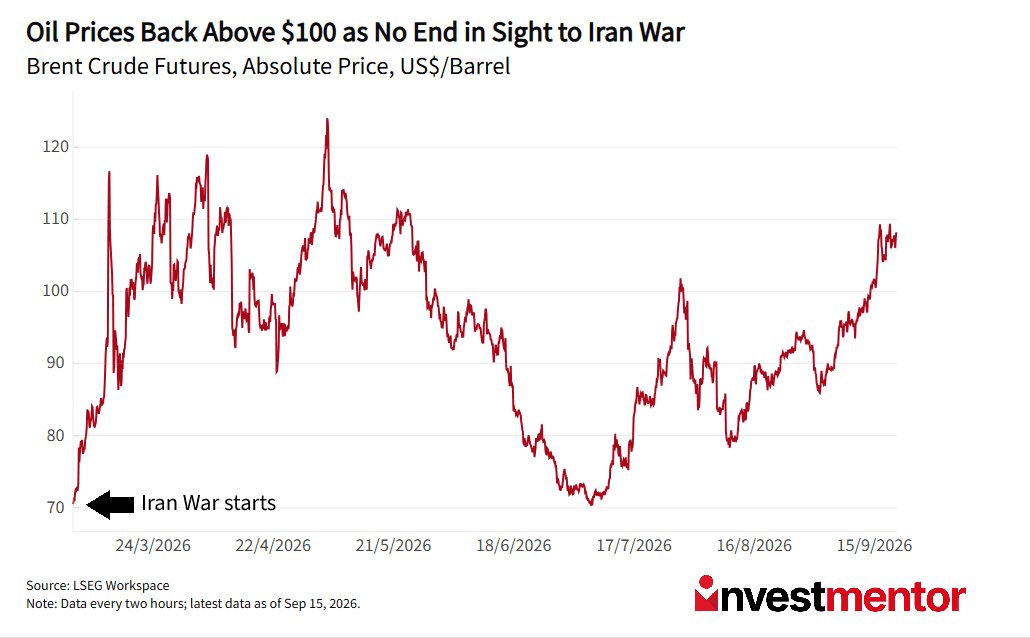
The Iran War and the widening conflict in the Middle East have pushed Brent crude above $105 a barrel, raising transport, manufacturing and energy costs. Higher inflation tends to lead to higher interest rates.
Iran-backed forces have forced a closure of an important pipeline, which Saudi Arabia is now scrambling to restore. The most important energy corridor, the Strait of Hormuz, remains largely closed. Iran-backed Houthi rebels have disrupted the alternative route in the Red Sea.
The White House has also urged Ukraine to stop attacks on Russian oil refineries. Ukraine has agreed, but only if Russia does the same. The two have been in war since Russia invaded Ukraine in 2022. Refined products have faced even more price pressures than crude oil.
The Federal Reserve lifted its target benchmark range to 3.75%–4% in its September meeting, marking the first increase since 2023. This proved that new chair Kevin Warsh is willing to defy US President Donald Trump who has demanded rate cuts. Prior to this meeting, economists had expressed worries about central bank independence in the US.
If the Fed had decided to do nothing, that could have rattle the markets which had priced in a 90% chance of a rate hike. Bond yields could have briefly dipped but if high inflation would have been left unattended, investors could have quickly started demanding higher yields. A bond paying 5% becomes much less attractive if inflation is running close to that level.
The European Central Bank has already hiked rates twice since the Iran War broke. The Bank of Japan is also on the hike path, and the Bank of England indicated it may join soon, too.
US treasury Secretary Scott Bessent recently warned currency and bond traders, saying: “I am the House.” In a casino, the house has the odds stacked in its favor. The Treasury apparently does not.
Bessent expanded a bond-buyback operation to $6 billion, hoping to steady long-term debt markets. Yet the 10-year yield soon punched through 5% anyway.
US Treasuries trade in a market worth roughly a trillion dollars a day. A $6 billion purchase could improve trading conditions, but it could not erase $40 trillion of federal debt, persistent inflation or colossal new borrowing. Bessent tried to overpower the market but the market called his bluff.
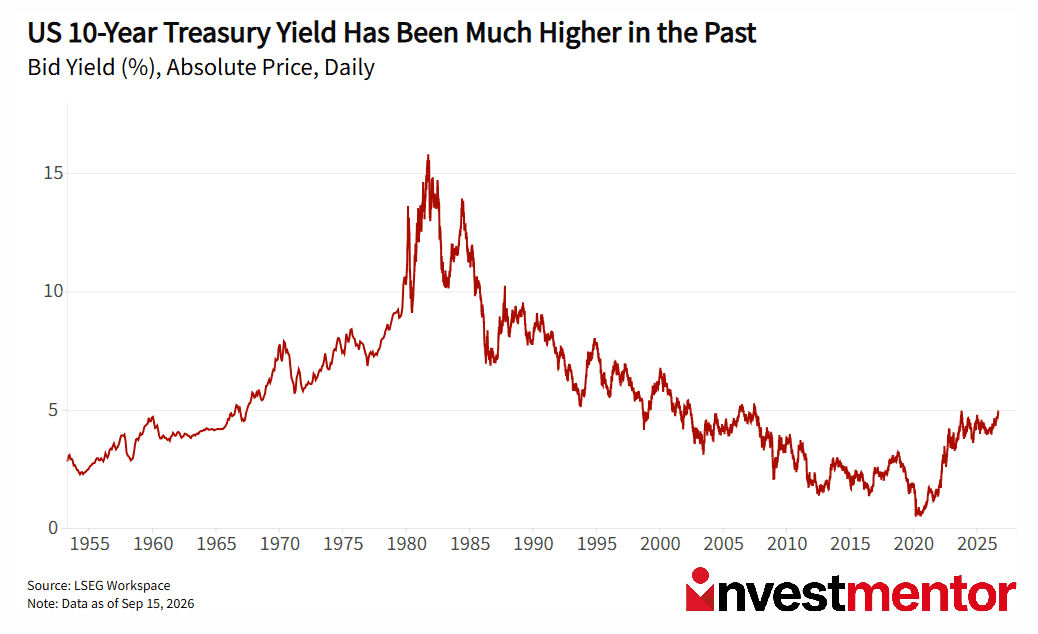
A 5% Treasury yield sounds alarming after the ultra-low rates of the 2010s. But over the past 50 years, 5% has been fairly ordinary. Historically, the stranger period was when central banks held rates near zero after the 2008 financial crisis and bought huge quantities of bonds.
The real issue is what changed while money was cheap. Governments have accumulated much more debt. Out of the G7 countries, all but Germany have a debt-to-GDP ratio above 100%, meaning debt exceeds their yearly economic output. Governments, companies, and households are all facing refinancing of their low-rate debts at a higher level.
Higher yields are manageable when economies grow quickly and debt loads are small. They become a problem when debt costs rise faster than growth. So, this “back to normal” is likely going to hurt.
Want to explore more? Download our free app to unlock expert news updates and interactive lessons about the financial world.