Markets
AI's Fine Print
Anthropic’s IPO Documents Warn of Existential Risks
9/29/2026
10/2/2026
Group of Seven countries have agreed to release 100 million barrels of diesel and crude oil from emergency reserves in an attempt calm down soaring energy prices.
This follows a decision in March by 32 International Energy Agency (IEA) member countries to release record 400 million barrels of the reserves.
Ahead of the G7 announcement, US President Donald Trump pressured the European Union to release more fuel onto the market and even threatened to block US diesel exports if it failed to comply. The dispute stemmed in part from the fact that some European countries had not yet released their full share of the 73 million barrels of refined fuels agreed under the IEA deal.
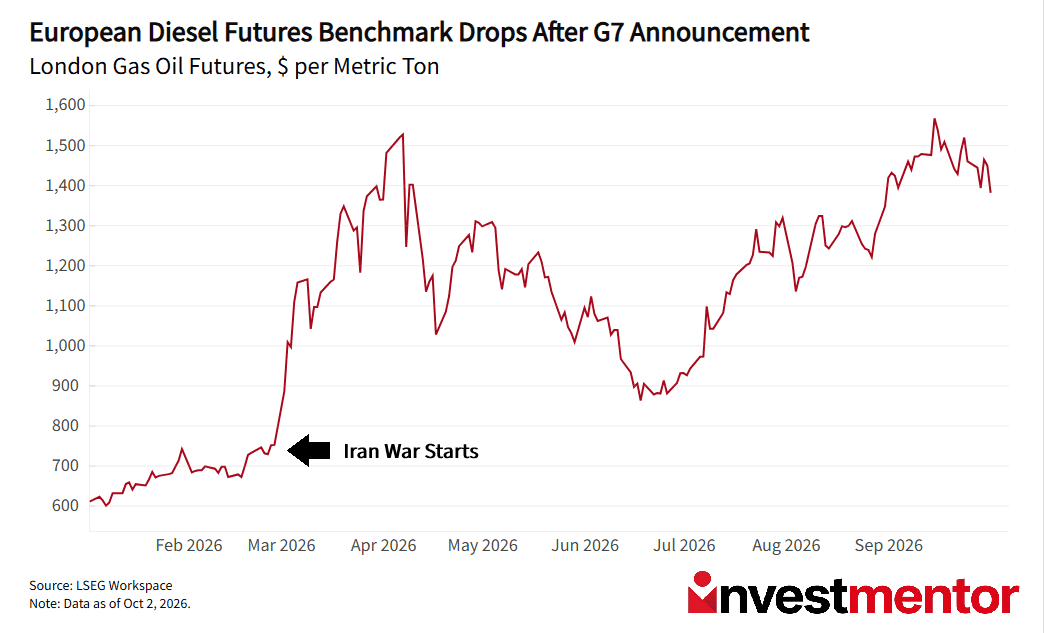
Diesel powers trucks, construction equipment, farms, ships, and many industrial processes. When it gets more expensive, countless other products often follow. Several disruptions are happening at once:
The result? Diesel prices have traded above $200 per barrel equivalent in major markets, while crude oil benchmark Brent has been around $100 per barrel. In the UK, diesel at the pump just hit all-time record of £2 per liter.
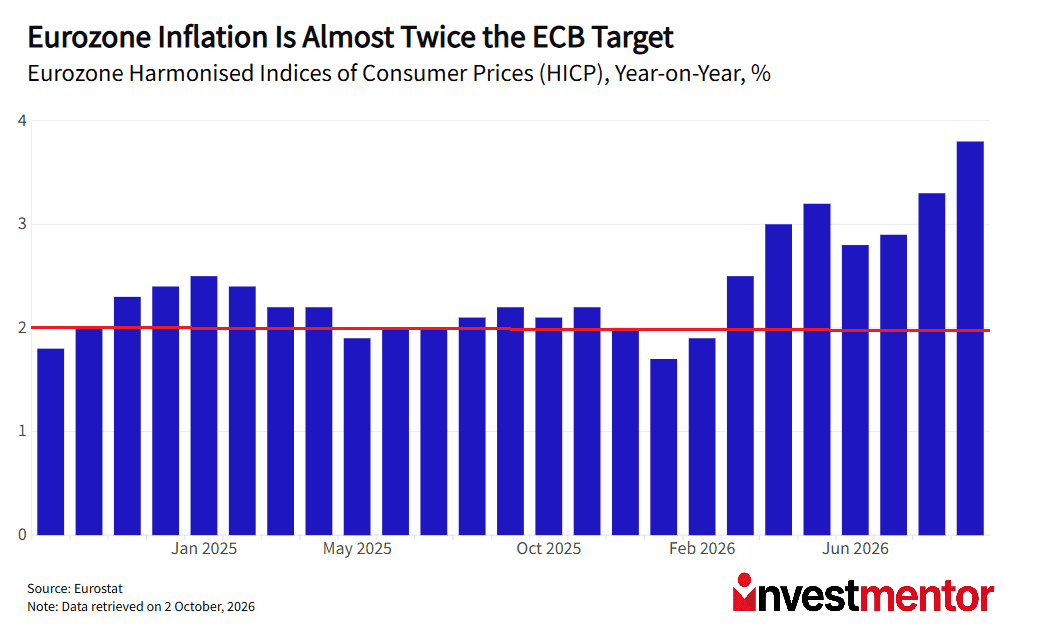
Just before the G7 decision, markets were hit with the latest Eurozone inflation data. Consumer prices jumped from year-on-year 3.2% in August to 3.8% in September, according to Eurostat. Economists had expected 3.6%, making the sharp rise even more startling. The European Central Bank (ECB) targets inflation of 2%, so prices are now increasing almost twice as fast as policymakers would like.
The main culprits were energy and food. Fuel, natural gas, and other energy costs climbed sharply, pushing up household budgets and business expenses. Even core inflation — which strips out volatile food and energy prices — edged higher to 2.5%.
For households, it means a more expensive autumn. For the ECB, it means tough decisions in October and December meetings.
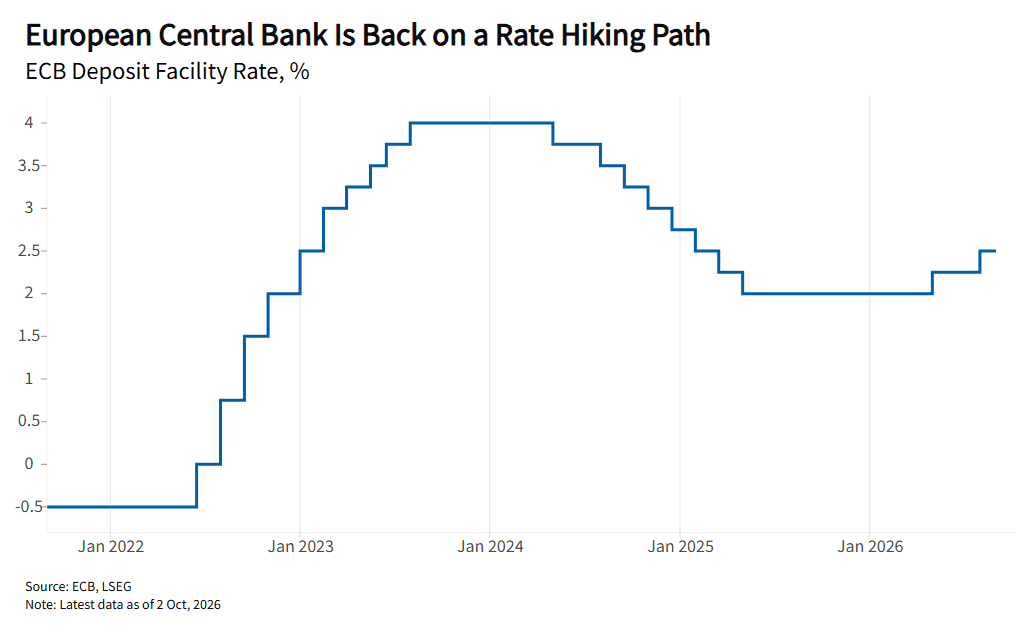
The inflation spike puts more pressure on the ECB to act quickly. Despite this, the market is still pricing in an 82% probability of the benchmark rate remaining unchanged at 2.5% in the next 29 October meeting.
That being said, investors do expect the central bank to stick to the hiking path. The ECB has raised rates twice after the Iran War broke out, with three additional increases expected over 2027.
But the ECB faces a complication: piling government debt. Countries with large borrowing needs, particularly France, are already facing rising financing costs as investors demand higher returns to hold their bonds. Rate hikes could cool down inflation but an aggressive push could destabilize the financial market.
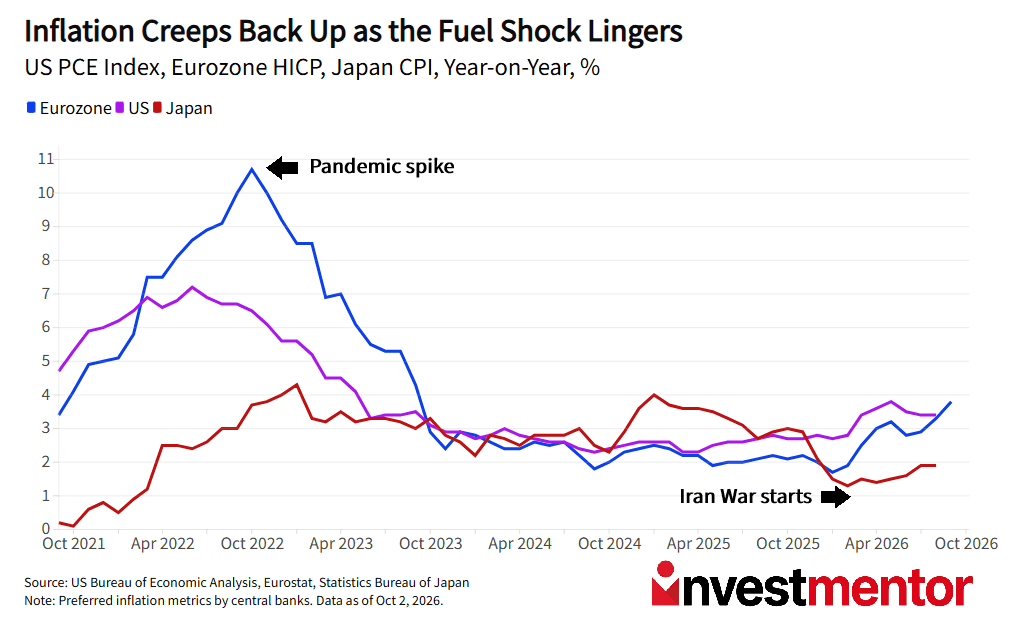
Europe isn't dealing with rising prices alone. The United States is grappling with elevated fuel costs ahead of November's midterm elections, which explains Washington's intense focus on diesel prices. Across Asia, supply disruptions and China's decision to hold back some fuel exports have tightened markets further.
Oil refined in one country may power trucks on another continent. Prolonged warfare in the Middle East, a refinery shutdown in Russia, or a policy decision in Beijing can quickly affect prices around the world.
That interconnectedness is why economists are watching energy markets so closely. If fuel prices continue climbing, the European inflation surge may be replicated globally.