Markets
Big Beat, Meh
Nvidia Reaches Another Peak, But Risks Mount
2/26/2026
2/27/2026

Persistence paid off for Paramount Skydance. After a hostile takeover attempt, reopened negotiations, and an improved bid, it has emerged as the victorious buyer of Warner Bros Discovery. This includes film studios, HBO Max, cable networks like CNN, and blockbuster franchises like Harry Potter, Game of Thrones, and Batman.
The $110 billion deal at $31 per share was enough to make rival bidder Netflix to call quits. After months of treating Netflix as the preferred buyer, Warner’s board said on Thursday that Paramount’s new offer for the whole company is “superior.” Netflix’s competing bid was $27.75/share for the studios and streaming assets only, excluding the cable networks.
Big mergers aren’t just handshakes and signatures. They often come with escape hatches. Netflix struck a deal with Warner in December, but the board also has a duty to shareholders to make sure they get the best price.
What happened:
While this twisty M&A drama now wraps up the first season, the show will go on, with competition authorities around the world preparing to scrutinize the deal.
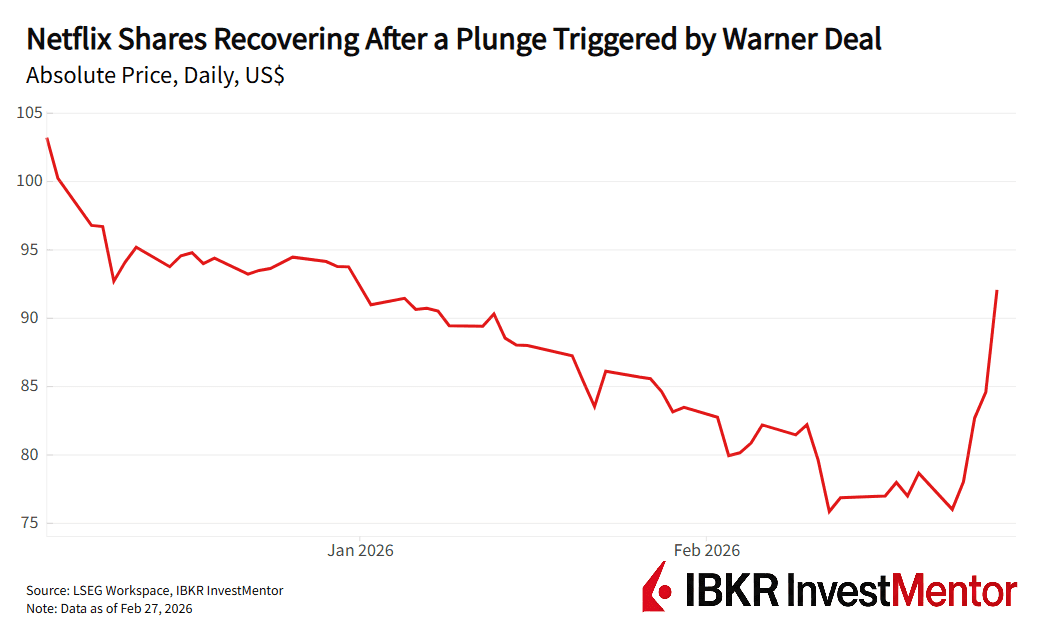
On Thursday, the Warner board gave Netflix four days to improve its bid. The streaming giant chose to walk away almost immediately, sending shares up around 10% the next day. Shareholders thought the deal was getting too expensive.
Before Thursday, Netflix had lost 26% of its market value since the deal was announced. Now Netflix gets to stick to its mantra of “build, don’t buy”.
Netflix may have also faced political headwinds: Netflix co-CEO Ted Sarandos met White House staff just hours before dropping out of the bidding war, CNBC reports.
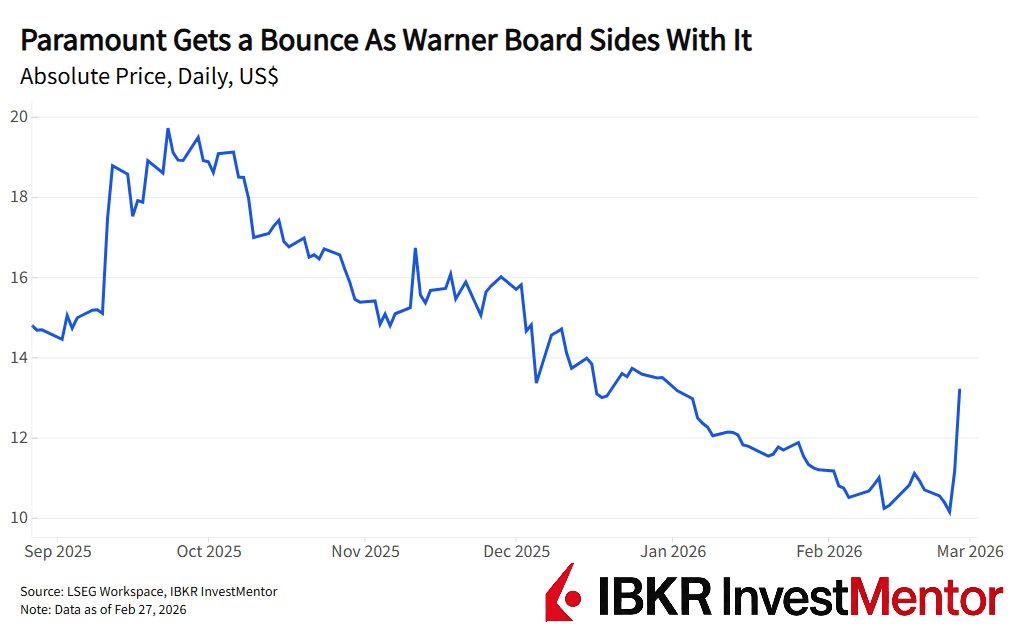
Paramount shares jumped nearly 10% on Thursday when the Warner board rallied behind the bid and climbed further 18% on early Friday trading after Netflix’s exit. Investors liked the win and see potential in the merger.
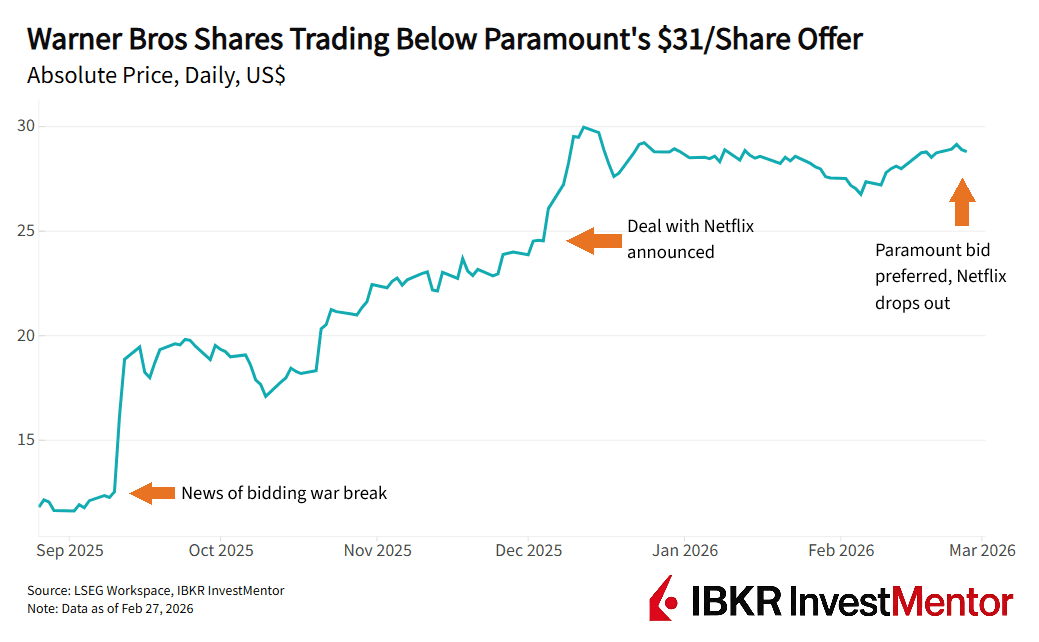
But Warner shares fell 2% and are trading around 28 dollars, below the $31 takeover price.
Markets price in probabilities. The gap isn’t huge, but it shows that investors have some worries over whether the deal will cross the finish line.
If a deal dies, someone often pays. Here, the “goodbye costs” are enormous.
Why so much? Because regulatory risk is real. When approval isn’t guaranteed, buyers offer money to prove they’re serious.
Paramount has a market cap of about $14 billion, and this nightmare scenario would leave the company with only bills and no new assets. This deal has to close.
Even after a “winner” emerges, the hardest part may be getting permission. Paramount + Warner would combine two major studios, two streaming brands (Paramount+ and HBO Max), and two news operations (CBS and CNN). That can trigger scrutiny in multiple places.
Paramount is backed by Oracle billionaire Larry Ellison who has a close relationship with President Donald Trump, potentially easing the approval in the US. But that’s not the only hurdle to cross.
Bottom line: shareholders have a final say on the price, but regulators can still scrap it afterwards.