
Companies
Space x AI
SpaceX Pulls xAI Into Orbit in a Record-Breaking Deal
2/3/20262/4/2026
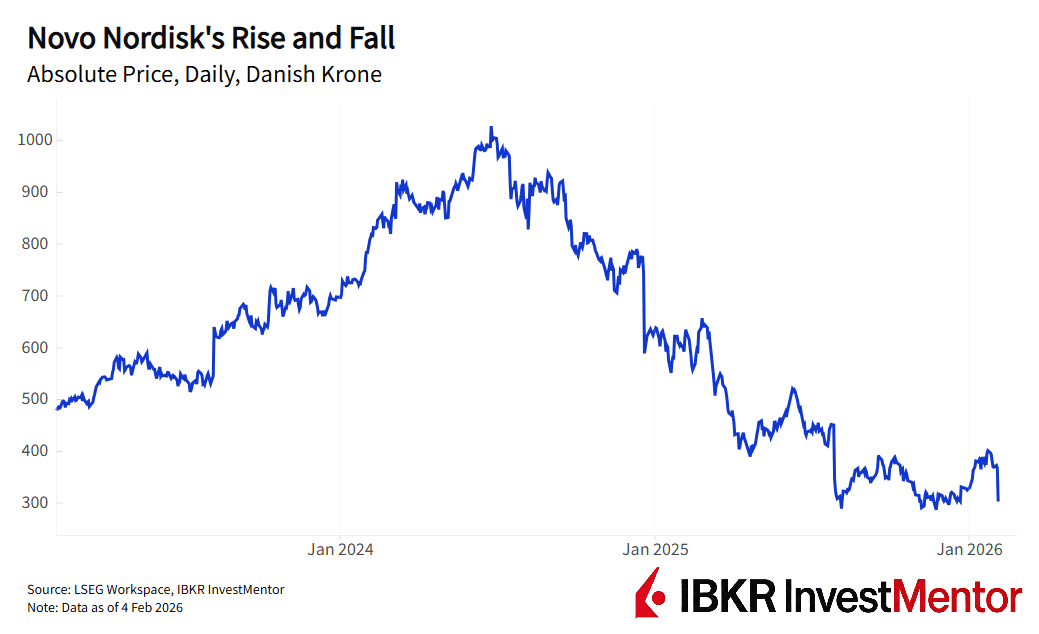
Novo Nordisk stunned markets by warning that 2026 sales and operating profit are set to fall 5-13%, far worse than analysts predicted. This comes after years of double-digit sales growth for the Danish pharma giant.
Shares plunged as much as 20% in a day, more than erasing early‑year gains. The drop comes after a tough 2025, with the company losing nearly 50% of its value as competition in obesity drugs heated up.
The twist? Demand for Novo Nordisk’s weight-loss and diabetes drugs, Wegovy and Ozempic, is still huge and growing. The new pill version of Wegovy is selling like hot cakes. This crash is about pricing, politics, and expectations.
Obesity‑drug prices are falling fast in the US. Novo agreed to lower prices in exchange for wider access through government programs, while insurers demand bigger rebates. American rival Eli Lilly has also cut prices. This is good for consumers but bad for the bottom lines.
Novo and Lilly are also battling cheap, compounded knockoffs, used by millions of Americans, even though they aren’t FDA‑approved.
The result:
Novo Nordisk CEO Mike Doustdar was blunt, saying investors should expect US pricing to “go down before it comes back up.”
Publishing earnings soon after Novo Nordisk, Eli Lilly delivered the mirror image of the Danish stumble.
Lilly blew past Q4 estimates, and then stunned investors with 2026 guidance far above expectations. Lilly forecasts $80–83 billion in sales, implying roughly 25% growth, powered by soaring demand for its weight-loss drug Zepbound and diabetes drug Mounjaro.
Prices are falling for Lilly, too, but massive volume growth more than offsets the hit. While Novo braces for a double‑digit decline, Lilly is positioning itself as the clear leader in obesity drugs.
Both companies make GLP‑1 drugs, which mimic a natural hormone that helps you feel full, slows digestion, and stabilizes blood sugar.
Novo’s Ozempic and Wegovy use this single‑hormone approach, which built the modern weight‑loss market. Lilly’s newer drugs go a step further: they use tirzepatide, which mimics two satiety hormones — GLP‑1 and GIP. That dual action often leads to stronger average weight‑loss results and has helped Lilly take the US lead.
Same category, same goal, but Lilly’s mechanism gives it extra momentum.
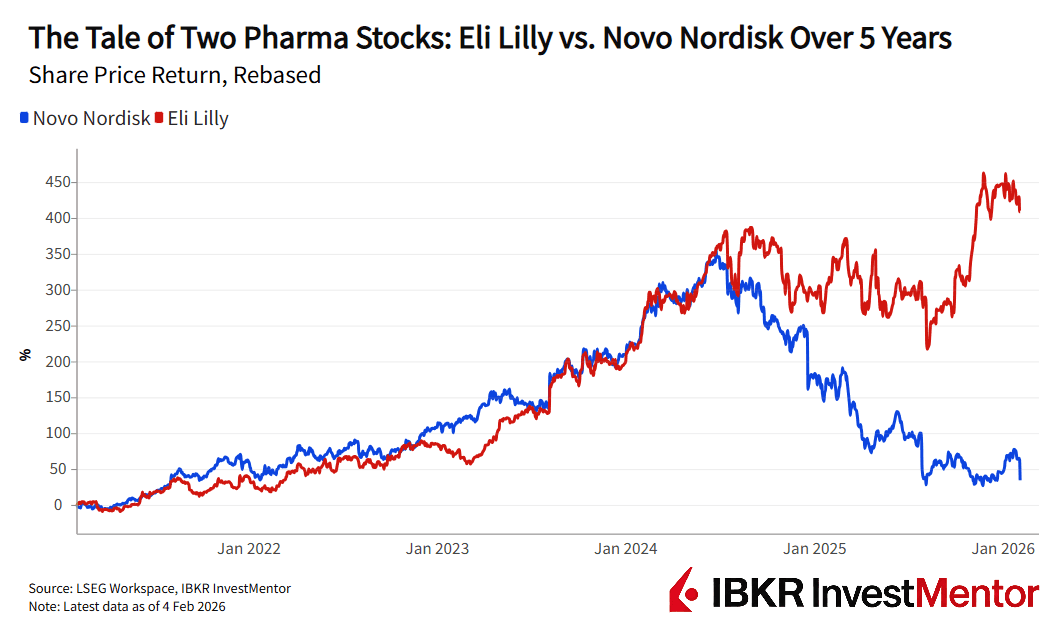
Back in 2024, it looked like Novo Nordisk was on its way to becoming Europe’s first one-trillion-dollar company. It had revolutionized weight loss, with celebrities and influencers raving about its drugs. In June that year, the market cap peaked at nearly $700 billion.
It has since lost around 70% of its value. Instead, Lilly reached the one-trillion milestone, becoming the first pharmaceutical in the coveted club.
As Novo struggles to fend off competition, more are about to enter the market. Later this year, the patent for semaglutide — the active ingredient of Wegovy and Ozempic — will expire in Canada, Brazil, and China, opening the door to generic drug makers.
Novo Nordisk’s rollercoaster share price ride shows how the healthcare sector hinges on breakthroughs, patents, and execution.
Key factors for investors:
Want to explore more? Download our free app to unlock expert news updates and interactive lessons about the financial world.