
Tech
Tech-Bro Trial
Courtroom Showdown With Ripples Across the AI Industry
4/29/20264/30/2026
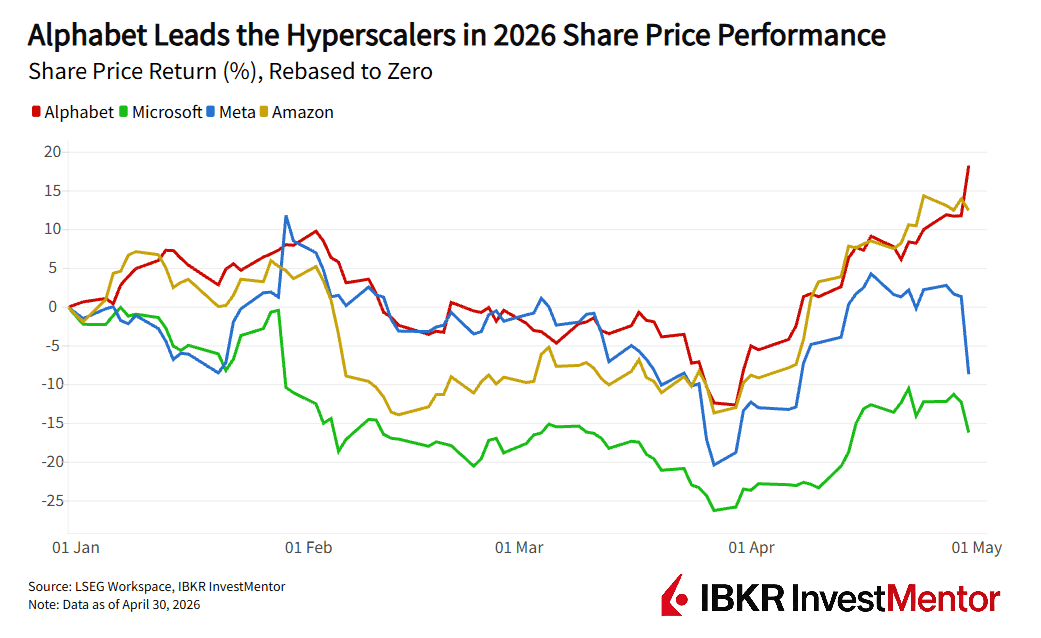
Big tech got to flex its muscles again this week, with Alphabet, Microsoft, Amazon, and Meta reporting earnings on Wednesday. Combined capital expenditures of the four hyperscalers rose to a new quarterly record of $130 billion. Most of this money went to data centers and high-end chips as companies race for AI dominance.
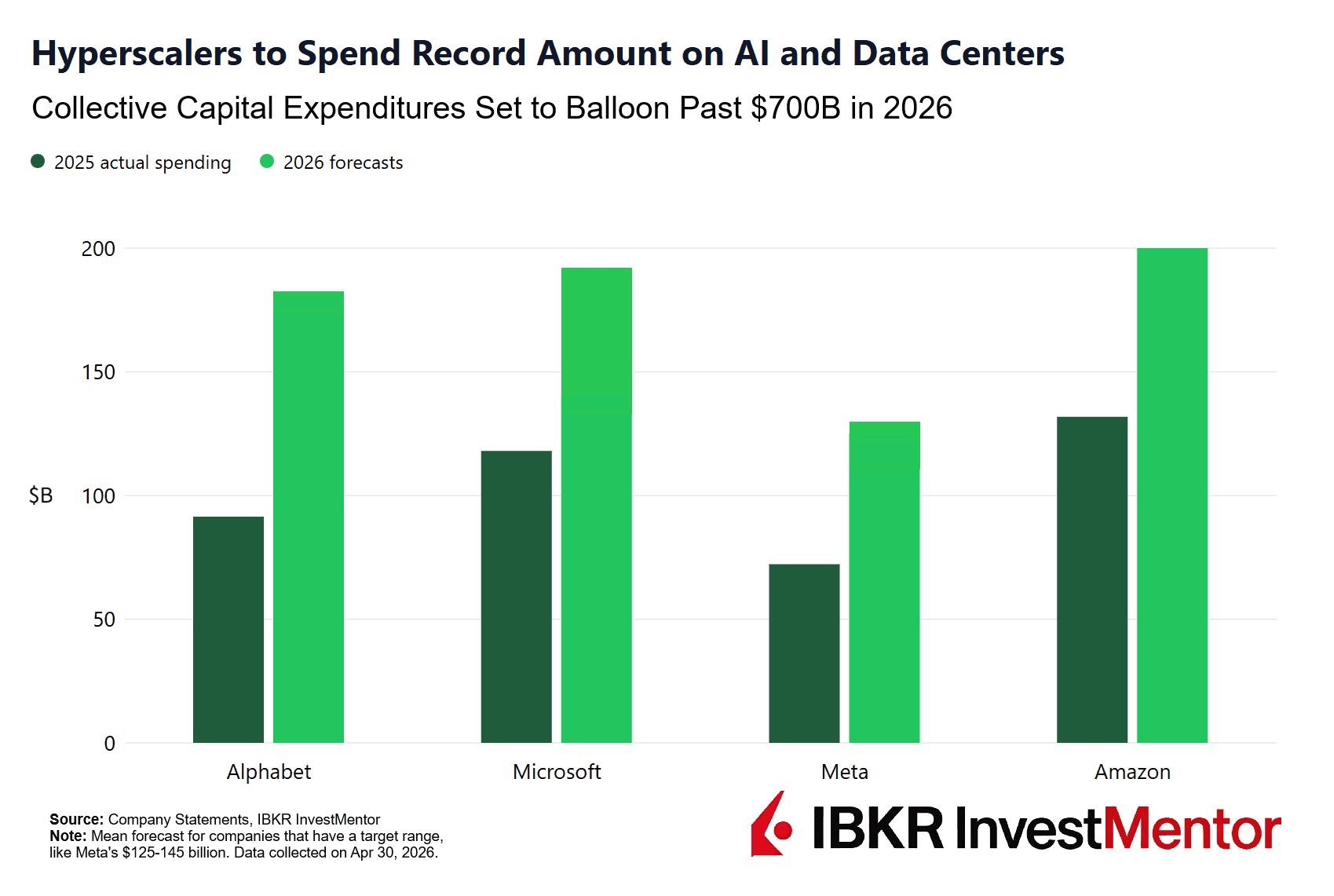
Big tech’s AI spending is now set to exceed $700bn in 2026, up from estimated $600bn just months ago.
Investors are weighing how the companies are using the money and where they stand in the AI race. This is why Meta’s shares got punished, despite the strong growth in its advertising business.
CEO Mark Zuckerberg offered vague timelines on the company’s improved AI models. The increase in capex guidance and a drop in users didn’t help either.
The historic AI build‑out is acting as a stabilizer to the oil shock triggered by the Iran war.
The hundreds of billions poured in by the big tech are fueling demand for construction, chips, and power infrastructure across the global economy. The US and China are particularly impacted by this.
Even with rising costs for memory chips, GPUs and energy, investors are backing firms that convert AI spending into revenue. This investment boom is in part helping keep equities resilient too, during a period when an oil shock would typically drag them lower.
Alphabet’s Google Cloud grew 63% in the first quarter from a year ago, hitting $20 billion. The pace of growth far exceeded analysts' expectations and was well above those of its bigger competitors, Amazon’s AWS and Microsoft’s Azure.
The growth was largely driven by large corporate clients adopting Google’s AI tools. This proved to investors that Google’s investments are reaping tangible rewards already
AWS remained the biggest cloud player, growing 28% to $38 billion. Azure was second, with 40% leap to $35 billion.
Google’s “full‑stack” strategy — building its own AI chips, data centers, models, and developer tools — is becoming a real commercial advantage.
Its custom TPU chips now compete directly with Nvidia, and Google has begun selling them to customers, including AI developer Anthropic. Analysts argue this gives Google cost benefits and helps explain why some businesses see its Gemini AI as more accurate than Microsoft’s Copilot.
Computing capacity remains a problem, but that’s why Alphabet’s capex spending is soaring. So far, investors seem to believe this is money well spent.
Want to explore more? Download our free app to unlock expert news updates and interactive lessons about the financial world.