Markets
Fab Results
How a Taiwanese Chipmaker Powers the AI Boom
1/15/20261/16/2026
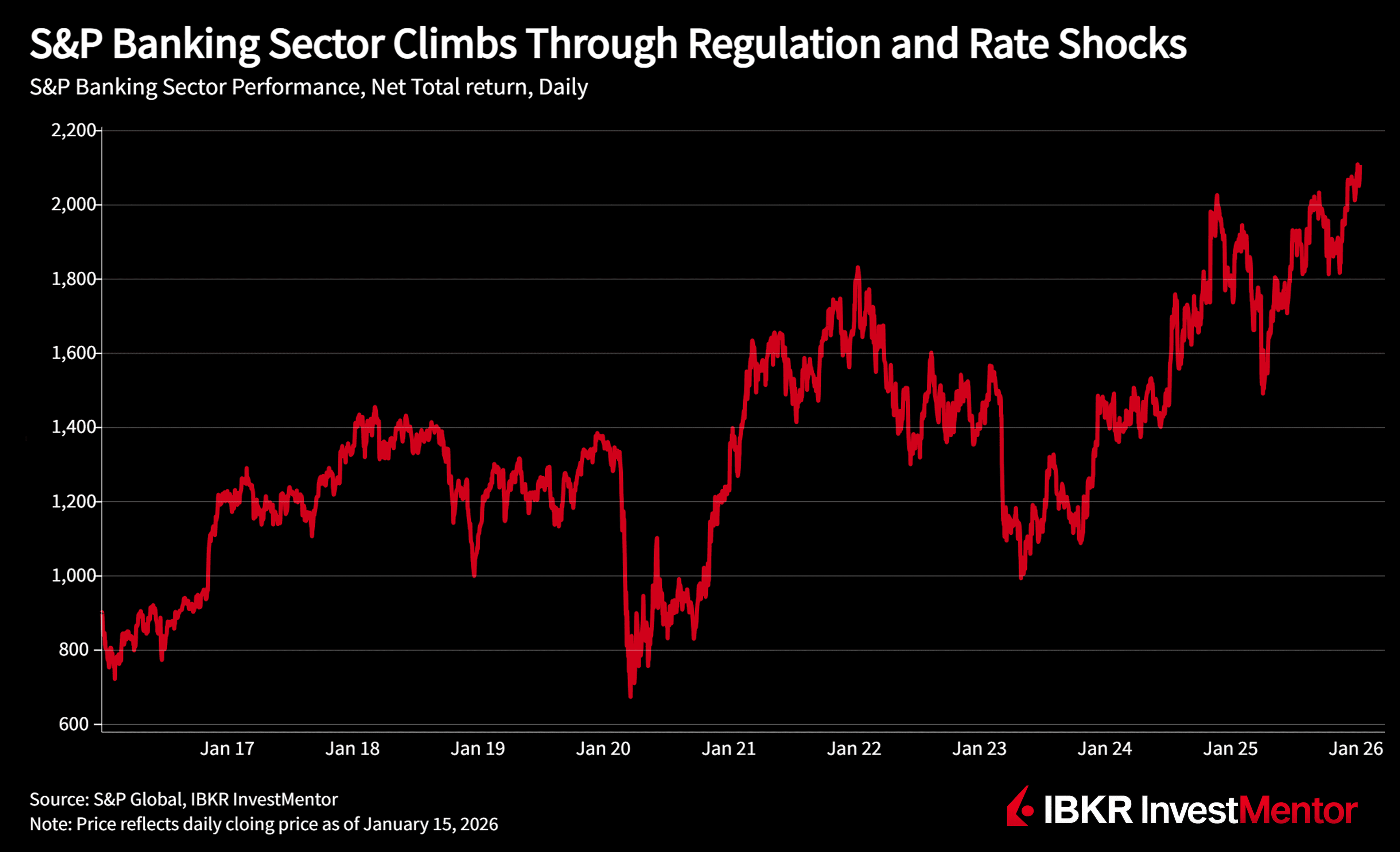
Across the large US banks, 2025 was a banner year. Collectively, the majors generated record revenue and profit, with the real engine coming from Wall Street activity such as dealmaking, trading, and investment-related fees, rather than old-school spread banking.
In short, the system is healthy, profitable, and well-capitalized, just more market-driven than loan-driven right now.
Big banks are exiting 2025 in solid shape, but the profit engine is clearly shifting. Markets and fee businesses — trading, investment banking, and wealth — are driving more of the upside, while classic lending looks steady but less exciting as the rate tailwind fades.
Strategies appear to be diverging across firms, yet the common theme is the same: large US banks are increasingly powered by markets and fees, not traditional lending alone.
The White House has proposed a one-year 10% cap on credit card interest starting January 20, 2026. With average APRs above 20% and cards a major profit engine for JPMorgan, Bank of America, Citi, and Wells, the move directly targets a high-margin business.
It still needs Congress, but markets took it seriously, with big bank stocks falling on the news. If a cap goes through, banks are unlikely to simply absorb the hit: they would almost certainly respond by tightening credit, lowering limits, cutting rewards, and pushing borrowers toward other, less-restricted forms of credit.
Right now, the picture looks like this:
The big banks almost certainly have the earnings power to absorb a one-year shock if they have to, but it’s unlikely they will just quietly eat it.
For investors and policymakers, the key questions now are:
The answers will determine whether this ends up as a one-off squeeze on card margins in an otherwise healthy sector, or the opening chapter in a more fundamental rewrite of how US consumer credit and big-bank profitability are structured.
Want to explore more? Download our free app to unlock expert news updates and interactive lessons about the financial world.