
Companies
Warner Showdown
Another Deadline for Warner Deal as Paramount is Back in the Game
2/25/20262/25/2026

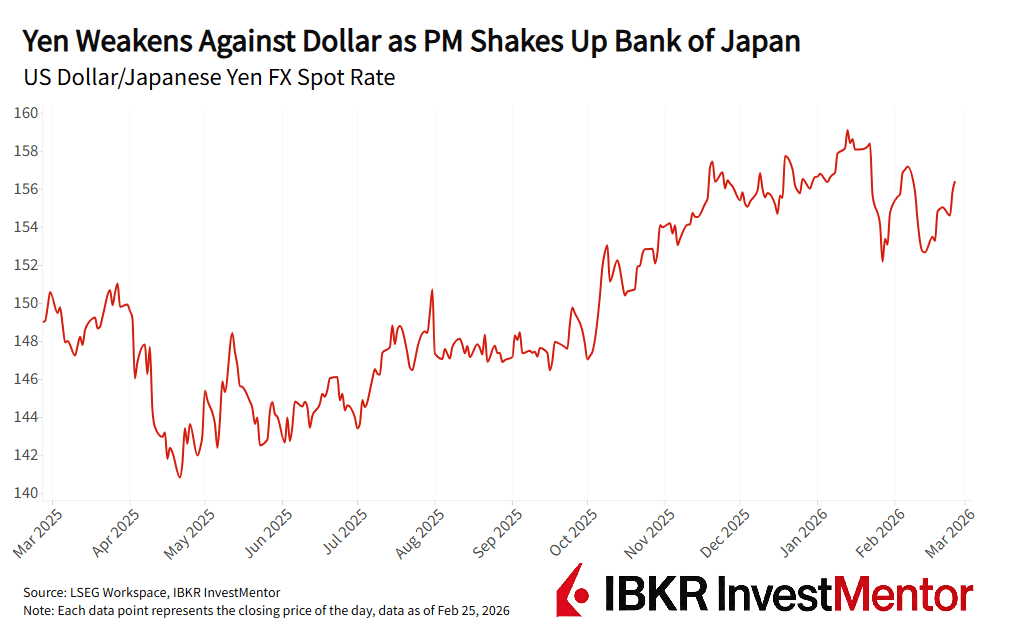
Japanese Prime Minister Sanae Takaichi has nominated two academics, Toichiro Asada and Ayano Sato, to the Bank of Japan’s policy board, triggering an instant market reaction. The yen weakened past 156 per dollar and Tokyo stocks climbed as investors dialed back expectations for rapid rate hikes.
Why? Because both nominees are reflationists — economists who favor stronger government spending and low interest rates to boost growth. They’re willing to take a little heat from the rising prices as long as the economy is growing.
Their arrival could further bolster the prime minister’s ambitious stimulus plans.
The BoJ has been gradually raising rates after ending its decade‑long stimulus in 2024. PM Takaichi has criticised the bank, especially just before taking office late last year. Adding two reflationists will make the board overall more dovish, prioritizing economic growth.
What to expect:
Prime Minister Takaichi champions the same expansionist ideas that defined the era of Japan’s longest-serving prime minister, Shinzo Abe around a decade ago.
The three arrows of Abenomics:
But Abe fought deflationary pressures — the prices and wages stagnating or decreasing. Today, inflation has stayed above 2% for nearly four years. Critics say stimulus risks pushing up prices and swelling government debt, already at around 230% of GDP.
PM Takaichi’s latest picks are only the beginning. Japan’s nine‑member BOJ board turns over slowly, but the timing works exceptionally well in her favor. If she stays in power, she could single-handedly upend the BoJ policy approach.
What’s coming up:
Beyond: A reshaped board could steer Japan’s rate path for a decade.
Economists still expect the Bank of Japan to keep raising rates, potentially to 1% by mid‑2026. But the path is now less certain.
With reflationists joining the board and the PM not fond of further hikes, the bank may move more cautiously.
Bottom line: Inflation remains above target, the price of rice has spiked, the yen is under pressure, and markets are watching for signs of policy shifts within the central bank.
Want to explore more? Download our free app to unlock expert news updates and interactive lessons about the financial world.