
InvestMentor
HomeNewsCoursesSnapshotsVideos
Privacy & TermsSocial Media DisclosureCookie settings

2026 Interactive Academy. All rights reserved.
InvestMentorSM is owned by Interactive Academy LLC, an affiliate of Interactive Brokers LLC. All content provided by InvestMentorSM is for informational and educational purposes only and should not be interpreted as implying any sponsorship, partnership, endorsement, recommendation, or approval by Interactive Brokers LLC or its affiliates.
  1. Snapshots
  2. Cash vs. Margin Account

Cash vs. Margin Account

What Are They? 

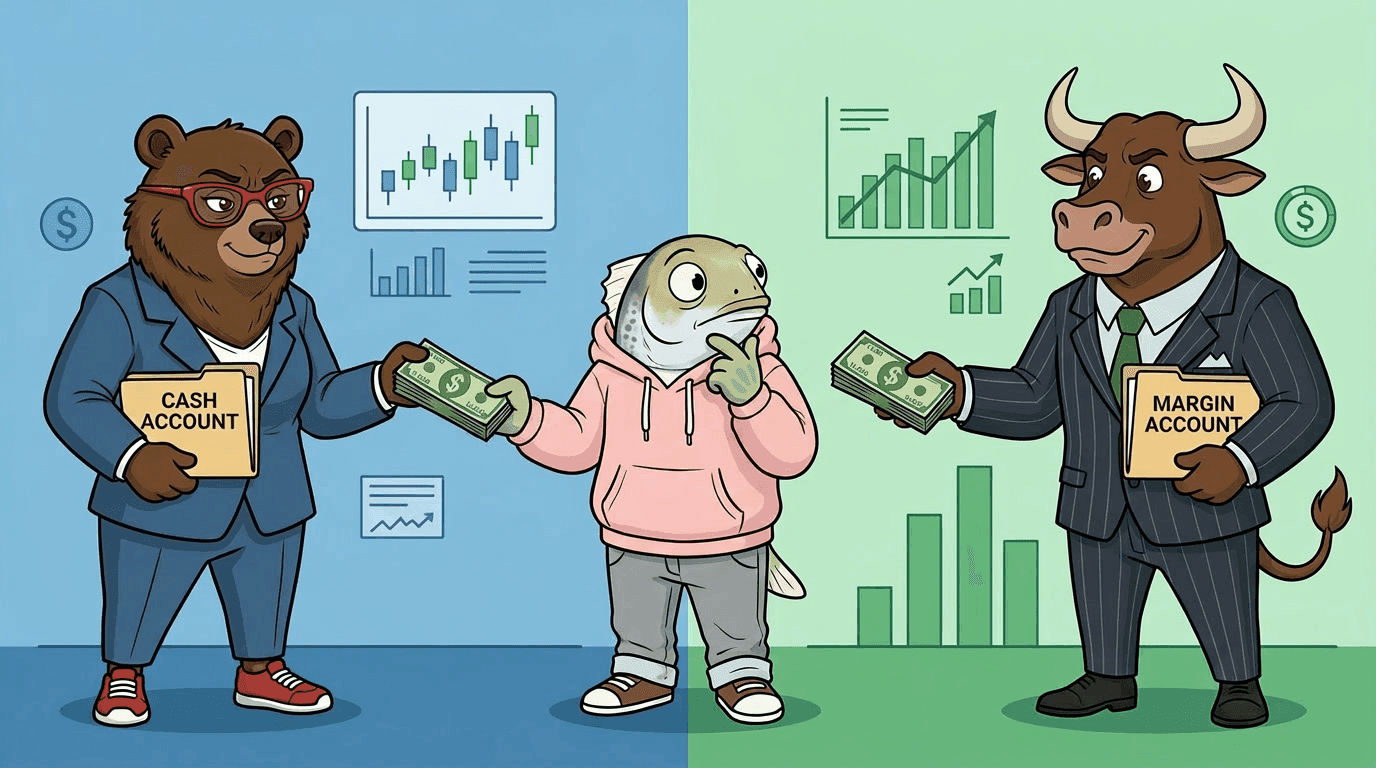
When you open a brokerage account, you usually choose between cash and margin. 

A cash account limits you to the money you’ve deposited. If you have $1,000, that’s the maximum you can invest. No borrowing. 

A margin account lets you borrow from your broker to buy more than your cash alone allows. Depending on the rules, you might buy $2,000 or more worth of assets against your $1,000 deposit. The investments act as collateral for that loan.

Why should I care? 

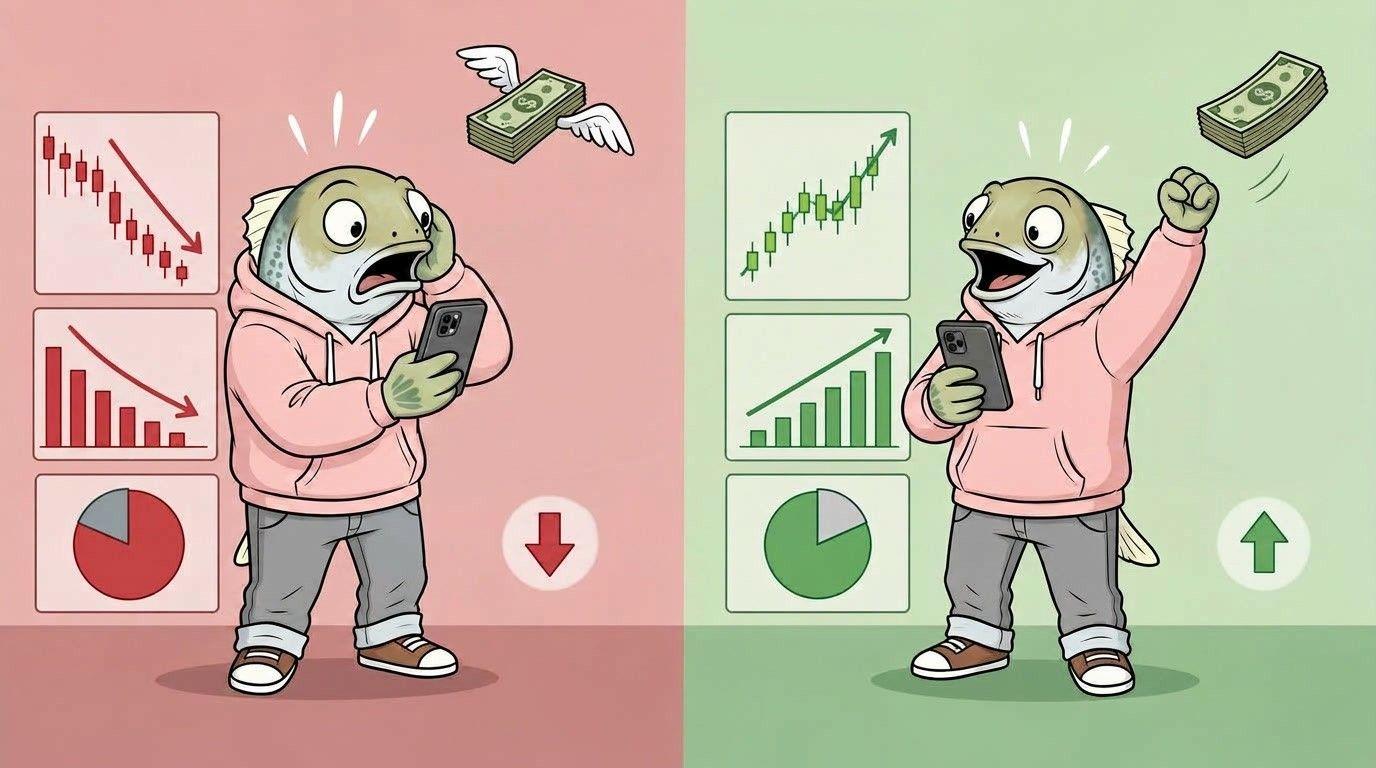
This decision changes how much you gain or lose from the same price moves. 

  • Larger positions: margin lets you control more stock with the same starting cash 
  • Amplified moves: a 10% gain or loss hits a larger position, so the dollar impact is bigger 
  • Access: short selling and some options strategies require margin 
  • Speed: you don’t need to keep waiting for cash to settle before reusing it 

Example: You use $1,000 of your own money and borrow $1,000 to buy $2,000 of stock. If the stock rises 10%, you profit $200. But if the stock falls, your loss is $200.

What’s the catch? 

Borrowed money cuts both ways. 

  • Bigger losses: if your investment drops, you still owe the borrowed money 
  • Margin calls: if your account falls too much, your broker can force you to add cash or sell assets 
  • Interest costs: you pay interest on the money you borrow 
  • Overconfidence trap: easy to take bigger bets than you should 

This is why cash accounts are considered safer for beginners and buy-and-hold investors.

Do you want to learn more?
Download InvestMentor to access the full snapshot and explore interactive courses that build your financial knowledge and guide you toward smarter investing decisions.
Log in to access the full snapshot
or