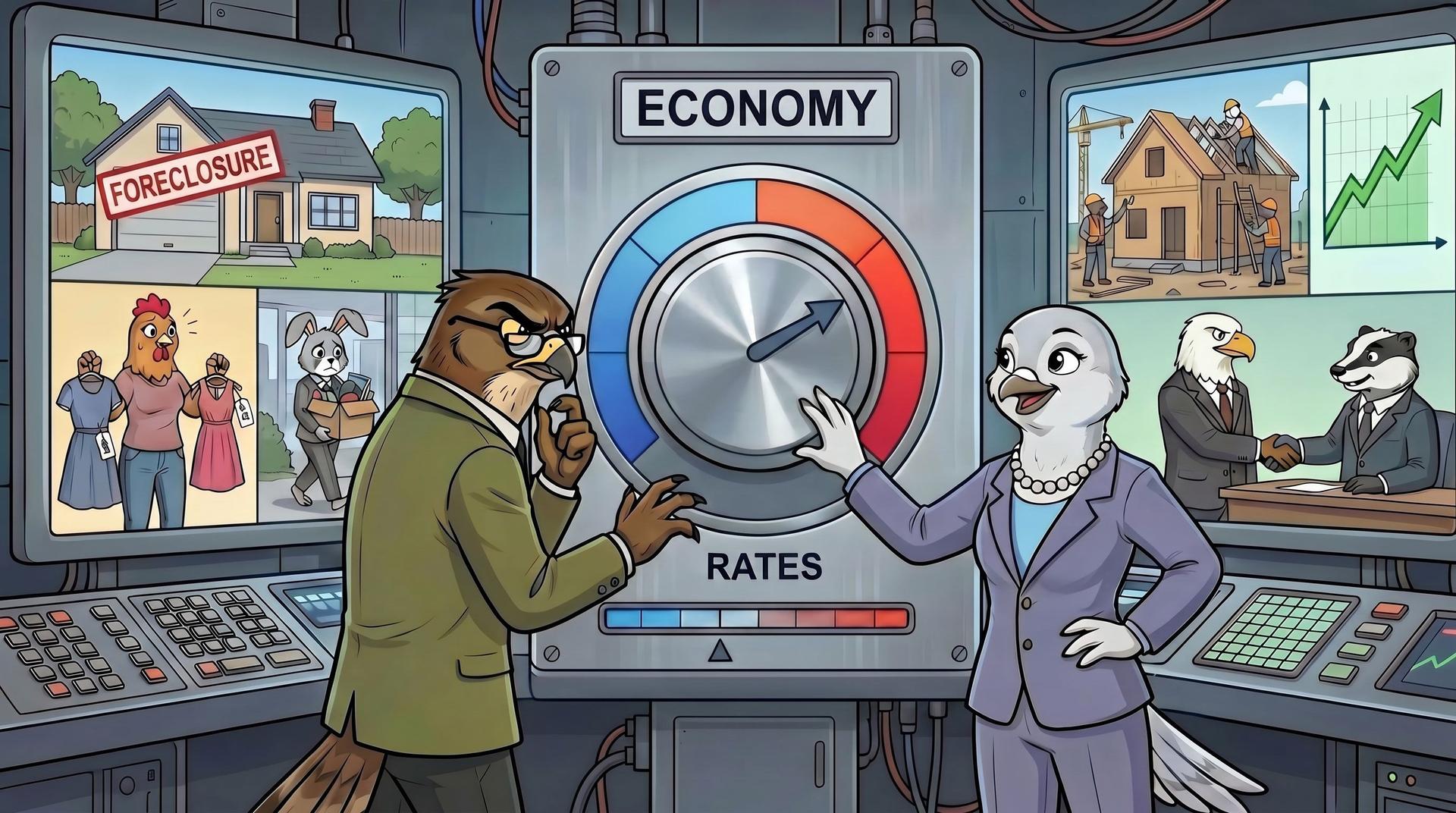
Monetary policy is how a central bank (like the Federal Reserve or the European Central Bank) steers the economy by managing the cost and supply of money in an economy. The goal is to keep inflation stable (usually around 2% in wealthy economies). Sometimes this target is paired with supporting growth and employment.
Main tools:

Monetary policy is the thermostat for the entire economy.
Example: As a response to the Covid-19 pandemic, central banks slashed rates and pumped money into markets. Stocks surged, borrowing boomed, and house prices jumped. This is how monetary policy impacts your rent, job prospects, and investment portfolio.

Central bankers are among the most powerful officials in the world. But monetary policy is a blunt, slow tool. Interest rate changes can take months to filter through the economy, with the full impact often only clear after about a year.
That lag creates a risk of overcorrecting: tightening too much can tip an economy into recession just as inflation starts to cool, while stimulus can spark new price spikes. Years of cheap money can also inflate asset bubbles. The Fed and ECB balance sheets hit record highs in 2022 and are still unwinding.
Central bankers’ job is to guess in real time with imperfect data. By the time inflation is “fixed,” the damage from the cure may already be underway.