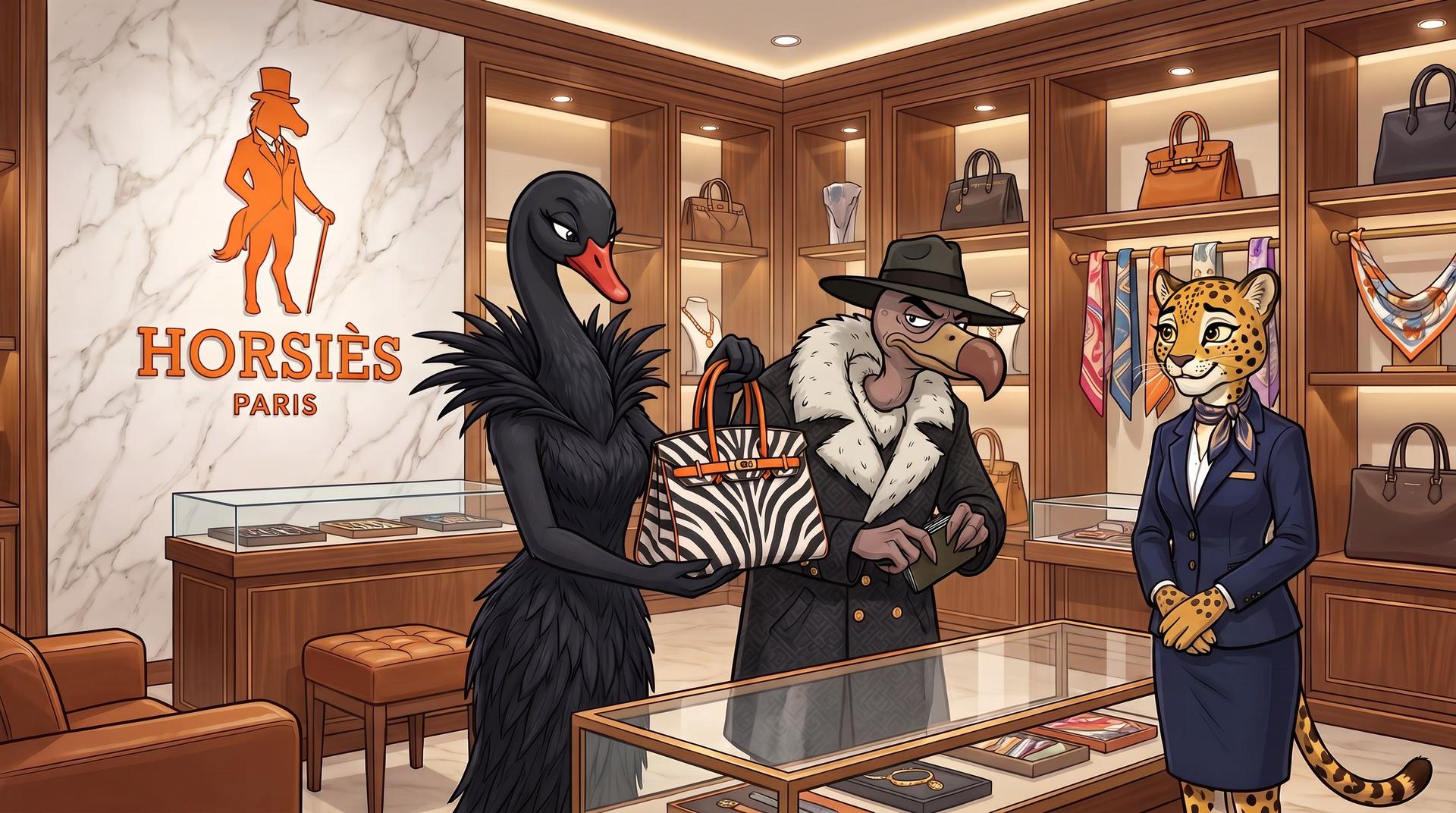
A Veblen good is something people want more of as it gets more expensive. Yes, really.
It’s named after a 19th-century American economist, Thorstein Veblen, who noticed that some wealthy buyers use spending to signal status in what he called “conspicuous consumption.” Instead of the high price putting people off, it pulls them in.
Classic examples:

Veblen goods break the basic rule: higher price = lower demand. It’s an important concept to grasp if you invest in the luxury sector. The most desirable brands can maintain pricing power even in shaky markets. The sky-high price is the point.
Example: Hermès has raised prices steadily for years. Yet demand for its iconic Birkin bag hasn’t faded since the first one was made in 1984. It has strengthened, partly because the bags feel even more exclusive with a bigger price tag.

This only works as long as people believe the story. If a brand becomes too common or loses its cool edge, desirability is diminished.
This is why many luxury companies have historically destroyed their unsold stock. This practice has become rarer as consumer backlash and regulation have forced companies to recycle, reuse, or donate their unwanted goods.
Also, not every expensive item qualifies. A pricey laptop isn’t a Veblen good if people buy it for the computing power. Even many luxury items fail to qualify if they're mass-produced or commonly discounted during downturns or Black Friday promotions.