
A dead-cat bounce is a temporary rally that sometimes happens after a stock, other asset, or the whole market has fallen sharply. Prices suddenly rebound, creating the impression that the worst may be over, only for the decline to resume soon after. The phrase comes from a morbid Wall Street saying: "Even a dead cat will bounce if it falls far enough." This type of short-lived recovery is also known as a sucker's rally.
Triggers for a dead-cat bounce:
Some of the biggest one-day and one-week gains in market history have occurred in the middle of bear markets rather than at the start of lasting recoveries.
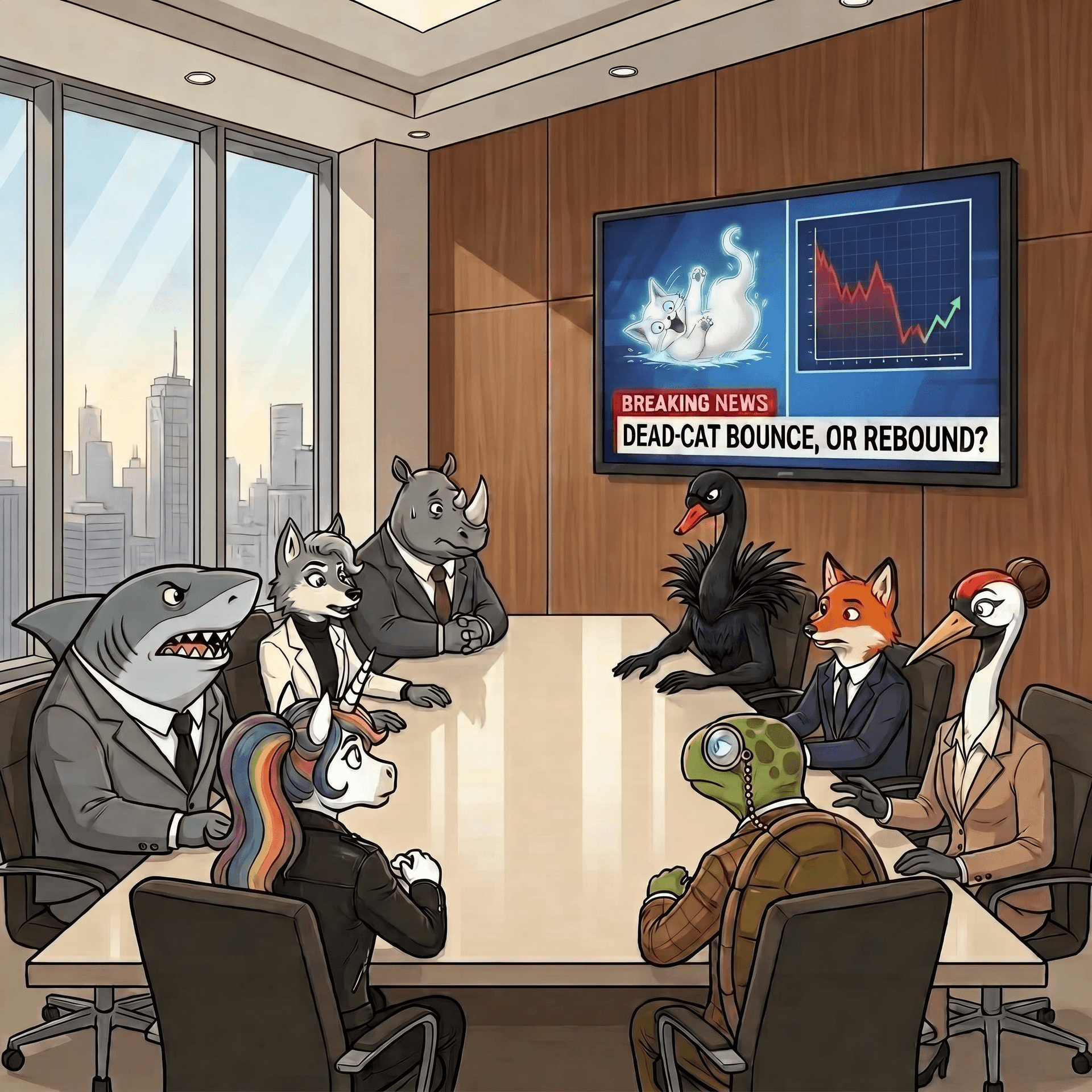

Dead-cat bounces can be expensive for investors who mistake a brief rally for a recovery. After a steep decline, even a modest piece of good news can spark buying. A stock that has fallen 40% might suddenly jump 15% within days, fueling talk that a turnaround is underway.
But a rising price does not always mean the underlying assets are improving. During the 2008 financial crisis, US stocks staged several impressive rallies before falling to new lows.
During the Great Depression, American stocks bounced nearly 50 percent between November 1929 and April 1930, only to collapse into a much deeper multi-year free fall.

It's hard to resist a powerful rally, especially after prices have fallen sharply. The problem is that dead-cat bounces are usually only obvious in hindsight. Analysts may attempt to spot them in advance using technical and fundamental analysis, but there is no reliable way to know for certain while the rally is happening.
For retail investors, the best defense is to focus on whether the underlying reasons for the decline have actually changed. A genuine recovery is usually supported by signs that conditions are improving, such as: