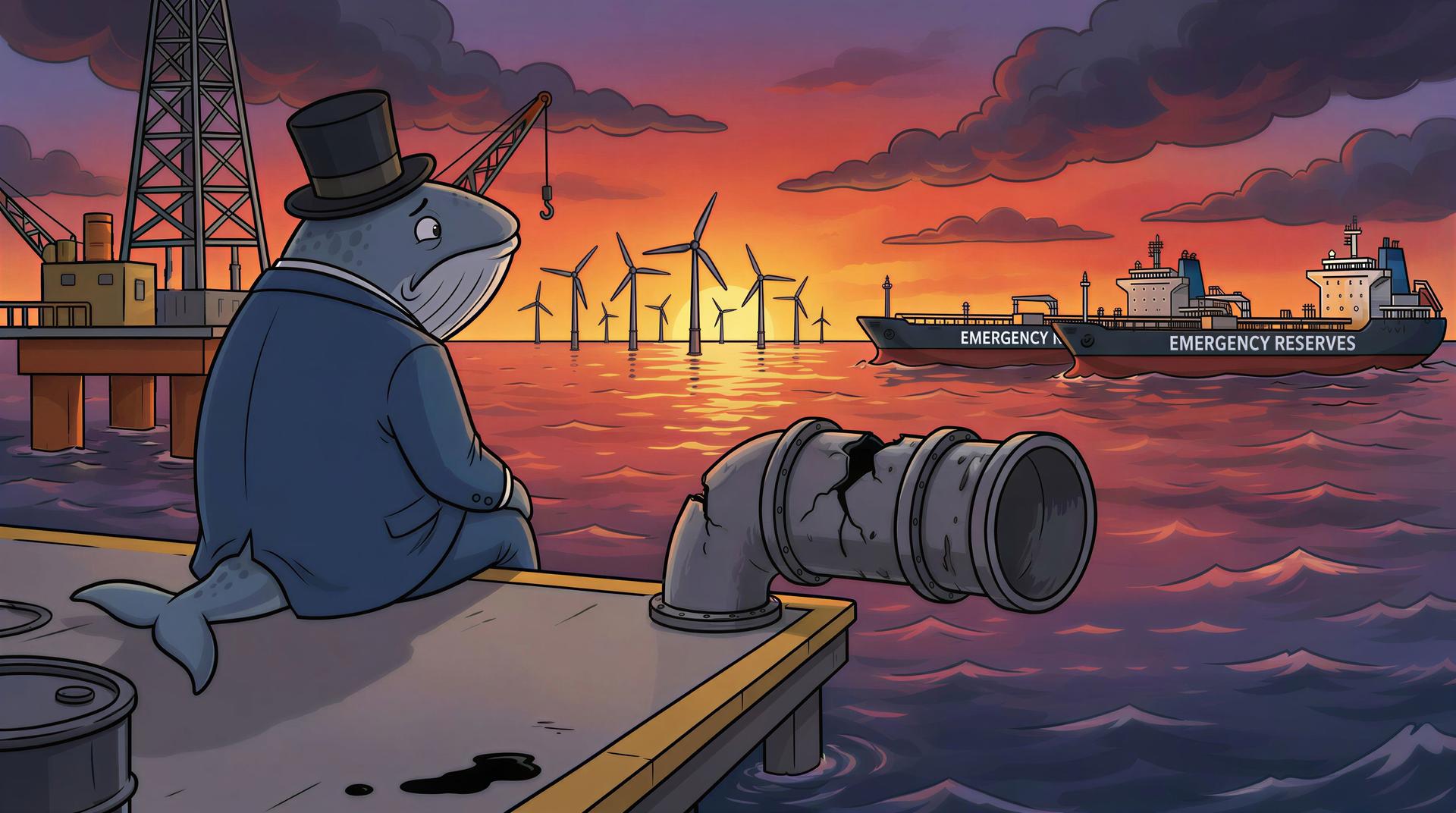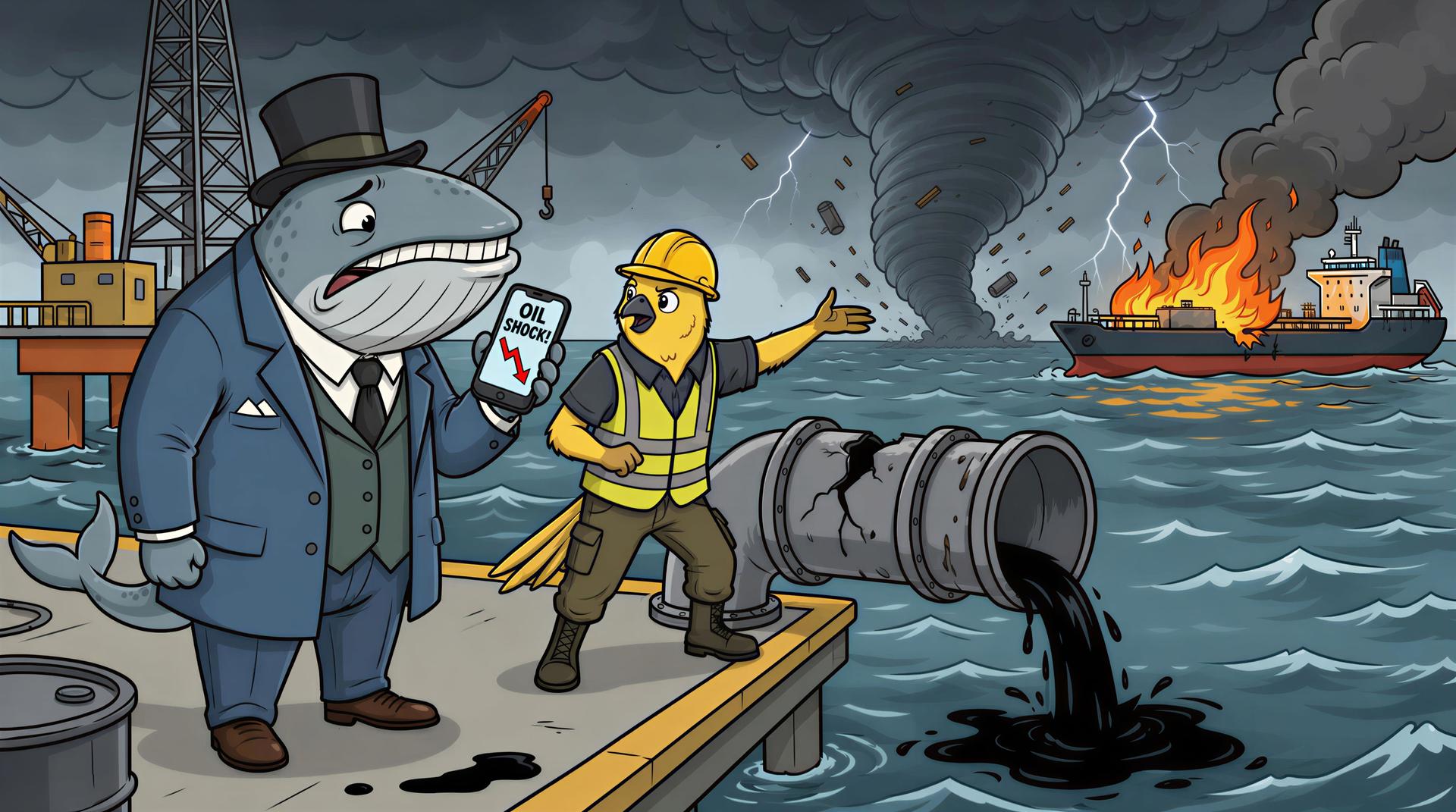
An oil shock is a sudden jump or drop in oil prices caused by an unexpected event.
This usually happens when something disrupts how oil is produced or delivered, such as:
Because oil powers transportation, heating, and manufacturing, price shocks can spread quickly.
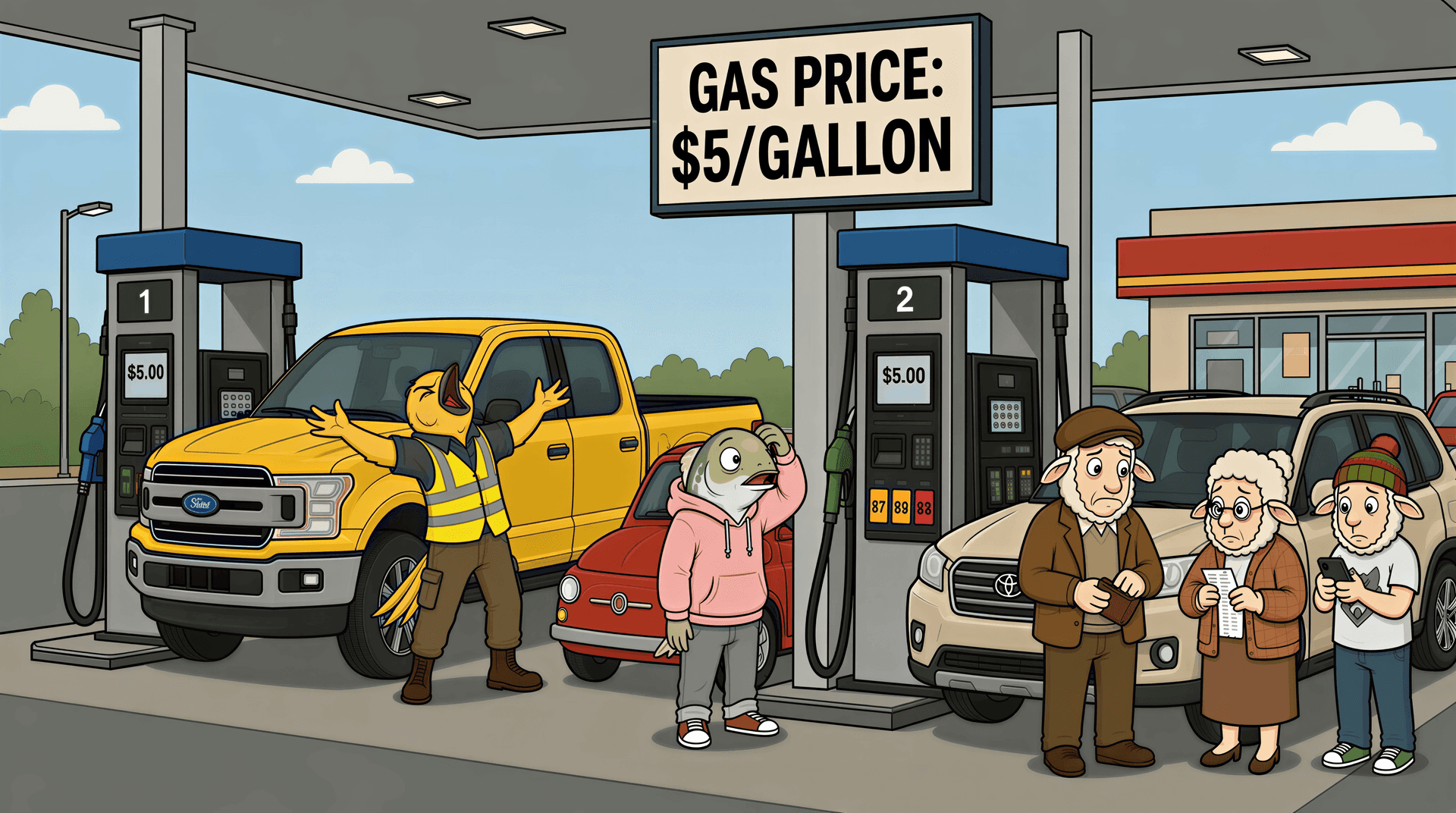
When oil prices jump, it can lead to a vicious cycle of inflation across the economy:
Because oil shocks impact the global economy, they often jolt the broader market too, making stocks and bonds more volatile. Oil shocks of the 1970s and the 2026 closure of the Strait of Hormuz are usually considered the worst in history.

It is difficult to estimate how long oil shocks last, especially if the trigger is a military conflict. A prolonged shock can push up inflation around the globe, and even trigger stagflation: simultaneously high unemployment and inflation combined with sluggish growth.
Things that can soften the impact: