Risks & Crises

Black Swan

Black Swan

What Are They? 

These are two popular ways to describe unexpected market shocks. 

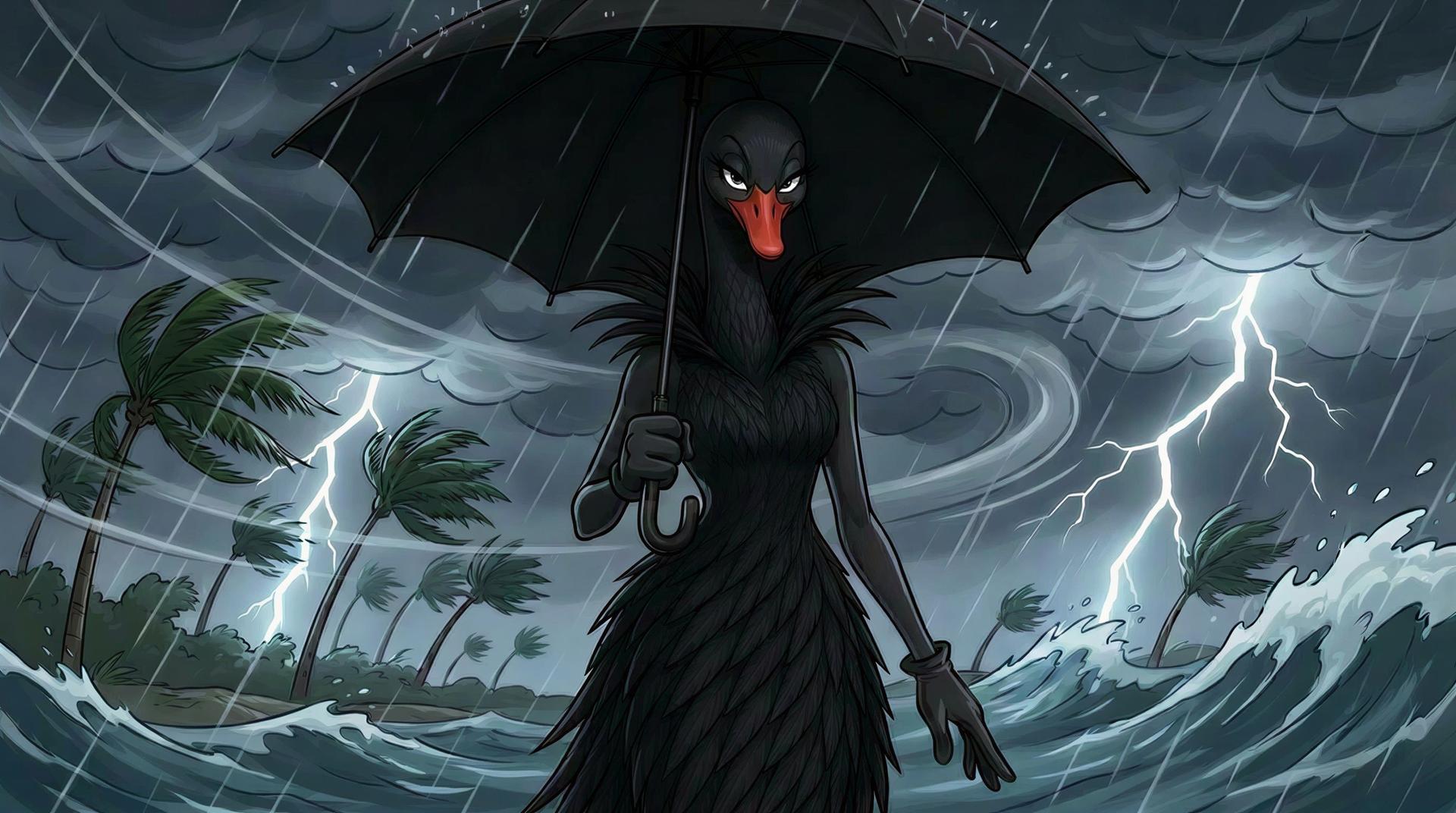
Black Swans (coined by statistician Nassim Nicholas Taleb): 

  • Extremely rare events, unforeseeable to most 
  • Severe, system-wide impact 
  • Often rationalized with the benefit of hindsight 

Examples: the 9/11 attacks and the 2008 financial crisis. This contrasts with a grey rhino, an obvious high-impact threat that is ignored.  You may have also heard of grey swans: possible but unlikely events that tend to be downplayed.
Black Swan

Why Should I Care? 

Events don’t move the markets. Surprises do. 

  • Black Swans trigger chaos because almost no one is prepared 
  • Risk models often miss them, especially the extreme scenarios 

Before 2008, banks bundled high-risk mortgages into complex products and sold them around the world. On paper, the risk looked spread out and manageable. But no one tracked the full exposure. When the US housing market crashed, losses rippled through the interconnected system, snowballing into a global crisis.

Black Swan

What’s the Catch? 

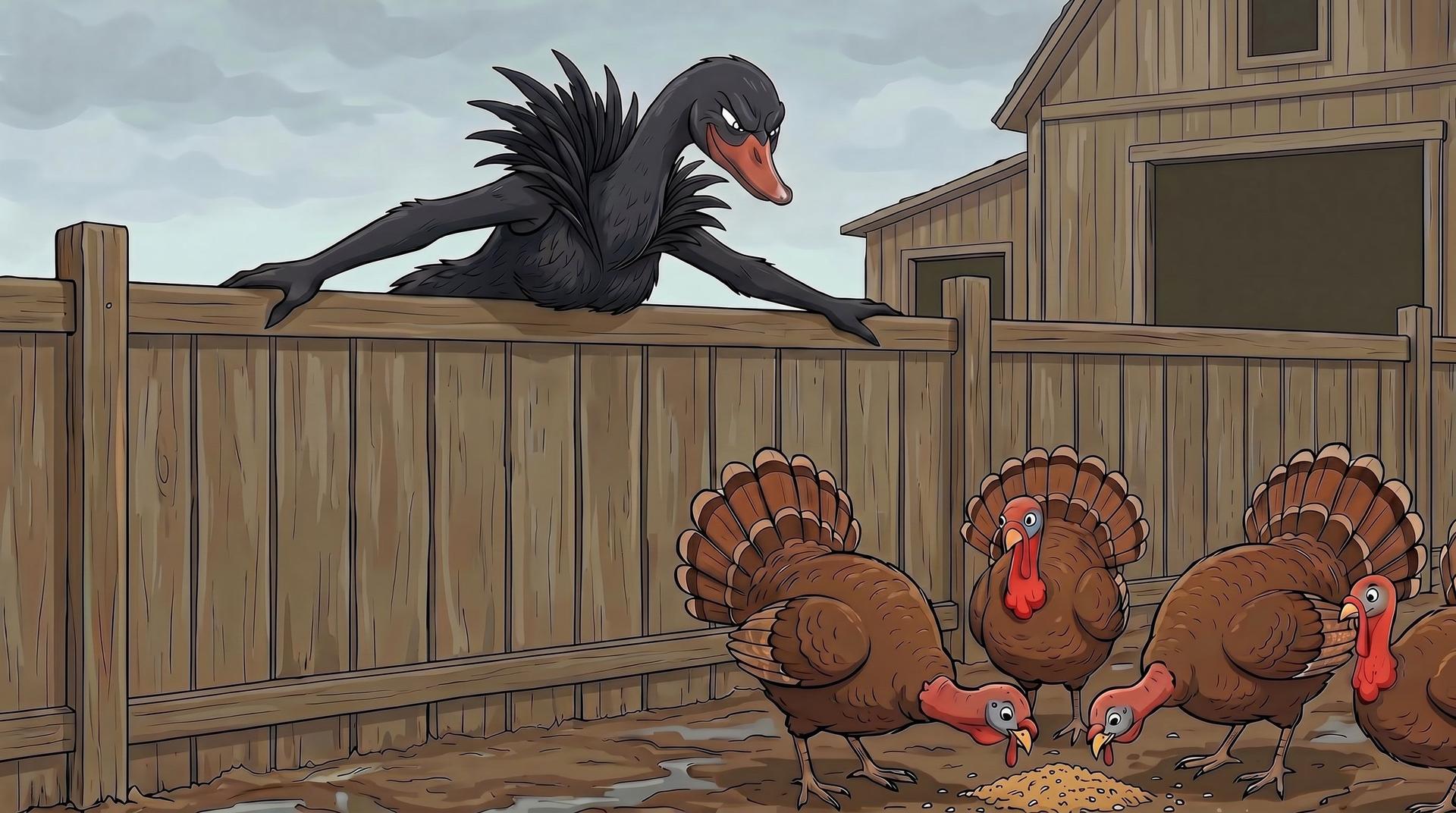
Past data does not predict future outcomes. Taleb’s famous example of a turkey highlights this problem. 

A Thanksgiving turkey is fed and taken care of every day for 1,000 days, making the bird confident that humans love it and have its best interests at heart. But then comes the day of slaughter, the ultimate black swan event for the poor turkey. The perspective matters, too: the unexpected disaster for the turkey is a mundane, calculated event for the butcher.  

While you may not be able to predict the unpredictable, you can avoid false security and prepare for systemic shocks.

Want to explore more? Download our free app to unlock expert news updates and interactive lessons about the financial world.