

Why Nations Trade

The Logic Behind Global Trade

Why countries specialize and trade to grow

23-01.png

Introduction to Why Countries Trade 

Welcome to Trade and Tariffs. 

In this first lesson, you’ll discover why countries engage in trade with each other, how absolute and comparative advantage encourage specialization and economic growth, and what benefits and challenges trade creates for nations, industries, and communities. 

You’ll also meet Daniel, a talented furniture maker whose story reveals how shifting trade patterns ripple from his workshop to local jobs, consumer prices, supply chains, policy debates, and the broader global economies.
23-02.png

Absolute Advantage 

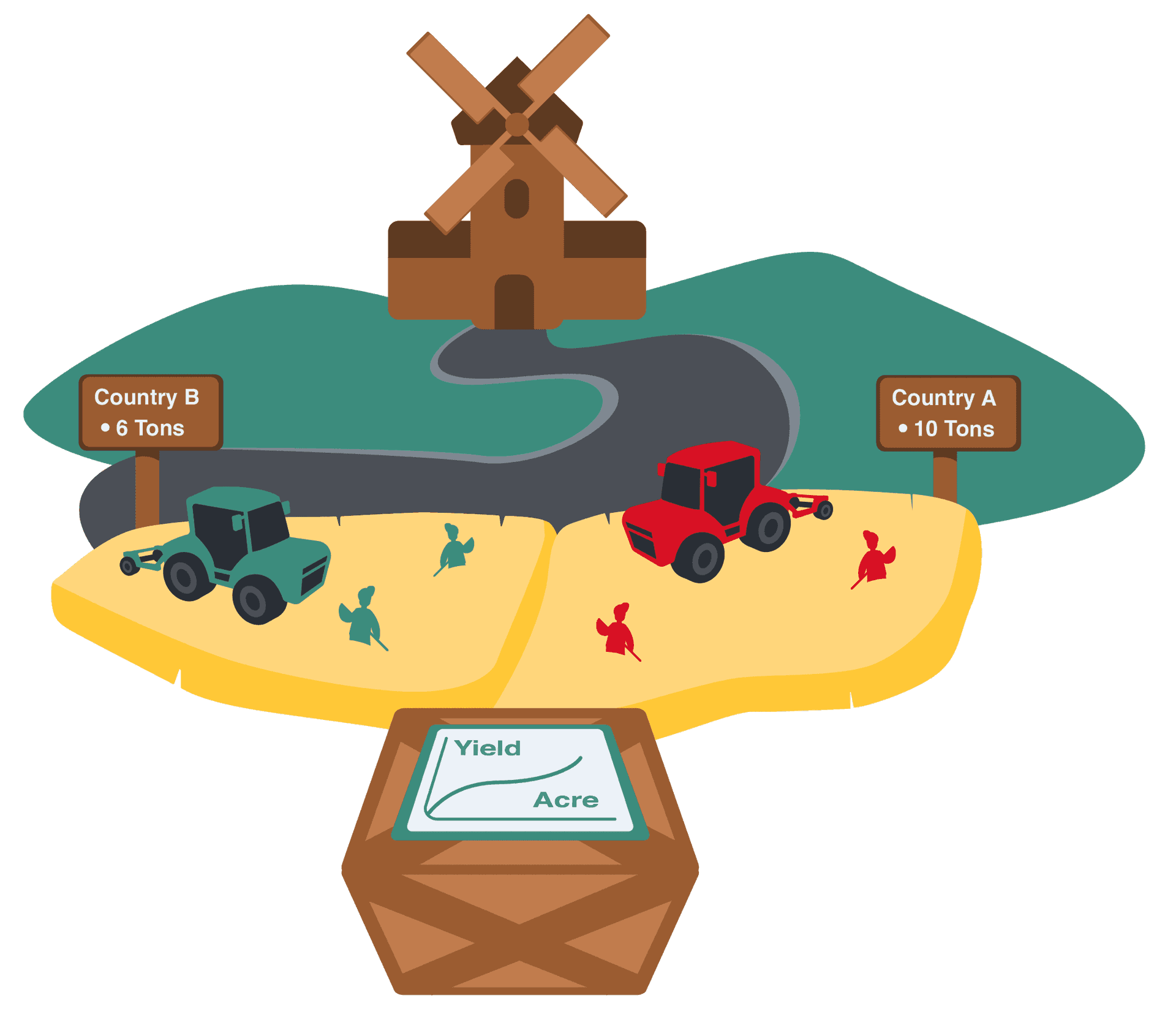
A country has an absolute advantage if it can produce more of a good using the same resources compared to another country. 

For example, if Country A grows 10 tons of wheat with the same land and labor that Country B uses to grow only 6 tons, Country A has an absolute advantage in wheat. 

This concept explains why nations often specialize in making goods they produce most efficiently. 

Specialization based on absolute advantage increases productivity and supports higher incomes over time.

23-03.png

Comparative Advantage 

A comparative advantage means producing goods at a lower opportunity cost, even if you don’t have an absolute advantage

For example, Country A can make wheat and cloth, but giving up some wheat to make cloth costs more than it does for Country B. 

So, Country B has a comparative advantage in cloth production. 

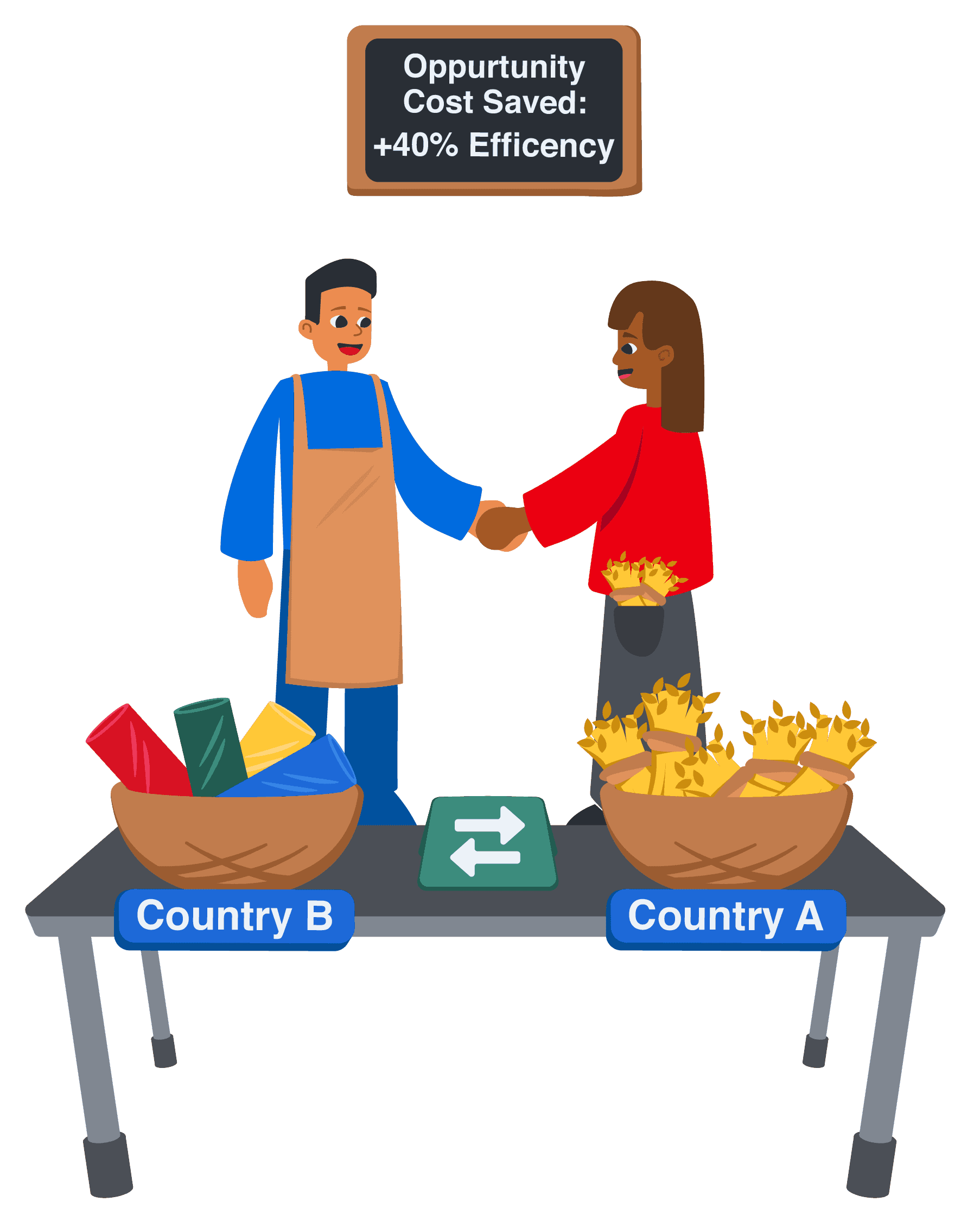
When each country specializes in what it does best relatively, trade allows both to enjoy more total goods and services than they could produce on their own without exchanging resources.

Gains from Trade 

When countries specialize in goods where they hold a comparative advantage and then trade, the total amount of goods available rises for everyone involved, an outcome called the gains from trade. 

Imagine two nations that each spend half their resources on coffee and half on corn. 

By shifting fully into their stronger crop and swapping surpluses, they both end up with more coffee and more corn than before. 

Trade also widens consumer choice, lowers average costs, and raises incomes, fueling economic growth.

Daniel Considers Exporting 

Daniel’s workshop makes desks and bookshelves. After learning about comparative advantage, he studies costs and demand abroad. 

Desks sell for $320 each overseas, compared to $250 locally, while bookshelves earn just $180 per unit in any market. 

Even though he can make both products efficiently, desks bring in a 28% higher margin when exported. 

He plans to shift 60% of production to desks for overseas buyers while purchasing bookshelves locally at $150 per unit to save time and resources.

Do you want to learn more?
Download InvestMentor to access the full lesson and explore interactive courses that build your financial knowledge and guide you toward smarter investing decisions.