
Shares and Ownership I.

Buying a slice of a company.

Master equity basics: rights, dividends, and corporate influence.

03-01.png

Introduction to Share Ownership

When you buy a share of a company, you're not betting — you’re owning

A share, or a stock, is a slice of a real business, complete with profits or losses, risks, and a seat at shareholder meetings.

This lesson continues the story of Daniel, a young professional eager to put his savings to work. 

Let’s follow him as he discovers what it means to be a shareholder: enjoying the rewards, accepting the responsibilities, and learning how investors shape a company’s future.
Understanding Shares

When you own a share, you own a fraction of the company’s assets, earnings, and future potential.

This is how stocks can make (or lose) you money: 

  • Dividends: Optional profit payouts to shareholders.
  • Capital gains: Selling your shares for more than you paid.
  • Stock buybacks: When a company repurchases its own shares, the value usually goes up.
  • Capital losses: Selling your shares at a loss.
  • Dilution: New shares issued may shrink the value of your holdings.
  • Bankruptcy: Shareholders are last in line.

QuantumTech's Stock Market Debut

QuantumTech, a biotech firm developing AI tools for early disease detection, completes its IPO and begins trading publicly.

Daniel, having followed the company’s progress, decides to invest early.

As the stock soars early on, his investment grows. A promising start!

His initial research seems to pay off, but he knows biotech can be a volatile sector. Daniel stays focused, aware that future developments may not follow a straight path.

03-02.png

Common vs. Preferred

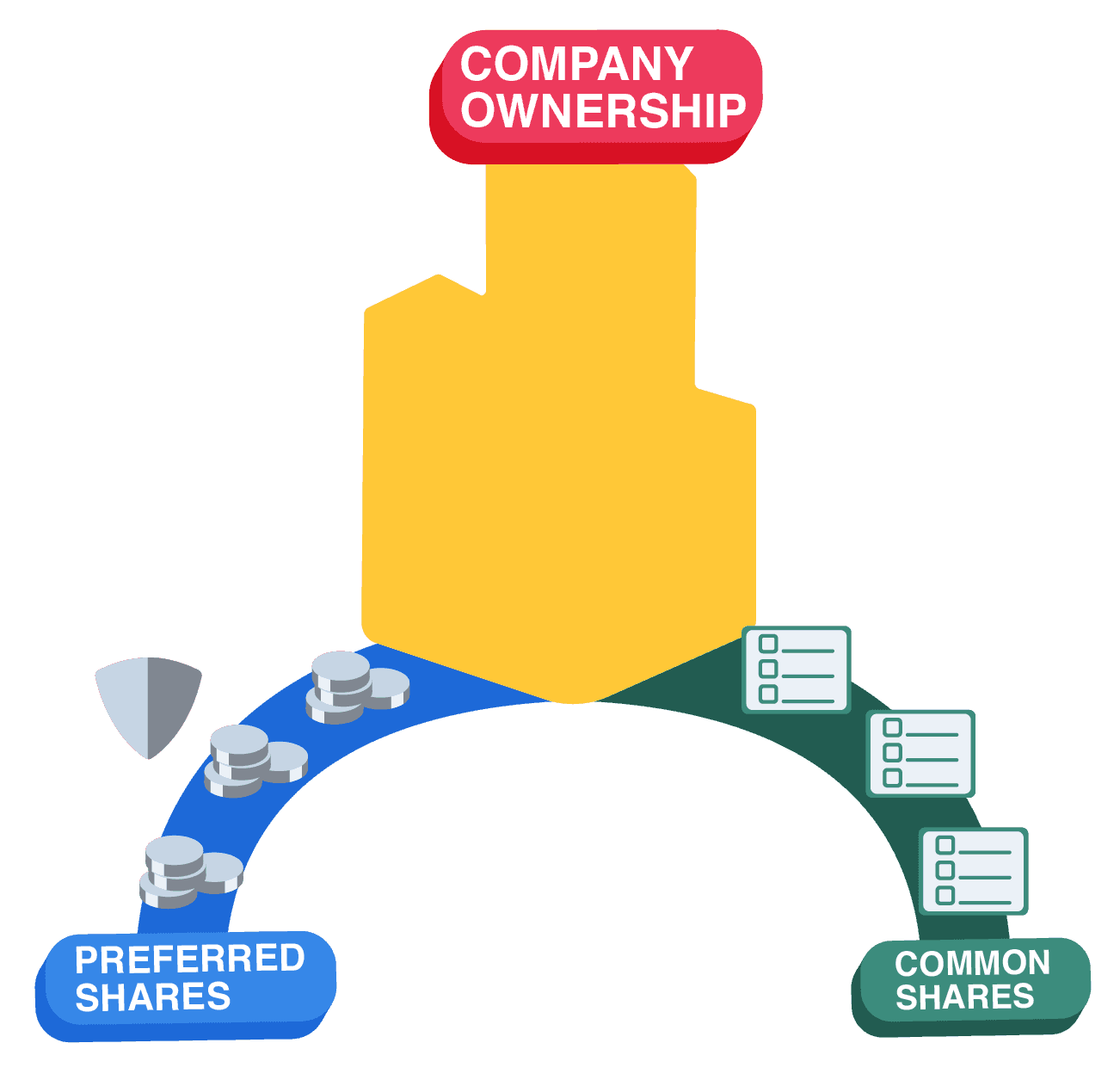
Stocks come in two main types: common and preferred.

  • Common shares are the most widely issued. They offer voting rights and potential dividends, giving investors influence and a share in the company’s success.
  • Preferred shares prioritize fixed dividends and carry a higher claim on assets if the company goes bankrupt, but they usually lack voting power.

Understanding the trade-offs helps investors choose the type of equity that fits their goals.

The Backbone of a Company

Shareholders play a powerful role in shaping a company’s future. 

They fuel the company’s growth by providing capital, and their votes help steer key decisions like mergers and acquisitions.

From individual investors like Daniel to institutional investors like pension funds and insurance companies, investors influence strategy and hold the top management accountable.

But ownership isn’t risk-free. Market downturns, poor leadership, or shifting business conditions can all impact returns.

Do you want to learn more?
Download InvestMentor to access the full lesson and explore interactive courses that build your financial knowledge and guide you toward smarter investing decisions.