
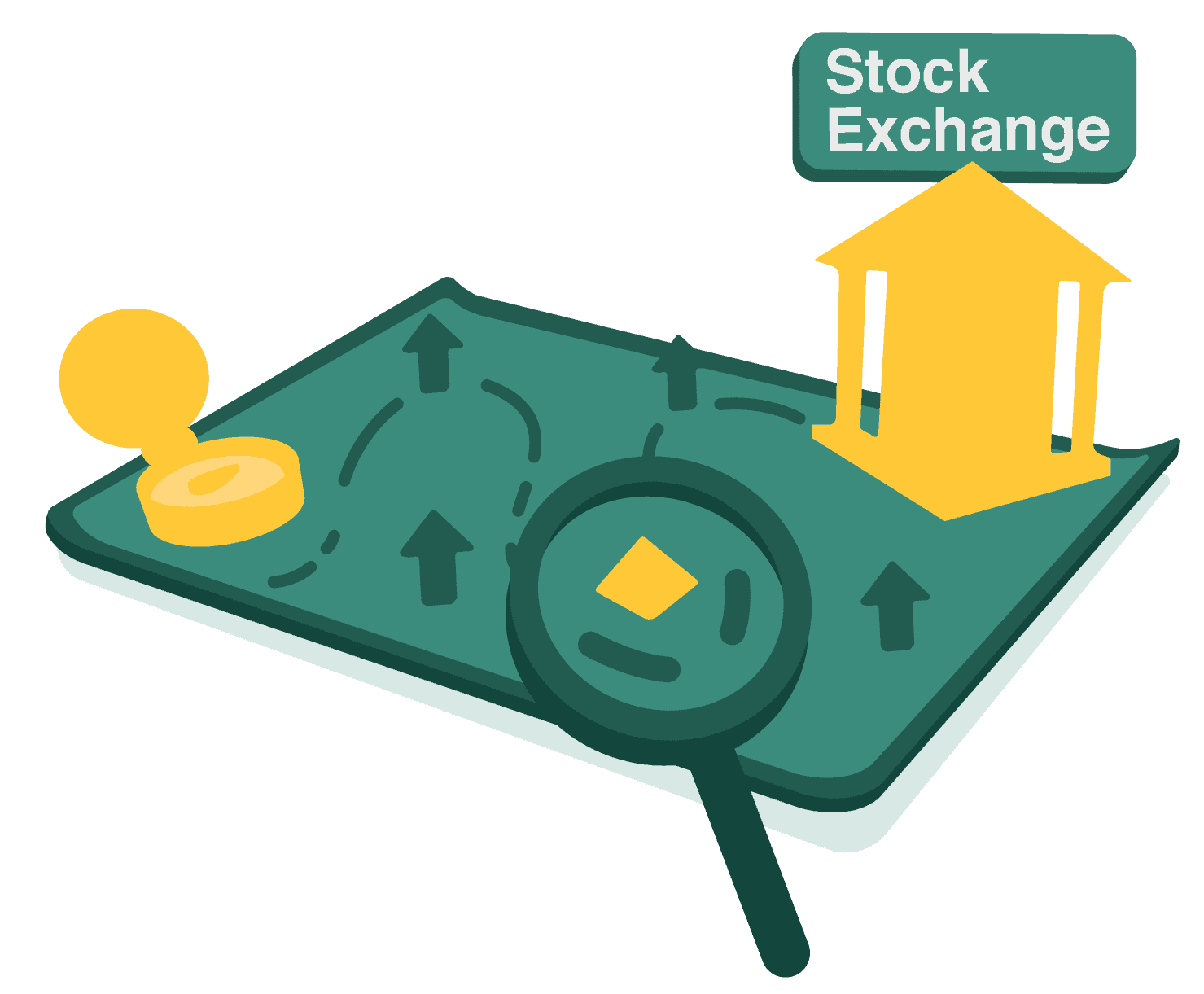
Stock Exchanges

The market scoreboards of the world.

Learn about trading mechanics and liquidity of publicly traded securities.

03-06.png

Introduction to Stock Exchanges and Indices 

Imagine a stock exchange as a big marketplace where people trade pieces of companies, called stocks. It connects investors with companies, enabling ownership to change hands in seconds.

Prices move based on supply and demand, with every trade shaping a company’s market value.

Stock indices, like the S&P 500, track groups of stocks — offering a snapshot of how the broader market is doing.

Let’s keep learning alongside Daniel as he dives into how stock exchanges operate.
What Are Stock Exchanges?

A stock exchange is a formal marketplace where investors buy and sell shares of publicly listed companies. 

It connects buyers and sellers, helping set fair prices through supply and demand.

Exchanges operate under strict rules, offering transparency, liquidity, and security for trades.

They mainly trade equities, though some also list other securities such as exchange-traded funds (ETFs) and options.

Major exchanges include the NYSE, Nasdaq, London Stock Exchange, Euronext, and Hong Kong Stock Exchange.

Placing Your First Trade

Starting a trade involves a few key steps:

  • Choose your stock — which company do you want to invest in?
  • Decide how many shares to buy or sell
  • Pick an order type — such as a market or a limit order

Before finalizing the order, investors analyze market trends, company performance, and broader economic signals. 

Orders are entered through a brokerage platform, then routed to an exchange and matched based on price and timing.

Double-check your numbers to make sure your trade goes through without a hitch.

03-07.png

Trade Execution and Settlement

Once you place a trade, it goes through two key phases:

  • Execution — your order is matched with a buyer or seller on an exchange
  • Settlement — the actual transfer of shares and money between parties

Execution can happen in seconds, but the settlement usually takes T+2 (trade+two business days). 

Clearinghouses like DTCC help reduce counterparty risk and ensure transaction completion.

This way, both sides get what they agreed to — shares for the buyer, cash for the seller — in a secure and regulated way.

Daniel Buys More Shares

After getting burned on his first investment, Daniel is determined to keep learning and stay in the game

He decides to buy 100 shares of FreshTote, an online shopping platform trading at $50 per share.

He logs into his brokerage account, searches for the ticker symbol "FTOT", and selects "Buy."

After entering the number of shares, he chooses a market order for immediate execution at the best available price.

He reviews the details, confirms the trade, and receives a confirmation message within seconds.

Do you want to learn more?
Download InvestMentor to access the full lesson and explore interactive courses that build your financial knowledge and guide you toward smarter investing decisions.