
Economy
ECB Race
High-Stakes Competition for Europe’s Top Job
2/19/2026
2/20/2026
Inflation in the US picked up in December, with the personal consumption expenditures (PCE) index rising 2.9% year-on-year — slightly more than economists expected.
Why this matters? The PCE is the Federal Reserve's preferred inflation metric. The central bank thinks the PCE index adapts to changes more quickly than the consumer price index (CPI). This makes it a more accurate measure of how Americans spend their money.
The holiday season data reinforced a familiar theme: inflation has eased a lot from its 2022 peak of 7.2%, but the final stretch toward the Fed's 2% target remains uneven.
The headline Personal consumption expenditures (PCE) price index rose 0.4% month-over-month, up from 0.2% in November. Core PCE (excluding food and energy) also increased 0.4%.
On a year-over-year basis:
The stronger monthly reading suggests inflation pressures remain sticky, particularly in services, where price gains tend to be more persistent.
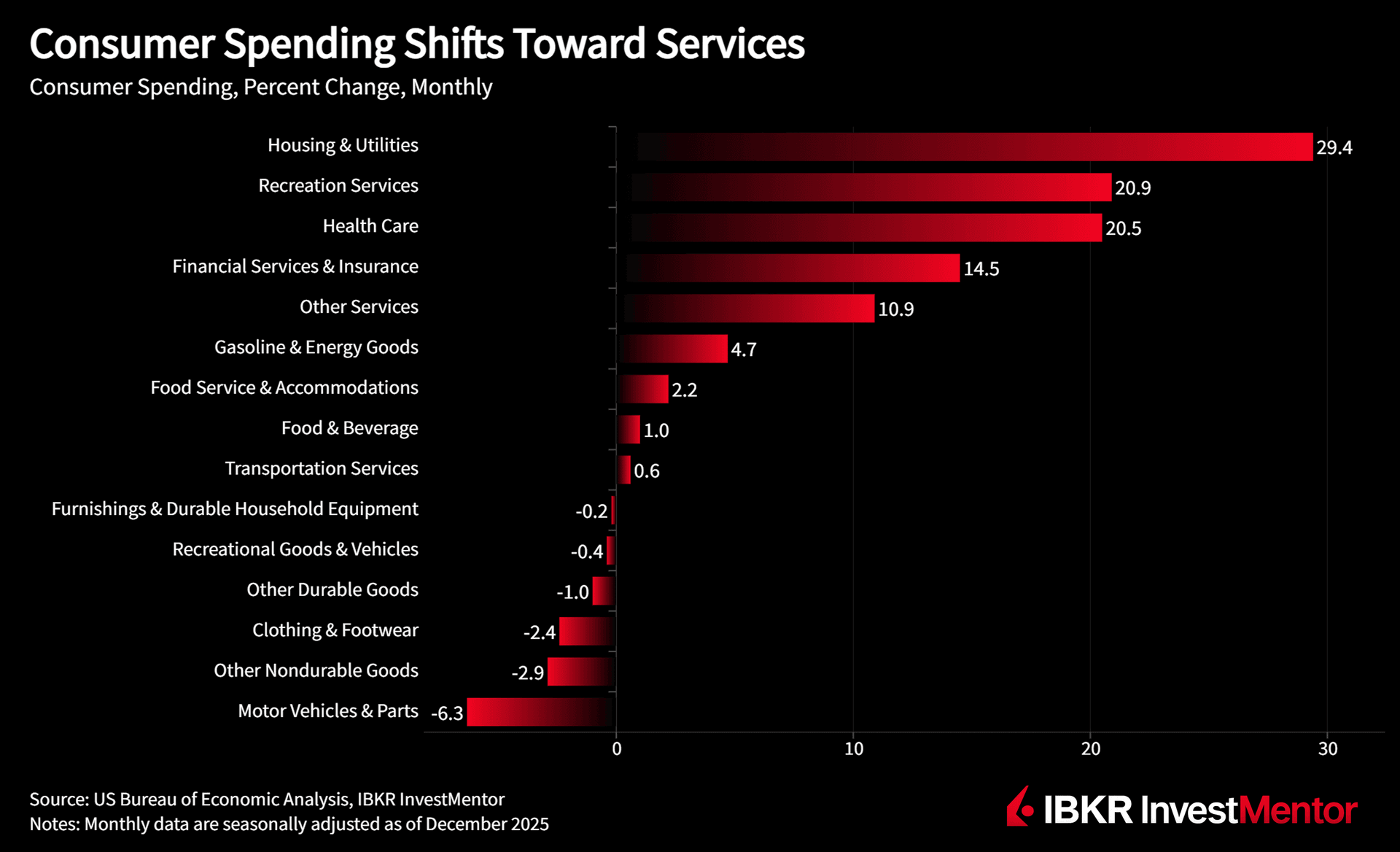
Americans spent 0.4% more in December at a monthly rate, but after adjusting for inflation, real spending rose only 0.1% — down from 0.2% previously. Most of the increase came from services, while spending on goods fell.
Spending breakdown:
This continued shift toward services matters because services inflation is closely tied to wages and tends to cool more slowly.
Personal income rose 0.3% month-on-month, supported by compensation and transfer payments. Disposable personal income also increased 0.3%.
However, after adjusting for inflation, real disposable income was flat, meaning rising prices absorbed most of the nominal gains.
The personal saving rate remained low at 3.6%, suggesting consumers are still spending but with a limited financial cushion.