Markets
Big Tech Splurge
From Chips to Software: AI’s Big Shake‑Up
2/5/20262/6/2026
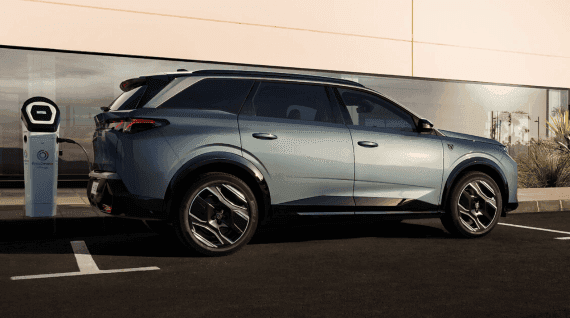
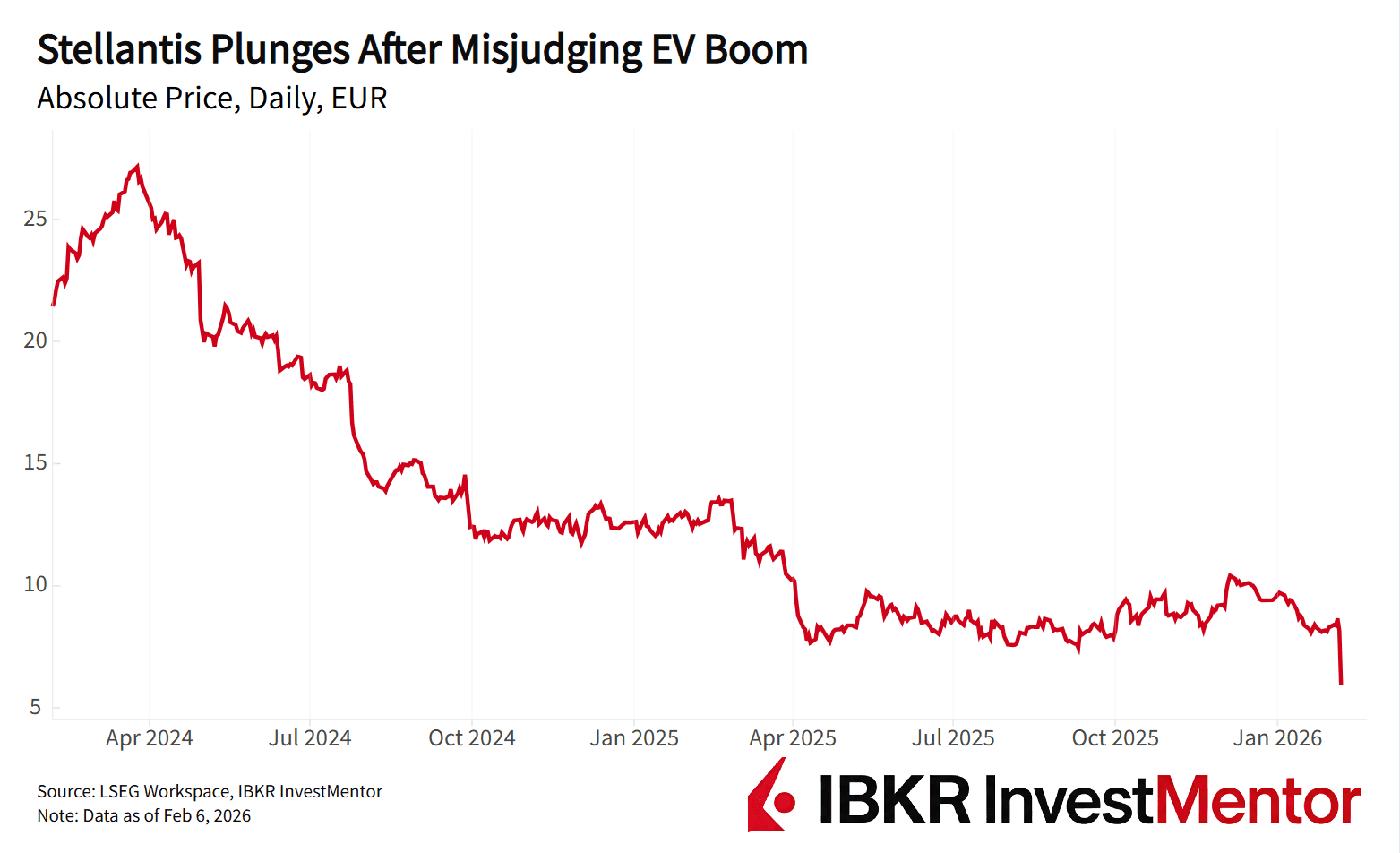
Stellantis is taking a €22.2 billion ($26.5B) charge as part of a sweeping business overhaul, sending the shares diving as much as 26% in Paris and Milan.
Much of the costs come from the automaker’s electric vehicle business, which it plans to downsize. The company makes brands such as Fiat, Chrysler, Peugeot, Citroën, Jeep, and Maserati.
CEO Antonio Filosa said the company had overestimated “the pace of the energy transition that distanced us from many car buyers’ real-world needs, means, and desires.”
In plain English: People aren’t buying as many EVs as Stellantis hoped.
Here’s what the charge includes:
Write-down is an accounting move in which a company admits that assets, such as factories or equipment, are now worth less than expected. Ford and GM have also announced multi-billion-dollar write-downs on their EV businesses.
Following Tesla’s success, automakers spent years betting on rapid electrification. But while the demand is rising, the rate of growth is slowing.
Why?
Western automakers are also struggling to compete against Chinese rivals. BYD is now the biggest EV maker in the world, surpassing Tesla in 2025.
While some companies overestimated the pace of the EV transition, electric vehicles are here to stay. Almost 21 million EVs were sold globally in 2025, up 20% year-on-year, according to Benchmark Minerals. The growth is down from +25% in 2024 and is set to cool further this year.
Every fifth car sold globally is now an electric one. In China, half of car sales come from EVs, with 10% of all cars on Chinese roads running on electricity. Emerging markets in Asia and Latin America are new growth drivers, with cheaper Chinese vehicles attracting customers.
Stellantis’s big EV reset shows that transition timelines matter. It expects to post a net loss for 2025.
It’s making some aggressive moves to fix the situation:
Want to explore more? Download our free app to unlock expert news updates and interactive lessons about the financial world.