Companies
Pharma Whiplash
Two Pharma Giants in Stark Contrast as Price Pressures Grow
2/4/20262/5/2026
Amazon unsettled markets on Thursday, announcing plans to spend $200 billion of capital in 2026, mainly on high-end chips and data centers. This was even more than Alphabet's forecast, announced a day earlier. The Google parent said it would double capital expenditures (capex) to up to $185 billion. Both shares tumbled afterwards, as investors were spooked by the scale of the AI bets.
Alphabet has quickly strengthened its position in AI, with Gemini chatbot now reaching 750 million active users. That’s right on the heels of OpenAI’s ChatGPT, which touts 800 million users.
Alphabet’s revenue and profit exceeded expectations for the last quarter, whereas Amazon's quarter was a mixed bag. But with big tech, the focus is now less on the top and bottom line and more on the capex.
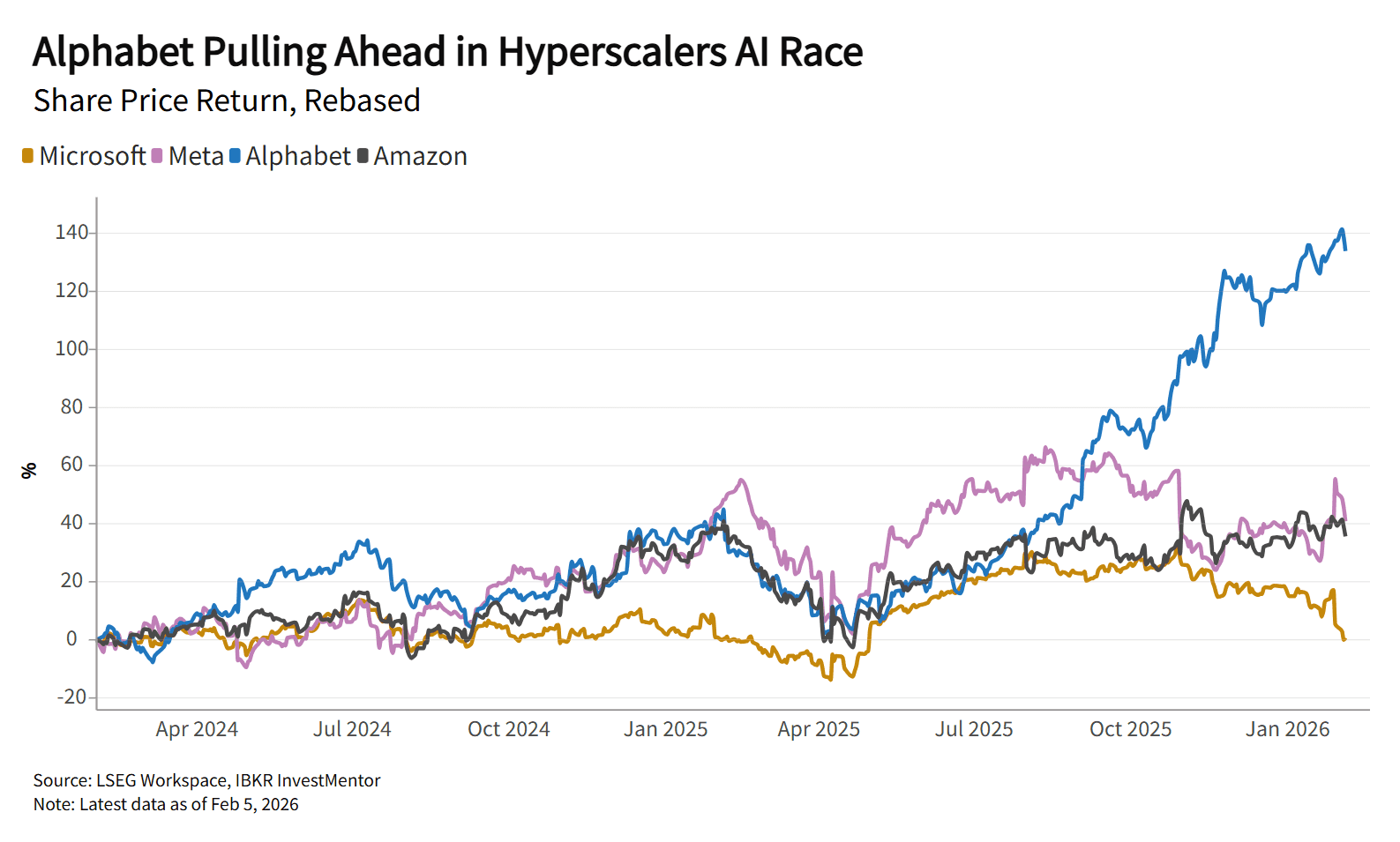
Amazon and Alphabet haven’t been the only hyperscalers, huge cloud service providers, to shake markets with their spending plans. Meta and Microsoft took investors by surprise just a week before. These plans are blowing past expectations set by Goldman Sachs, among others.
Big tech spends:
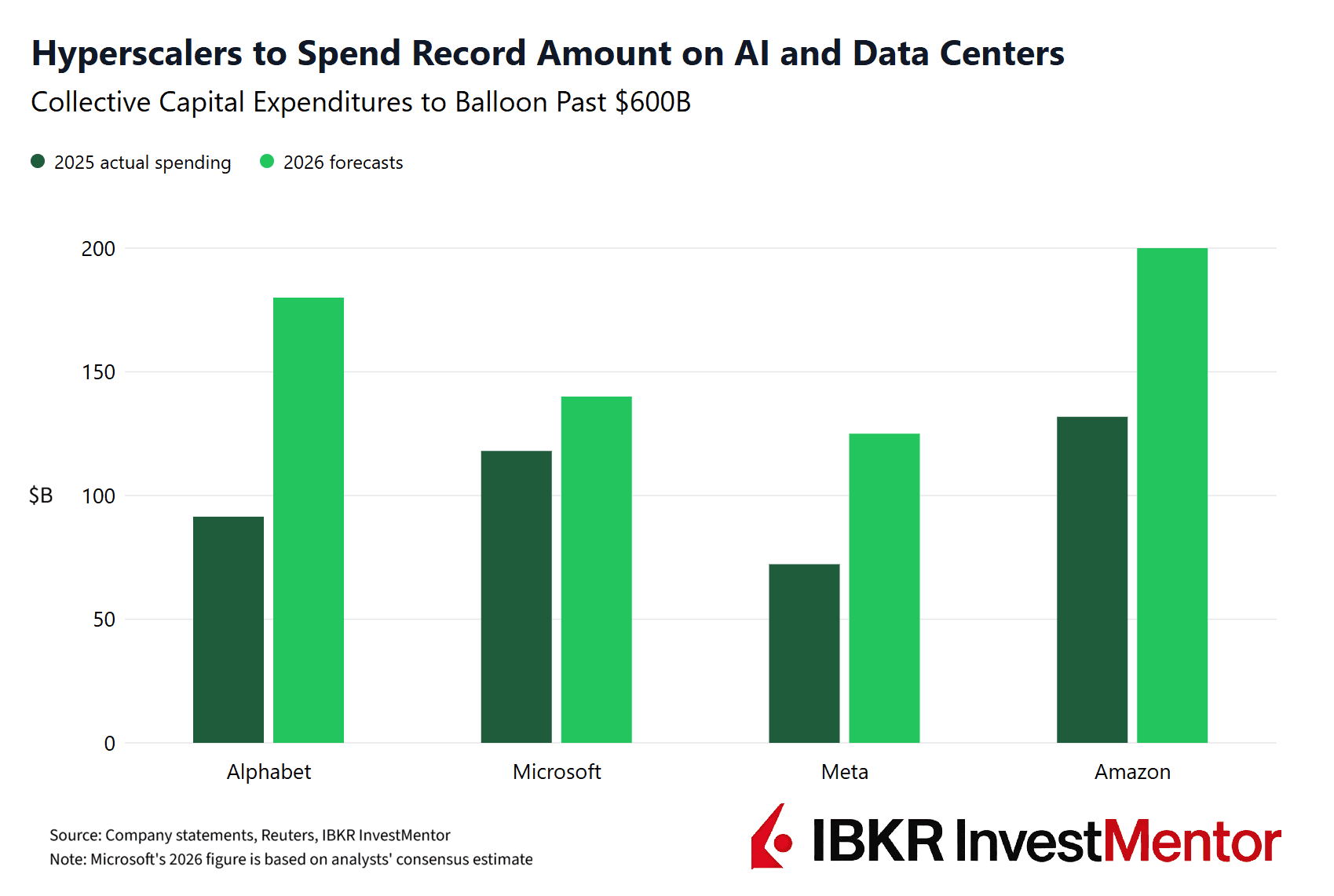
Capital spending is rising because artificial intelligence requires a lot of expensive physical infrastructure — from semiconductors and data centers to electricity grids and cooling systems.
Microsoft said two‑thirds of its record capex last quarter went into “short‑lived assets,” mainly Nvidia's chips that power AI.
Across the industry, spending is driven by:
The rapid build‑out of AI infrastructure is running into real‑world limits. Data centers already used roughly 1.5% of global electricity in 2024, according to the IEA, and demand is rising fast.
Power, land use, and water consumption are becoming binding constraints. Even with cleaner energy sources, growth may slow unless operators redesign facilities, secure new power deals, or adopt more efficient hardware.
This pressure is driving more experimental ideas, too. Elon Musk’s SpaceX–xAI merger aims to explore orbital data centers, while others are betting on breakthroughs like fusion power to keep future AI systems running.
As Big Tech pours billions into chips and data centers, the ripple effects are hitting the software sector. The S&P 500 Software index is down more than 18% since the start of 2026.
Companies offering business or legal software have been hit particularly hard. A trigger appears to have been Anthropic’s release of new plugins for its Claude Cowork, an AI tool for automating tasks across legal, sales, marketing, and data analysis.
US-listed companies like ServiceNow, Thomson Reuters, Oracle, Figma, and Atlassian have plummeted. In Europe, firms like SAP, LSEG, and Capgemini are under pressure.
Want to explore more? Download our free app to unlock expert news updates and interactive lessons about the financial world.