
Commodities
War Volatility
Markets Caught Between Threats and Optimism
3/10/20263/11/2026

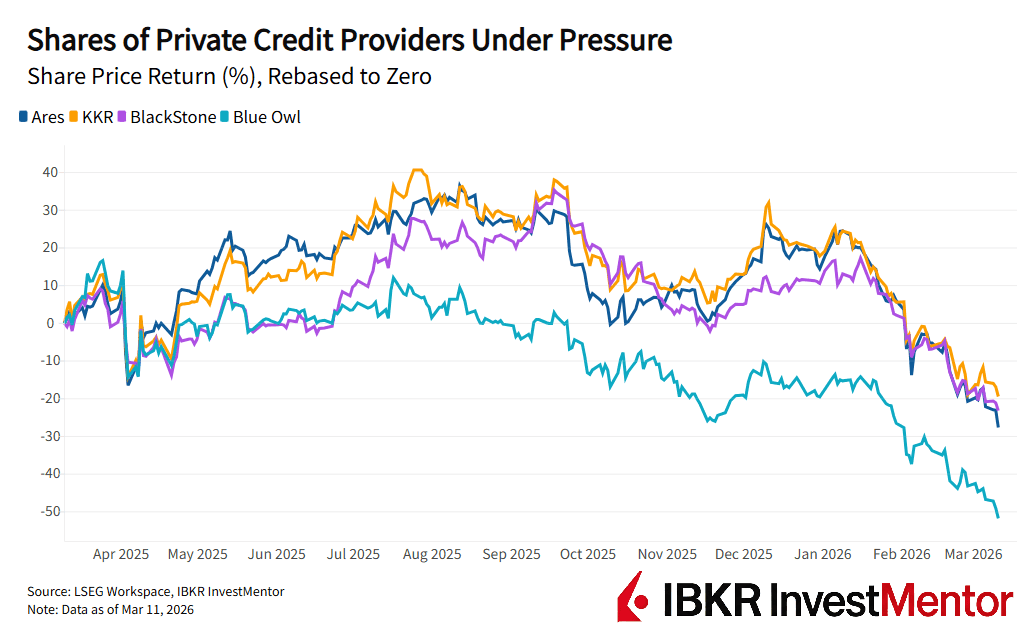
Banking giant JPMorgan has marked down the value of certain loans held by private‑credit groups, unnerving a market that has grown to $3.5 trillion in assets as of 2025. The markdowns hit particularly software‑sector loans, an area once seen as safe but now pressured by slower growth and AI‑driven competition.
Banks rarely adjust loan values unless they see trouble ahead. The move suggests lenders are bracing for a tougher environment for private credit, even as it continues to expand at record speed.
It’s money lent to companies by non‑banks: investment funds, pension funds, and specialist lenders like Ares and Blue Owl.
Deals usually come with flexible terms and higher interest rates, accounting for more risk. After the 2008 financial crisis, banks tightened their purse strings, so private lenders stepped in. It has become essential for small and medium-sized firms that struggle to get bank loans.
But it’s no longer just a small‑business story. Private lenders bankroll large buyouts and M&A deals, competing with investment banks. Apollo, for example, is providing debt funding to Paramount in the ongoing Warner Bros takeover.
Private credit offers higher yields, but the risks sit below the surface.
If the economy slows down and defaults rise, losses can hit pensions, insurers, and funds that rely on this income.
Withdrawals Hit Big Funds
The markdowns landed during a surge in investor withdrawals from private‑credit vehicles. BlackRock capped redemptions after a spike in requests, and Blackstone’s private credit fund faced similar pressure.
landed during a surge in investor withdrawals from private‑credit vehicles. BlackRock capped redemptions after a spike in requests, and Blackstone’s private‑credit fund faced similar pressure.
These loans are illiquid, meaning the funds can’t sell assets quickly when investors want out.
Private credit loans aren’t publicly traded, and while most bank loans aren’t either, bank‑originated corporate loans are often syndicated to institutional investors, creating more pricing signals, external scrutiny, and regulatory oversight. Private‑credit funds rely on internal models, with far less external oversight.
That works when borrowers are healthy. It gets murky when they’re not.
JPMorgan CEO Jamie Dimon captured the mood with a blunt warning late last year after the bankruptcy of First Brands, a heavily indebted auto‑parts supplier that relied on private credit. “When you see one cockroach, there are probably more,” he said during an earnings call.
Want to explore more? Download our free app to unlock expert news updates and interactive lessons about the financial world.