
Companies
M&A Drama
How Warner Is Battling Paramount’s Hostile Offer
12/18/202512/19/2025

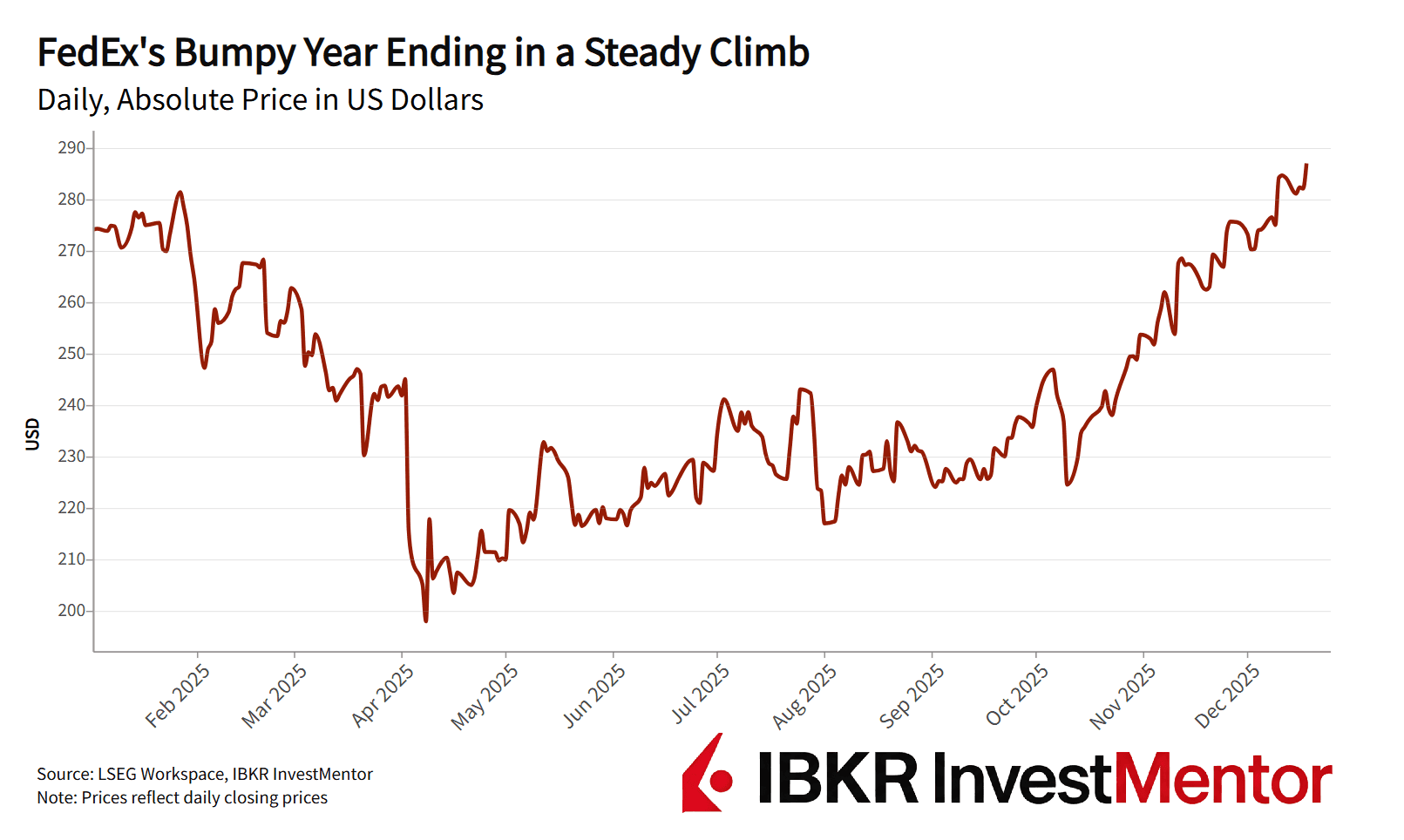
FedEx beat forecasts, with operating profit climbing to $1.4 billion on $23.5 billion in revenue. The logistics giant’s revenue grew almost 7%, helped by higher prices and steadier demand than expected. It also nudged up its full-year outlook.
Because the company works as a courier across so many industries, FedEx and its main rivals UPS and DHL double as bellwethers for the global economy.
For now, the message is that activity is holding up, even as costs, regulation, and geopolitics complicate the backdrop.
FedEx earnings showed how businesses must be prepared for unforeseeable setbacks.
A UPS-operated cargo plane crashed in November in Kentucky, killing 14 people. Regulators have now grounded all Boeing’s MD-11 cargo jets, including FedEx’s 28-plane fleet. Even though the company wasn’t involved in the crash, it has been forced to lease extra trucks and aircraft to survive the holiday rush — resulting in about $175 million in additional costs, split across two quarters.
It’s a neat case study in how a safety issue can cascade through supply chains, pushing up costs and adding friction just as demand peaks.
The pandemic pushed supply chains from a back‑office detail to a boardroom fixation, putting couriers and shipping companies squarely in focus. Supply chains remain a hot topic with global conflicts and trade disputes threatening the flow of goods.
FedEx enables about $2 trillion worth of commerce annually, delivering everything from Christmas presents to high-end GPUs needed in data centers.
Flows between the US and China have slowed, so the company has cut capacity on those lanes. But other routes are busier:
In 2024, nearly 1.4 billion packages valued under $800 entered the US duty‑free. That advantage vanished earlier this year, when the White House scrapped the exemption. The EU aims to scrap similar exemptions to cheap parcels in 2026.
That dents the flood of low‑value parcels that once padded FedEx and UPS volumes. Fewer cheap international packages mean less revenue, but the shipments that remain tend to be heavier on customs work and pricing power — and therefore boost margins.
FedEx has been growing its business-to-business revenue, with 66% now coming from those shipments. These rely less on small, cheap parcels.
AI is only useful if you have the data to feed it, and FedEx generates plenty: 17 million packages a day, each with routes, timing, and customs codes attached. Big courier companies control global supply chain data, and they’re racing to figure out how to best leverage it.
With stricter trade rules and the end of tariff-free, cheap parcel traffic, getting those customs codes right has become more important — and more tedious. FedEx is using AI to predict them and cut delays. AI has also helped the company to grow in healthcare shipments, where logistics can be complex and rule-driven.
Additionally, FedEx is boosted by the data center build-up, with chips and other parts needing to be transported across the world.
Want to explore more? Download our free app to unlock expert news updates and interactive lessons about the financial world.