
Companies
Space Economy
Why the New Space Race Doesn't Need a Single Winner
3/31/20263/31/2026
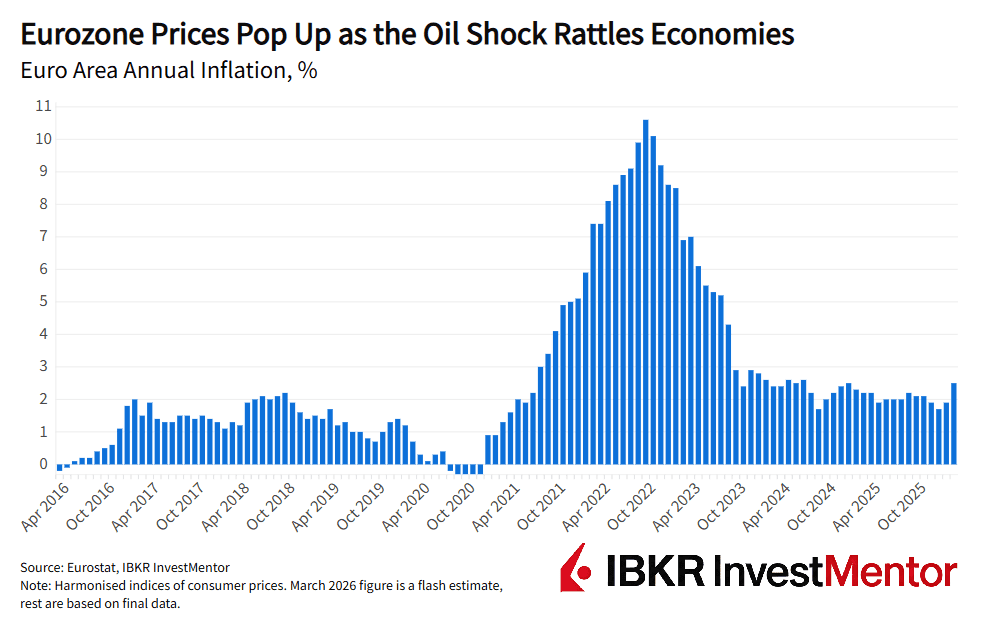
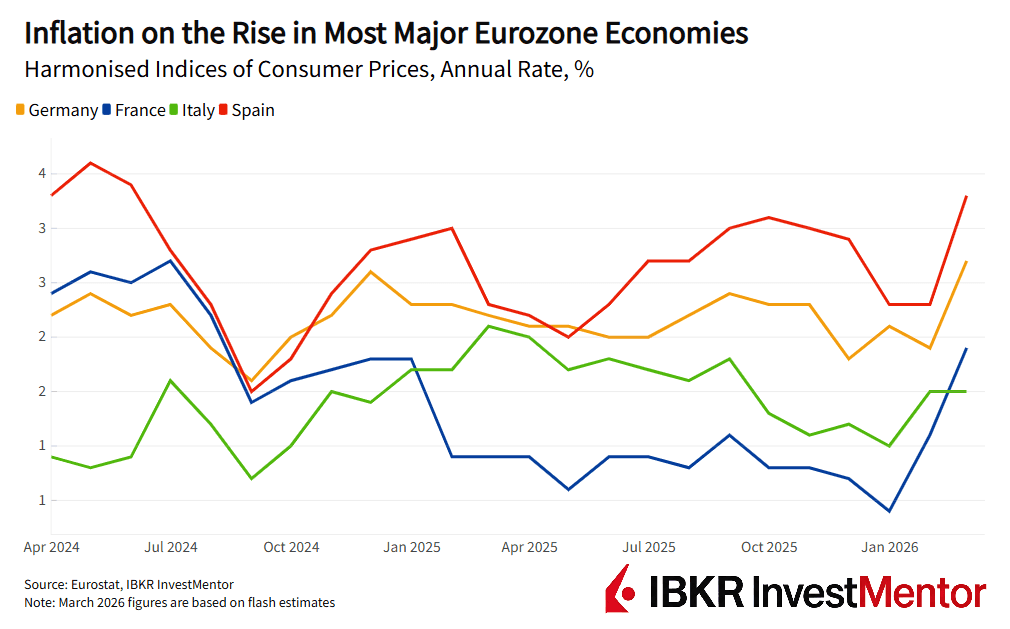
Eurozone inflation climbed to 2.5% in March year-on-year, up from 1.9% in February, according to the flash estimate by Eurostat. The figure slightly undershot the economists’ expectations of 2.6%, but it was still a clear sign that consumers now feel the oil shock in their wallets.
Inflation runs above the European Central Bank’s 2% target for the first time in months. The prices are rising at the fastest pace since January 2025.
While the eurozone inflation remains far below the pandemic peak of 2022, the direction is up, and price pressures are outside of Europe’s immediate control.
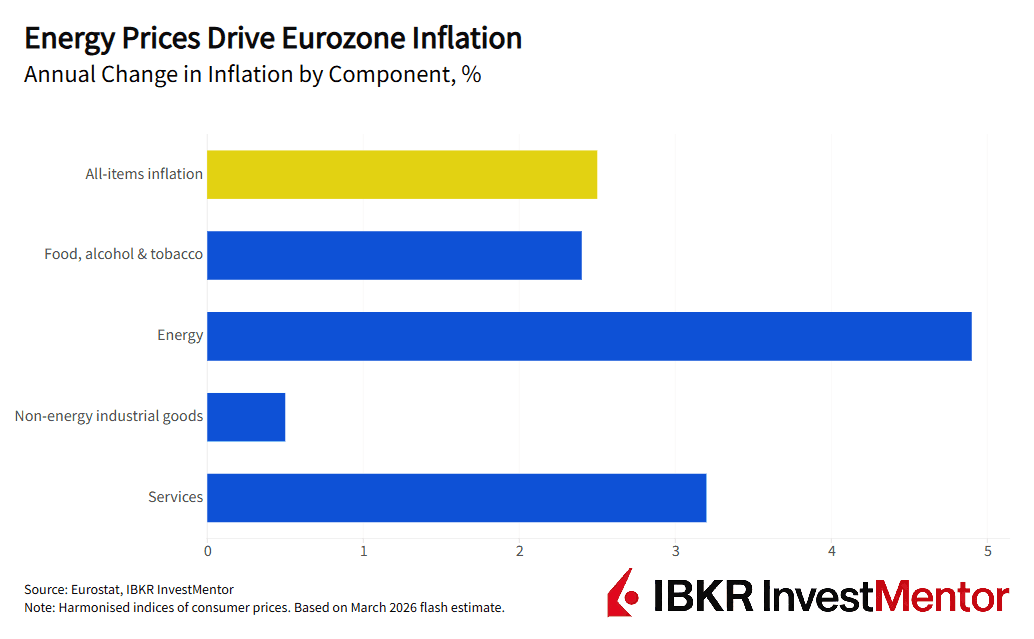
Energy prices in the Eurozone rose 4.9% in March from a year before, accounting for most of the rise in inflation.
Oil prices have soared since the Iran war disrupted global supply, with the Brent crude benchmark now trading around 60% above the pre-war level. Europe imports most of its energy, and higher oil prices can pass into transport, heating, and power bills.
Energy‑led inflation can fade quickly if oil prices fall, but it can also spread into other prices if the crisis persists and firms start passing higher costs on to consumers.
The good news is that core inflation, which strips out volatile food and energy, fell to 2.3% year-on-year in March from 2.4% in February.
It looks like the oil shock is contained to the energy markets for now. Services inflation, the largest part of the euro zone price basket, eased to 3.2% from 3.4%.
But the war in the Middle East is not just impacting the price of oil and gas. The Strait of Hormuz is a crucial route to many important fertilizers and other chemicals. The longer the war continues, the likelier it is that price pressures increase in the broader economy.
Textbook economics says central banks should not rush to change interest rates in response to temporary supply shocks. Raising rates would not create more oil, and central bank policy works with long delays.
But the ECB, together with other major central banks, has fresh scars. During the Covid‑19 recovery, it initially treated inflation as temporary. Price pressures proved sticky, spreading from energy and goods into wages and services. Some critics argue that central bankers stepped in too late, letting the inflation run unchecked.
That experience matters now. Policymakers worry that waiting too long could allow energy‑led inflation to become entrenched again.
Financial markets expect up to three ECB rate hikes this year, with debate over whether the first move comes in April or June.
The backdrop is very different from 2022. Interest rates are already higher, fiscal policy is tighter, and labor markets are cooling. Central banks, including ECB, were on the path of rate cuts before the war.
For now, inflation looks energy‑driven. The ECB’s choice depends on whether policymakers believe higher energy prices stay contained or spill into wages and everyday prices across the eurozone.
Want to explore more? Download our free app to unlock expert news updates and interactive lessons about the financial world.