Markets
Bessent's Battle
Can the US Treasury Secretary Boss Markets Around?
8/28/20269/7/2026
Anthropic's stock market debut is delayed by a couple of weeks, with the company expected to list shortly before the November US midterm elections, according to Reuters. The delay shows how crucial timing is for the first major pure-play AI listing.
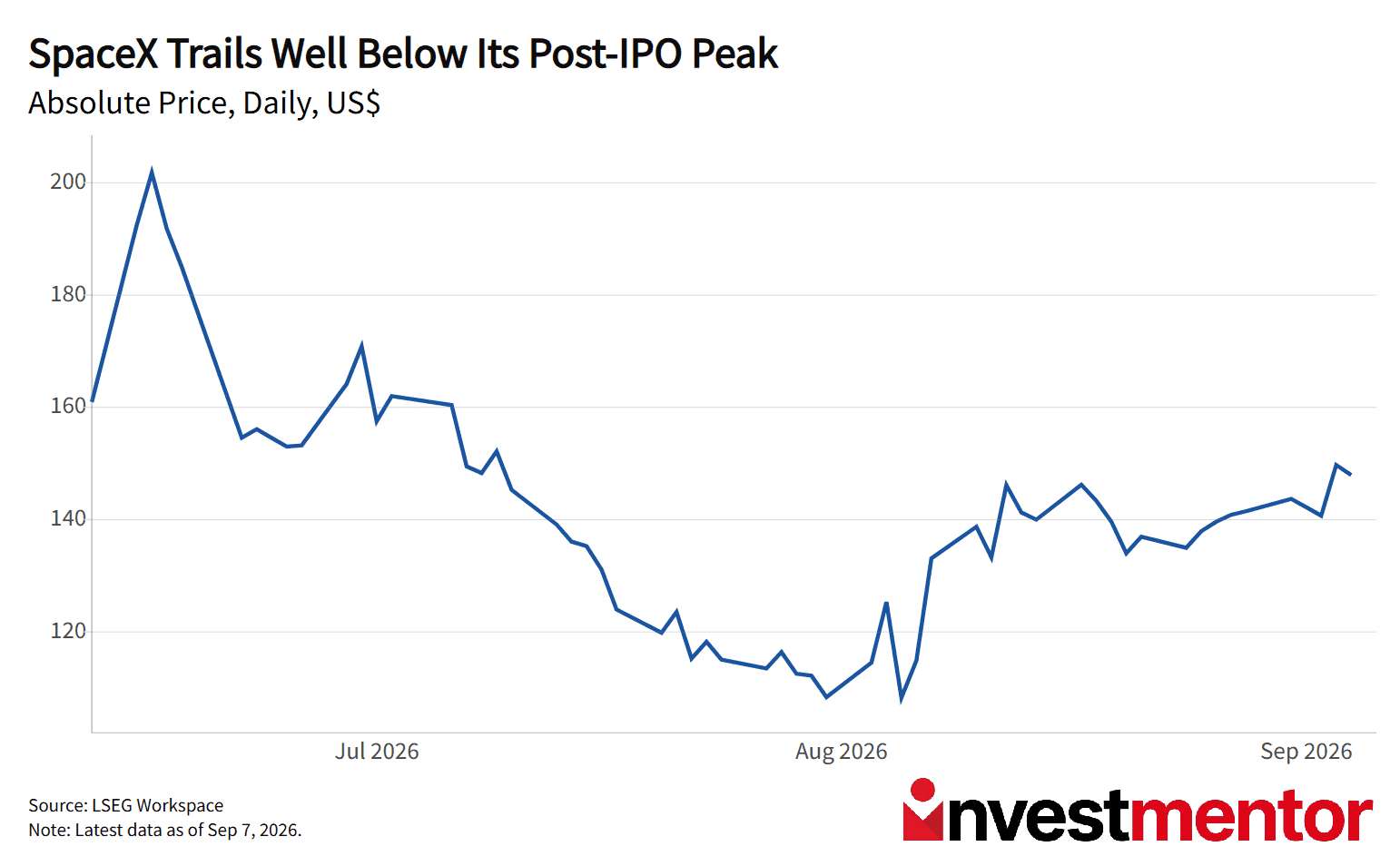
The company behind Claude-chatbot could debut at a valuation of around $2 trillion. It could surpass Elon Musk’s SpaceX, which was valued at $1.77 trillion in an IPO earlier this year. It’s not yet clear how much Anthropic will raise but SpaceX’s $75 billion is the record to beat.
The lofty valuation rests largely on astonishing growth and its first-ever profit in the second quarter. Investors expect Anthropic's annualized revenue to reach $100-120 billion by the end of 2026, more than ten times higher than at the start of the year. Fast-growing AI companies like this metric because it’s all about potential. It shows how much revenue a company could make in 12 months based on recent performance.
For years, the AI boom has been funded by venture capital firms, sovereign wealth funds, and tech giants willing to pour money into companies chasing ever more powerful models. Private investors can tolerate big promises and distant profits better than public ones.
That's why Anthropic’s IPO matters so much. It’s the first real test whether stock markets are willing to grant AI trillion-dollar valuations. Anthropic’s prospectus, a business overview published ahead of an IPO, is expected to be out late-September. It will become one of the most scrutinized document of the industry. Cue some uncomfortable questions:
The AI industry is pushing out new models at a breathtaking speed: In the span of a single week, Anthropic released Claude Fable 5.1 and Mythos 5.1, OpenAI launched GPT-6 Astra, Google unveiled Gemini 3.8 Flash, and Meta introduced Muse Spark 1.3.
AI companies are fighting for customers, developers, computing resources, and investor attention at the same time. Every product launch is also a marketing campaign and a cry for attention. OpenAI (which has also confidentially filed for an IPO and plans to list in 2027 or sooner) even claimed its latest model has crossed the fuzzy threshold of artificial general intelligence, AGI – outperforming humans at most tasks.
With +trillion-dollar listings approaching, neither Anthropic nor OpenAI can afford a week where people stop talking about them.
Anthropic has repeatedly clashed with the US government over AI policy and remains in active litigation with the Department of Defense after being labeled a supply-chain risk. A California judge said in August that the Pentagon ban was illegal, but litigation continues in a separate court in Washington DC.
Earlier this year, the Department of Commerce export controls forced Anthropic to briefly withdraw some of its leading models.
The disputes highlight a strange reality of the AI race: Governments want domestic companies to create the world's most powerful AI systems, but they also worry that those same systems could create economic, military or national security risks.
Anthropic is a public benefit corporation (PBC), which is an awkward combination of profit-making and responsible AI development for the interests of humanity. PBCs are for-profit firms that have a specific purpose built in the corporate charter.
Anthropic’s mission is overseen by the Long-Term Benefit Trust, an independent body that can appoint or remove a majority of the company board. The trust includes figures such as former Federal Reserve Chair Ben Bernanke.
Anthropic’s structure is untested by public markets which crave higher profits. Currently, trustees can be fired with 85% of the shareholders voting power. This may change with the IPO. OpenAI already went through its own AI ethics drama, ditching its non-profit structure after the board failed at its attempt to get rid of CEO Sam Altman.
Want to explore more? Download our free app to unlock expert news updates and interactive lessons about the financial world.