
Companies
EV Reality Check
Stellantis's EV Reset Rattles the Car Industry
2/6/2026
2/13/2026

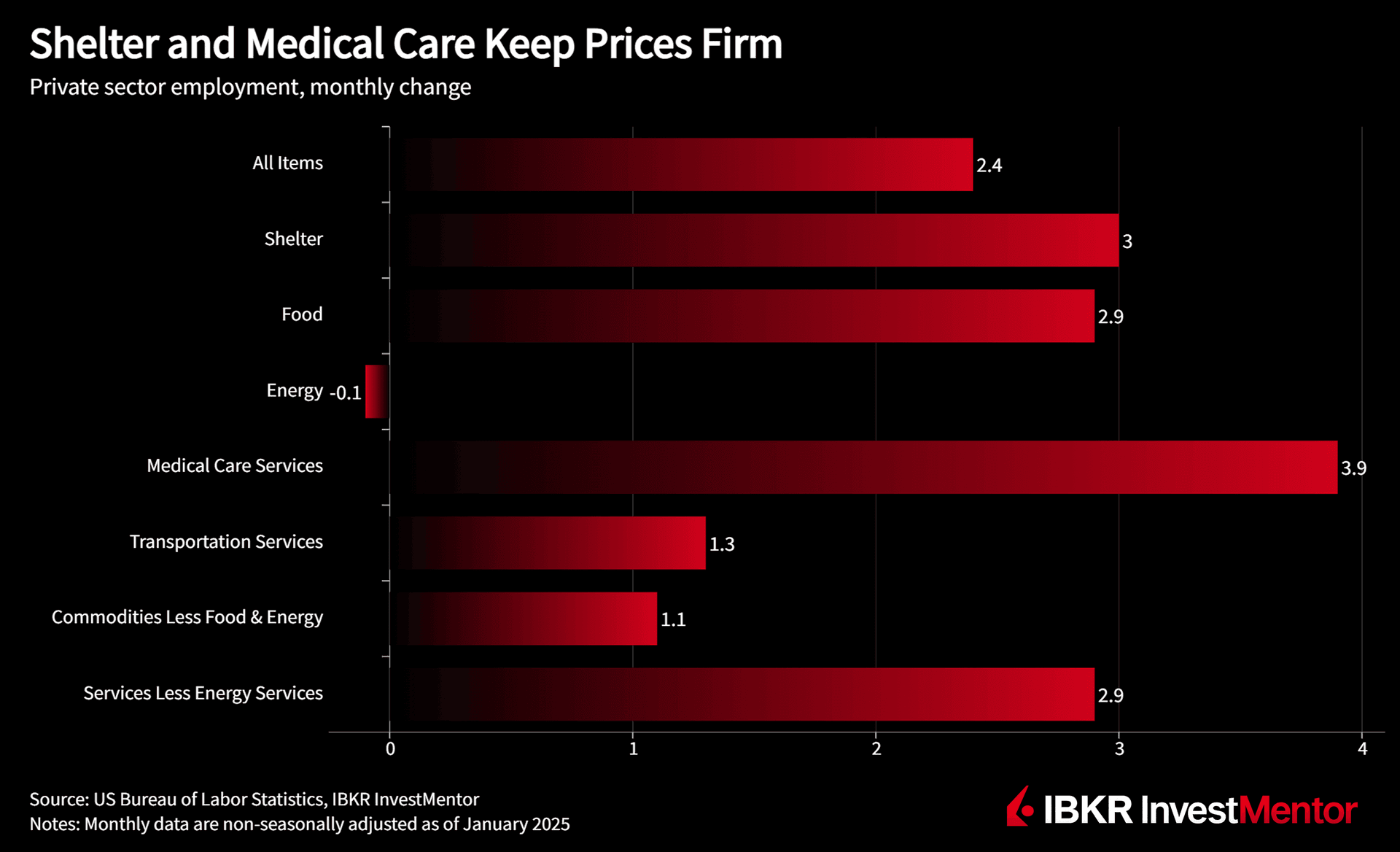
January’s consumer price index (CPI) in the US showed that inflation is easing but not disappearing.
Headline CPI, the entire basket of goods, rose 0.2% month over month and 2.4% over the year, down from 2.7% in December.
Core CPI, with volatile food and energy prices excluded, was a bit higher — up 0.3% on the month and 2.5% over the past year, showing that underlying price pressures are moderating but still present.
Shelter remained the main driver, rising 0.2% in January and 3.0% over the past year.
In inflation statistics, shelter is the cost of having a place to live, mainly rent, plus an estimate of what homeowners would pay if they rented their own home. It's by far the largest piece in CPI, making up about one-third of the index.
Plane tickets, personal care (think of shampoo, hairdressers' appointments, or manicures), recreation, communication, and medical care also moved higher, with airline fares up 6.5% just in January. Offsetting that strength were declines in used cars and trucks (-1.8%), motor vehicle insurance, and household furnishings, which helped keep overall core inflation contained.
Food and energy told a mixed story that will matter for households. Food prices rose 0.2% on the month and 2.9% year over year, with groceries up 2.1% and meals away from home up a hotter 4.0% over the past year.
Energy prices fell 1.5% in January and are down 0.1% over 12 months, driven by a 7.5% drop in gasoline, even as electricity and natural gas remain notably higher than a year ago.
Taken together, January’s data reinforce the narrative of cooler but still sticky inflation. Headline pressures are easing thanks to cheaper gasoline, but core services, especially shelter and health-related categories, are keeping inflation slightly above the Federal Reserve’s comfort zone of two percent.