
Commodities
Out of Fuel?
The Oil Shock Moves From Charts to Reality
4/20/20264/21/2026
Apple has appointed John Ternus, its hardware chief, as CEO from September 1.
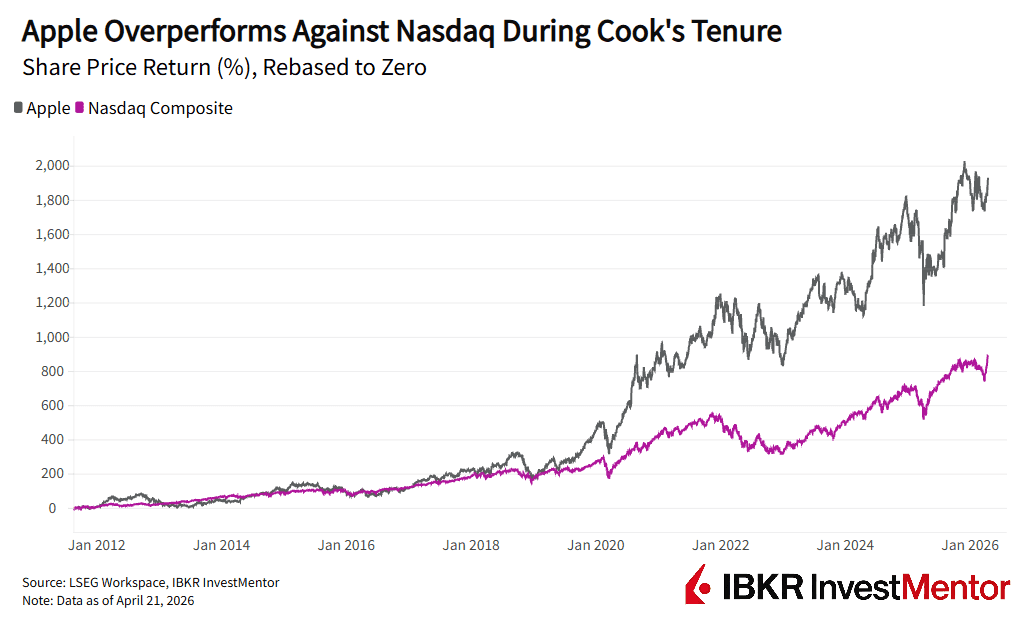
Current CEO Tim Cook, 65, becomes executive chair after a 15‑year run that added staggering $3.6 trillion to Apple’s value.
The timing is delicate: Apple has held back as rivals pour dozens of billions into AI investments. Apple’s voice assistant Siri is due for an AI reboot, but that has been repeatedly delayed.
John Ternus is a 25‑year Apple veteran known for precision, calm leadership, and a perfectionist streak (he once challenged a supplier over the groove count on a screw). Cook described him as "obsessed with every detail" in his parting letter.
Ternus led Apple’s shift from Intel chips to in‑house Mac chips and, more recently, launched ultra-thin iPhone Air and budget laptop MacBook Neo. He’s a hardware lifer, designing a head‑motion‑controlled feeding device for quadriplegic users as a university project.
Colleagues have described him as humble and collaborative, but some have voiced concerns whether he has enough big ideas to lead Apple into the AI age.
Apple does not change its CEO very often. Steve Jobs returned to lead the near-bankrupt firm in 1997 and stayed until 2011, dying shortly afterwards. Tim Cook has steered Apple since then.
Ternus doesn’t seem like a visionary showman or a sleek operator, comfortable with lobbying EU officials or the US president. He’s an engineer who champions product quality above all else.
Apple spent less than $13 billion on capital expenditures (money on long-term assets to improve the business) in fiscal year 2025. That’s less than tech rivals Alphabet, Microsoft, Meta, and Amazon are currently spending in a quarter. These hyperscalers splurge on data centers and high-end chips.
Apple has taken a different path. It’s leaning on on‑device AI, where its custom chips shine, using Google’s Gemini to power a delayed Siri overhaul.
The risk: AI could shift power away from smartphones entirely. The opportunity: tightly integrated devices that make AI feel seamless could keep Apple relevant.
A CEO sets strategy, hires leaders, allocates capital, and tries to keep investors, regulators, and governments onside. At Apple, that includes navigating US–China tensions, EU regulation, and supply‑chain politics.
CEO succession at global giants is often a high‑wired, years‑long process. The board, which chooses the CEO, tests internal and external candidates and benchmarks them against each other. Often, big multinationals use executive search firms to help with the process.
Insiders are usually chosen for stability. Outsiders for reinvention.
Want to explore more? Download our free app to unlock expert news updates and interactive lessons about the financial world.