
Commodities
Oil Shock
How the Iran War Is Swelling Into a Global Energy Crisis
3/13/20263/16/2026

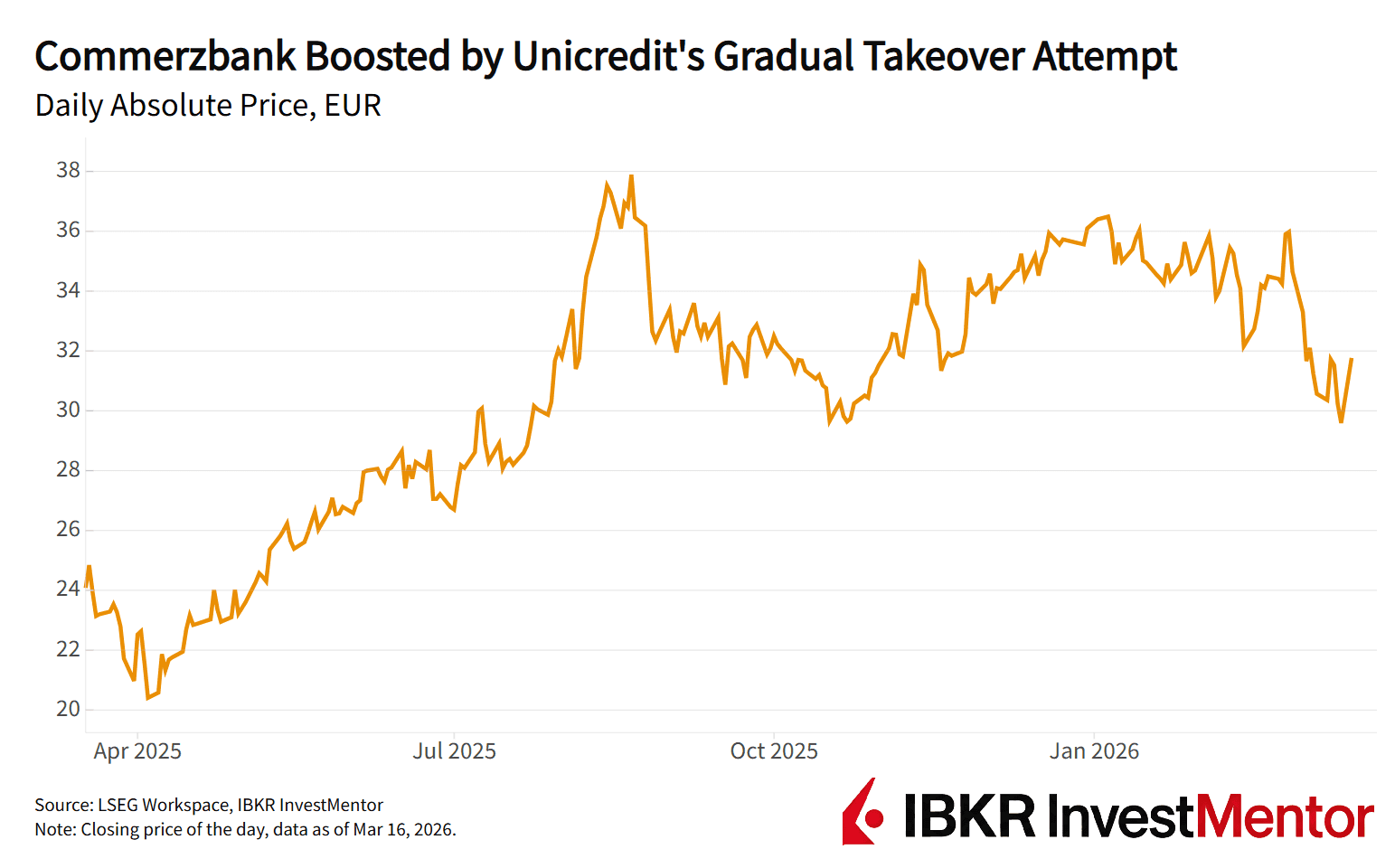
Italian bank UniCredit has spent more than a year building a nearly 30% stake in Germany’s Commerzbank. Now it’s launched a €35 billion offer to nudge that stake above 30%, the point where German law forces an official takeover offer.
This comes with only a tiny 4% premium — the extra money a buyer offers above the undisturbed market price to convince shareholders to sell. Commerzbank shares surged over 8% on Monday, prompting the bank’s CEO Bettina Orlopp to claim the offer does “not include a premium” at all.
But here’s the twist: Unicredit expects Commerzbank shareholders to say “no” at this point. The real goal is to unlock talks after months of pushback.
Germany’s takeover rules create a “cliff‑edge” once a shareholder crosses 30%. UniCredit has been stuck just below that line, even having to sell shares whenever Commerzbank bought back its own.
By launching a voluntary offer, UniCredit removes that risk and gains freedom to buy more shares later from the open market. This technical move shows how complicated banking mergers in Europe can be. But it also signals that Unicredit is serious: It wants to create a truly cross‑border European banking champion.
Europe’s financial system is fragmented and split along national borders, making it tricky to fund big ideas or compete with the US and China. Former ECB chief Mario Draghi highlighted this in his famous 2024 report on European competitiveness.
Draghi’s proposals:
Current ECB chair Christine Lagarde has also encouraged bank mergers.
If EU bank mergers are so desirable, why aren't they happening? Often, banks find that national pride makes cross-border deals near impossible.
Berlin still owns around 12% of Commerzbank from its 2008 bailout and sees the bank as vital to Germany’s industrial backbone. So, when UniCredit launched its offer, the finance ministry immediately called any “hostile takeover” unacceptable. Commerzbank vowed to defend its independence.
Unions warn of job losses, and politicians worry about Frankfurt losing influence. This reaction isn’t unique: across Europe, governments support their banks expanding abroad but resist being taken over.
Cross-border banking deals in Europe have picked up. Smaller asset sales and acquisitions are happening, but large-scale, industry-shaking mergers are still missing.
2025 deals:
For investors, the UniCredit–Commerzbank saga is really about whether Europe can build banks big enough to compete globally.
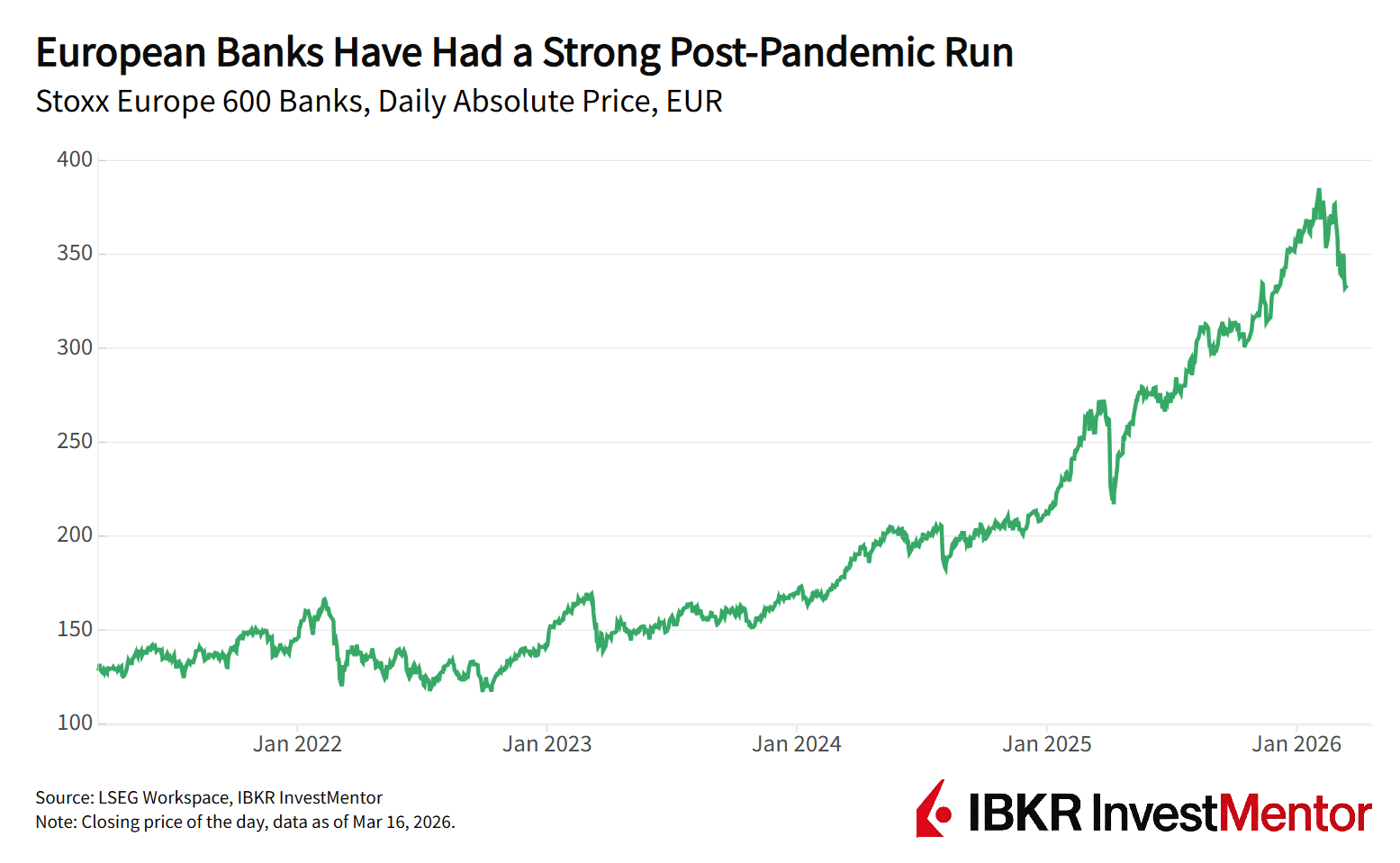
European bank shares have outperformed US peers since Covid: capital buffers are strong, profitability has improved with higher rates, and balance sheets are cleaner than they’ve been in years.
But even after the recent boom, JPMorgan’s market value at $770 billion is larger than the seven most valuable EU banks combined. US lenders have more firepower and credibility in underwriting, IPOs, and corporate lending.
Want to explore more? Download our free app to unlock expert news updates and interactive lessons about the financial world.