Commodities
Tapping Reserves
How Emergency Oil Reserves Help in a Crisis
3/9/20263/9/2026

Average hourly earnings (AHE) is the Jobs Report’s way of answering a simple question: are paychecks heating up or cooling down? It’s released in the Bureau of Labor Statistics (BLS) Employment Situation report on the first Friday of the month and tracks hourly pay for private employees.
It includes overtime and late-shift pay, but skips the “extras” like benefits and bonuses, so it’s a cleaner read on everyday wage pressure
AHE matters because wages help drive consumer spending, and the AHE explainer notes consumption is roughly 70% of US GDP. When wages rise, households often have more room to spend.
But wages are also a major input cost for businesses, meaning faster wage growth can push companies to raise prices or protect margins in other ways.
Investors fixate on AHE because wages can feed inflation. In an IBKR macro podcast discussion, wages are described as “the contribution to inflation,” and if they come in way faster than expected, that can be “problematic for the Fed.”
Simply put, a hot wage print can make markets rethink how soon the Fed can ease, or whether it needs to stay cautious a little longer.
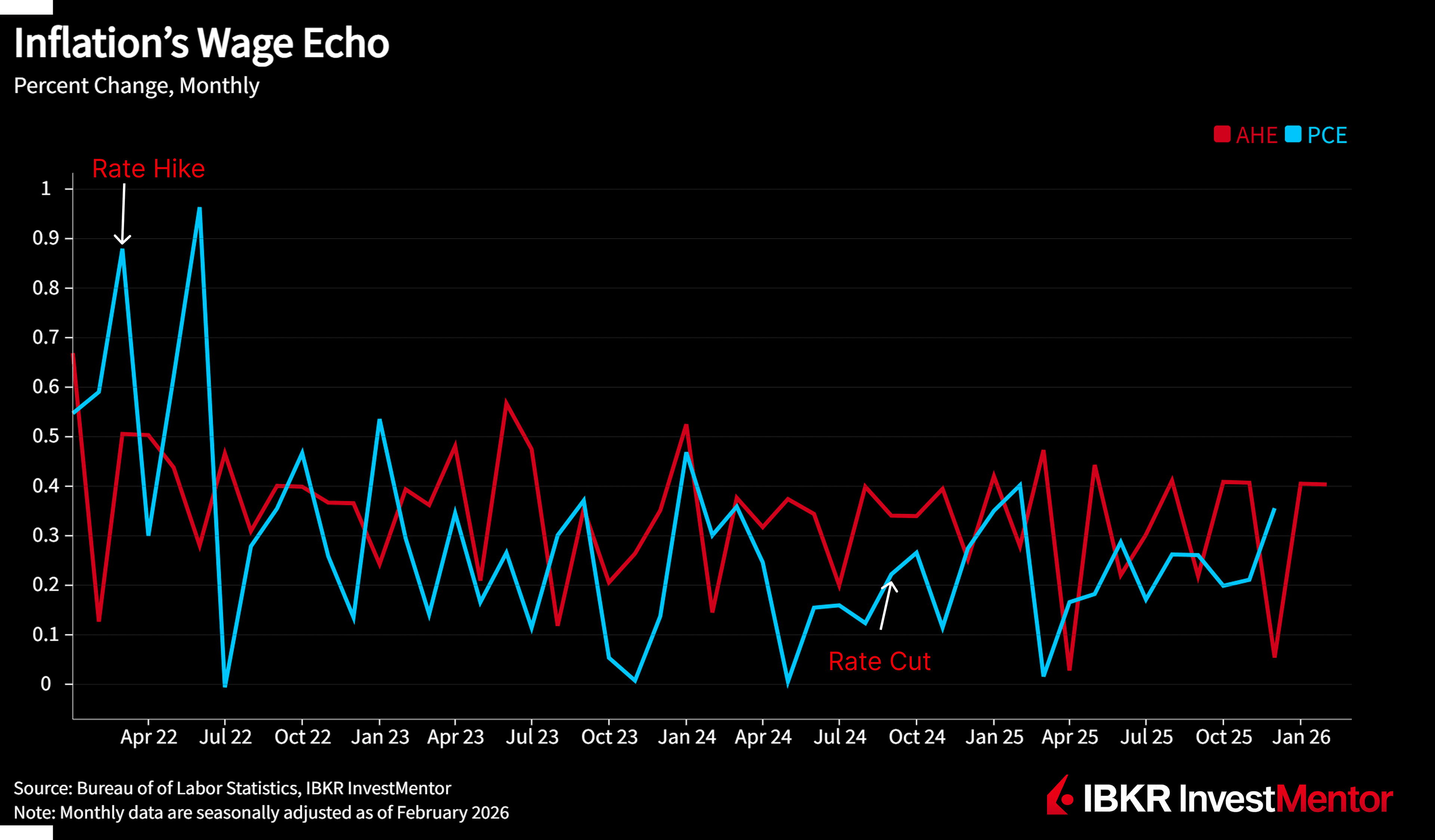
The paycheck print was loud and clear: average hourly earnings rose 15 cents in February (+0.4%) to $37.32, and are up 3.8% over the past 12 months.
Even the “core worker” slice moved higher: production and nonsupervisory pay rose 9 cents (+0.3%) to $32.03.
Why markets care: average hourly earnings helps gauge wage pressure and inflation risk, strong pay supports spending, but wages can also be a major cost for businesses, shaping pricing and Fed expectations.
Want to explore more? Download our free app to unlock expert news updates and interactive lessons about the financial world.